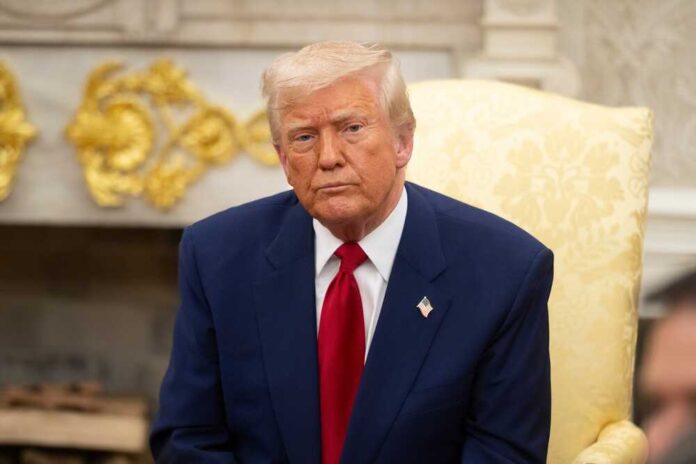
President Trump has issued a controversial pardon to Tina Peters, a former Colorado county clerk serving nine years for election-related crimes, despite constitutional scholars arguing presidential pardons cannot override state convictions.
Story Highlights
- Trump pardoned Tina Peters, calling her a “patriot” who wanted fair elections
- Peters was convicted by a Republican prosecutor in state court for unauthorized voting machine access
- Colorado officials assert Trump has no constitutional authority over state crimes
- Peters’ attorney argues an unprecedented legal theory that federal pardons could apply to state cases
Trump Defends Election Integrity Advocate
President Trump announced the pardon via Truth Social on December 11, 2025, describing Peters as a victim of partisan persecution. “Democrats have been relentless in their targeting of TINA PETERS, a Patriot who simply wanted to make sure that our Elections were Fair and Honest,” Trump stated.
Peters, a former Mesa County clerk, was sentenced to nine years for allowing unauthorized access to voting machines while investigating alleged irregularities in the 2020 election.
Trump pardons jailed ex-Colorado election official Tina Peters, but she was charged in state court https://t.co/Osw4JsSKxB
— CBS News (@CBSNews) December 12, 2025
State Officials Challenge Federal Authority
Colorado Secretary of State Jena Griswold immediately contested Trump’s authority, stating Peters “was convicted by a jury of her peers for state crimes in a state Court.”
Attorney General Phil Weiser emphasized constitutional principles, arguing that “states have independent sovereignty and manage our own criminal justice systems without interference from the federal government.”
Even Democrat Governor Jared Polis noted Peters was prosecuted by a Republican District Attorney in a Republican county, undermining claims of partisan targeting.
Constitutional Precedent Under Question
Peters’ attorney, Peter Ticktin, has proposed an untested legal theory suggesting presidential pardon power could extend to state crimes. The Constitution grants presidents authority over “Offences against the United States,” traditionally interpreted to apply only to federal crimes.
Ticktin acknowledged this constitutional question “has never been raised in any court.” Legal scholars maintain no precedent exists for federal pardons overriding state convictions, setting up a potential constitutional showdown.
Pattern of Election-Related Pardons
Trump’s intervention follows a broader pattern of supporting those who challenged the 2020 election results. The president previously pardoned January 6 Capitol riot participants and dozens accused in state courts of attempting to overturn the 2020 election, including alternate electors and former attorney Rudy Giuliani. Peters had warned in August of “harsh measures” if Peters wasn’t released from state custody, demonstrating sustained interest in her case.
This case represents a significant test of constitutional boundaries between federal executive power and state sovereignty. Patriots supporting election integrity measures will watch closely as courts determine whether Trump’s pardon carries legal weight against state convictions, potentially reshaping the balance of federal and state authority.