

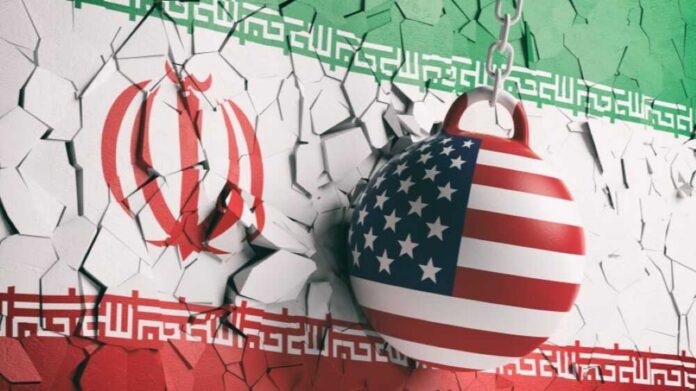
Two American service members were killed in Jordan by Iranian missiles and drones, and the United States answered with nights of strikes deep inside Iran.
Story Snapshot
- CENTCOM said U.S. strikes hit Iranian air defense, coastal radar, and military sites.
- The response followed Iran’s deadly attack on a Jordan base that killed two Americans.
- U.S. operations spanned at least eight straight nights and over 80 targets, per official accounts.
- Both sides traded fire as fears of a wider war rose across the Gulf.
What Triggered The U.S. Strikes
Iran fired missiles and drones at a base in Jordan on July 17, killing two U.S. service members and leaving others hurt, according to U.S. Central Command and major outlets covering the military beat. The attack crossed a line Washington has drawn for years: kill Americans, expect a direct answer.
The White House did not wait long. U.S. forces launched strikes inside Iran within days, targeting the systems Tehran used to threaten troops and shipping in the Gulf.
Central Command reported eight straight nights of action by July 18, describing successful hits on Iranian military coastal surveillance, air defense facilities, and associated units. The operation signaled a shift from past practice. In 2024, the United States hit Iran-backed groups in Iraq and Syria after troop deaths, not Iran itself.
This time, the Pentagon went after hardware and operators on Iranian soil, a more direct form of deterrence with clearer ownership and higher stakes.
How The Campaign Unfolded
U.S. officials and press reports described a broad target set that included radar sites, missile and drone locations, and command nodes along Iran’s coast and beyond. Central Command said the latest wave struck more than 80 locations, a scale meant to blunt Iran’s launch capacity and signal willpower.
Iran answered with its own strikes and threats toward U.S. partners. Regional media tracked blasts from Bandar Abbas to Gulf islands, while Washington warned of further action if U.S. personnel faced new attacks.
Nearly 100 American service members have been injured in multiple Iranian airstrikes on bases in the Middle East region this month, U.S. officials told CBS News. https://t.co/C7qvE4r8qe
— CBS News (@CBSNews) July 20, 2026
Numbers told their own story. Iran’s claims of dozens killed on its side rolled through state media, while U.S. releases focused on precision strikes and military targets. The throughline matched a familiar American playbook: limited but forceful retaliation designed to restore deterrence without sliding into a declared war.
Yet direct strikes inside Iran mark a harder edge. That edge aims to raise the cost for Tehran’s leadership and its Islamic Revolutionary Guard Corps, which the U.S. holds responsible for attacks on Americans.
Why This Response Fits A Clear Pattern
Presidents of both parties have set a simple rule in the region: attacks that kill American troops will meet quick force. After a 2024 drone attack killed three U.S. soldiers in Jordan, the United States hit Iran-backed sites within hours to days.
Officials said then that attacks on U.S. troops could not go unanswered, even as they said they sought no wider war. The current strikes echo that approach but escalate the venue, placing direct accountability on Iran rather than its proxies.
🚨 DAY 10: U.S. strikes on Iran continue as Washington expands its military campaign following the deadly attacks that killed American service members. CENTCOM says command centers, missile sites and air defenses were hit.@CENTCOM#Iran #US pic.twitter.com/fTJFRshE3p
— Helena da Notícia (@da_helena95491) July 21, 2026
Measured against American values and common sense, the case for retaliation rests on duty, deterrence, and clarity. Duty demands protecting deployed troops. Deterrence requires painful consequences for those who kill them. Clarity means hitting the source, not just the pawns.
Critics warn about escalation risks, and that risk is real. Yet allowing Iran to kill Americans without a direct, costly reply would invite more attacks, not fewer. Strength, applied with focus, is the surer path to fewer flag-draped coffins.
Sources:
cbsnews.com, centcom.mil, npr.org, usatoday.com, legion.org, cnn.com, en.wikipedia.org, reuters.com, nbcnews.com