

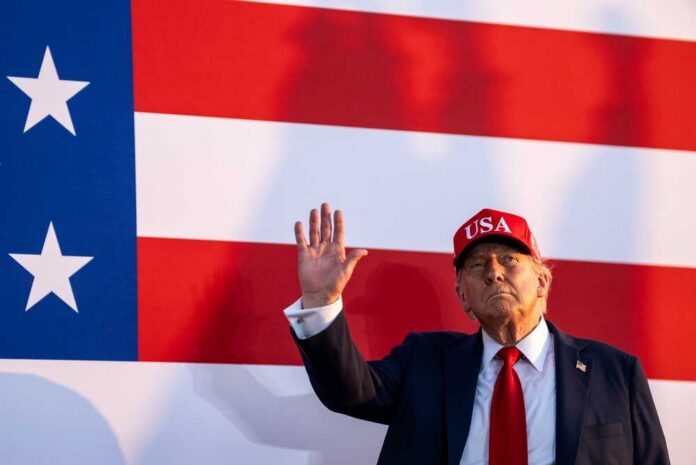
A late-night Truth Social post from President Trump just turned a Texas Senate primary into a national test of whether loyalty to one man now outweighs experience, electability, and basic trust in government.
Watch the video below this post
Story Snapshot
- President Trump endorsed Texas Attorney General Ken Paxton over incumbent Senator John Cornyn in the Republican runoff, despite pleas from party leaders to back Cornyn.
- Trump framed Paxton as a “MAGA warrior” who stood by him when it counted, turning the race into a referendum on personal loyalty rather than record or ethics.
- Cornyn and his allies warn Paxton could lose the general election and drag down other Republicans, highlighting growing cracks inside the party.
- For many frustrated Americans, the fight reinforces a fear that both parties now serve political tribes and donors, not citizens who just want competent, honest government.
Trump Picks Paxton And Makes Loyalty The Litmus Test
President Donald Trump used Truth Social to give what allies called a “complete and total endorsement” to Texas Attorney General Ken Paxton in the Republican Senate primary runoff, snubbing long-serving Senator John Cornyn just days before the vote.[1][2]
Trump praised Paxton as an “America First patriot” and “true MAGA warrior,” saying he had seen Paxton “tested at the highest and most difficult levels” and calling him a “WINNER.”[1] Trump’s message cast the contest as a choice between his movement and the old guard.
Trump justified his move largely on the grounds of personal loyalty, stressing that Paxton backed him when it mattered, while Cornyn was “very late” in offering support and once suggested Trump’s time had passed after the 2020 election.[1][2]
That rationale fits a pattern in which high-profile endorsements in party primaries serve as tools to reward allies and punish skeptics, rather than as neutral guidance about who will govern best. In a low-turnout runoff, that kind of signal can matter more than policy white papers or résumés.
Cornyn’s Establishment Case Collides With Grassroots Anger
Senator John Cornyn answered Trump’s snub by warning that Paxton could be “an albatross around the neck” of Republicans in November and might lose to Democrat James Talarico in the general election.[4]
Reporting on recent polling backs up part of Cornyn’s argument, with one survey showing Cornyn narrowly ahead of Talarico while Paxton is tied, suggesting the incumbent may be the safer bet statewide.[2]
Party leaders quietly urged Trump to endorse Cornyn, fearing Paxton’s legal baggage and polarizing image.
Cornyn’s allies argue that his experience, committee clout, and broader appeal to moderates and independents make him better positioned to protect the seat and help down-ballot Republicans.
Yet the first round of voting showed both men with substantial bases inside the party, with Cornyn finishing only slightly ahead of Paxton.[4]
Vice President J.D. Vance undercut Cornyn’s case by publicly backing Trump’s decision, saying Paxton “was there for the country” and “for the president” when it counted, and that this loyalty is why he earned the endorsement.[3] That message reinforces the idea that crossing the movement carries a price.
What This Texas Fight Reveals About A System Many Voters No Longer Trust
The timing of Trump’s endorsement—on the second day of early voting and less than a week before the runoff—means many ballots were likely already cast, making it harder to measure how much it truly shifts the outcome.[1][2]
There is no evidence yet from exit polls or voter files showing whether late-deciding Republicans changed their vote because of Trump’s post.[1][2]
What is clear is that both campaigns are treating the endorsement less as a debate over policy and more as a verdict on who sits inside the ruling circle of today’s Republican Party.
Trump Gives Ken Paxton ‘Complete and Total Endorsement’ in Texas Senate Primary Against John Cornynhttps://t.co/K10AN1Fyi1
— Karen Slaton (@KarenSlato45240) May 20, 2026
For conservatives and liberals alike who feel the federal government now answers to donors, consultants, and entrenched elites rather than ordinary citizens, this episode looks familiar.
A Senate race in a major state has become a tug-of-war between national power brokers, cable-news narratives, and factional score-settling, while questions many Americans care about—border security that actually works, affordable energy, the cost of living, and basic integrity in office—are filtered through whether a candidate is “with” or “against” one leader.[1]
The Texas runoff is not just about who wins a primary; it is another reminder of how far our politics has drifted from the idea of public servants accountable first to the people, not to a political brand.
Sources:
[1] YouTube – Trump Endorses Ken Paxton In Texas GOP Senate Primary Runoff
[2] YouTube – Trump endorses Ken Paxton in Texas GOP Senate runoff
[3] YouTube – VP Vance on President Trump Endorsing Ken Paxton in …
[4] Web – Trump endorses Ken Paxton in Senate GOP runoff