A 53-year-old American woman stood atop the world’s fifth-highest mountain, then died in a nightmare descent that shows how the most dangerous part of any Himalayan expedition isn’t the climb up—it’s the journey down.
Story Overview
- Shelley Johannesen, an Oregon-based expedition outfitter, died from hypothermia after a wet slab avalanche struck below 7,000 meters on Mount Makalu during her descent.
- The avalanche swept four climbers through a fixed-rope section, sending Johannesen and her Sherpa guide tumbling 400 meters down the mountain.
- Despite a middle-of-the-night rescue effort reaching her at 3 AM, she died an hour later as temperatures plummeted and her injuries proved too severe.
- Two survivors were airlifted to hospitals in Kathmandu, while Nepalese authorities continue investigating the incident amid an active spring climbing season.
When Success Becomes Survival
Shelley Johannesen summited Mount Makalu at 10:30 AM on May 9, 2026, alongside her partner David Ashley and two Sherpa guides.
The 8,485-meter peak represented a crowning achievement for the co-owner of Dash Adventures, a U.S.-based expedition company.
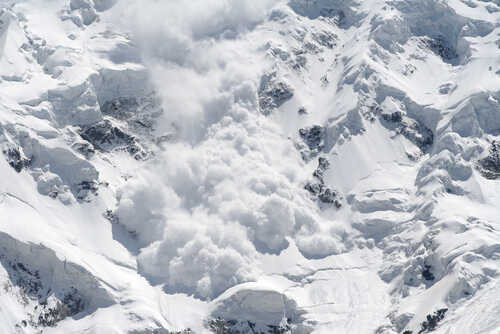
What should have been a triumphant descent turned catastrophic two days later when a wet slab avalanche struck the team below Camp 3.
The avalanche caught all four climbers in a fixed-rope section spanning 300 to 400 meters, violently separating the group and sending Johannesen and Sherpa guide Tawa plummeting down the steep North Face.
The Deadly Physics of Wet Snow
Wet slab avalanches represent a particularly insidious threat on high Himalayan peaks during the spring climbing season.
Solar radiation rapidly melts surface snow layers at 7,000 meters, creating unstable conditions where entire sections can release without warning.
Mount Makalu’s French Route features slopes approaching 50 degrees in sections, steep enough that even fixed ropes provide limited protection as thousands of tons of snow begin to move.
The 2026 season brought heavy April snowfall that created deep accumulation layers, precisely the conditions that increase avalanche probability as temperatures rise through May.
American Mountaineer, 53, Dies in Partner’s Arms After Getting Caught in Avalanche on World’s 5th-Highest Peak https://t.co/WRinzIAQrO
— People (@people) May 12, 2026
Race Against Hypothermia at Altitude
Rescue teams reached Johannesen and Tawa Sherpa at 3 AM on May 11, finding both climbers severely injured from their 400-meter fall.
Rescuers provided supplemental oxygen and attempted to warm Johannesen, but hypothermia at 7,000 meters presents a nearly impossible challenge.
At that altitude, the human body struggles to maintain core temperature even under ideal conditions.
Combined with fractures from the fall and the physical exhaustion of summiting days earlier, her condition deteriorated rapidly.
She died around 4 AM as dawn approached over the Himalayan range. The timing underscores a brutal reality: above 7,000 meters, the window for successful rescue narrows to hours, not days.
The Descent Trap
Mountaineering statistics reveal a sobering pattern: approximately 60% of high-altitude fatalities occur during descent, not ascent.
Climbers reach summits physically depleted, mentally fatigued, and often operating on diminished oxygen reserves.
Johannesen’s team had summited, rested at a high camp, then began descending on May 11 when the avalanche struck.
The fixed ropes that provide security on ascent become potential traps during avalanches, as climbers clipped into lines get swept along rather than thrown clear.
Experts note that while technology, such as helicopter evacuations, saves lives, the fundamental danger of descent continues to claim experienced climbers who have successfully conquered their objective.
Commercial Climbing’s Hidden Costs
The incident highlights tensions within Nepal’s approximately $500 million annual climbing tourism industry. Johannesen and Ashley operated Dash Adventures while climbing with 14 Peaks Expeditions.
This illustrates the interconnected web of commercial outfitters, Sherpa guide companies, and international clients that defines modern Himalayan mountaineering.
The Sherpa community bears disproportionate risk, with Tawa Sherpa suffering serious injuries requiring hospitalization alongside Ashley.
Nepal’s Department of Tourism issued over 400 Everest permits alone for the 2026 season, raising questions about whether commercial pressures encourage climbers to push forward despite hazardous conditions.
Insurance claims following such incidents can exceed $100,000 per climber, costs that ripple through the entire expedition ecosystem.
Mount Makalu has recorded approximately 90 deaths since detailed records began, with avalanches accounting for roughly 15% of fatalities according to the Himalayan Database.
This marks the second death on Makalu during the 2026 season, following Czech climber David Roubinek’s death from altitude sickness.
The previous year saw two Sherpas killed in a Makalu avalanche, part of a disturbing pattern that Nepali guide associations attribute partly to climate change increasing wet avalanche frequency by 20% over the past decade.
Calls for improved forecasting, enhanced rope systems, and better hazard pay for Sherpas gain urgency with each tragedy, though meaningful reforms remain elusive as the spring season continues with additional teams attempting summits under similar conditions that claimed Johannesen’s life.
Sources:
American Woman Dies in Avalanche on Makalu, Three Injured – ExplorersWeb
American Climber Dies in Avalanche on Makalu Descent – Tourism Info Nepal