

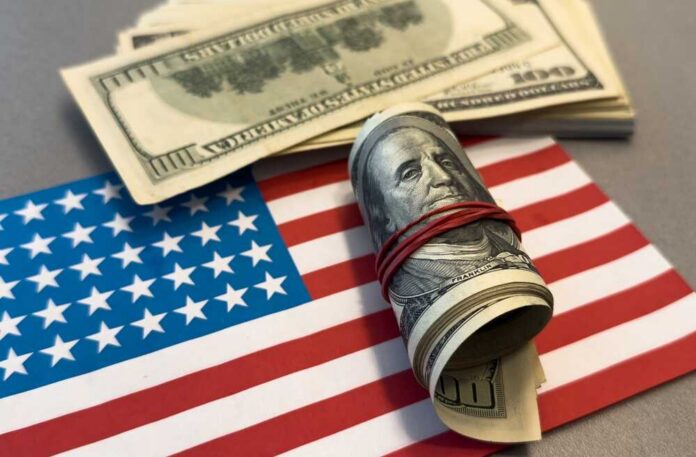
A nearly $1.8 billion “anti-weaponization” fund born from President Donald Trump’s dropped tax-return lawsuit is about to test how far Washington’s elites can bend the system while telling taxpayers it is all about justice.
Story Snapshot
- The Justice Department created a $1.7–$1.8 billion fund after Trump dropped his $10 billion lawsuit over leaked tax returns.
- A five-person committee handpicked by the president will decide who was “targeted” by government and deserves payouts.
- Key details of the settlement and funding source remain opaque, raising questions about legality and separation of powers.
- Critics across the spectrum see the fund as another example of elites using taxpayer money to reward political allies.
How Trump’s IRS Lawsuit Turned Into a Massive Payout Pool
News outlets report that after years of litigation over the leak of President Donald Trump’s tax returns, the former president agreed to drop his roughly $10 billion lawsuit against the Internal Revenue Service and the Treasury Department in exchange for the Justice Department creating an “anti-weaponization” fund of about $1.7 to $1.8 billion.[1][2] Commentators describe this as an unusual settlement structure because the money is not going to Trump himself, but into a new compensation program housed inside the federal government.
Legal analysts say the fund is designed to compensate individuals and organizations that claim they were unfairly targeted, investigated, or prosecuted by the federal government, particularly during the Biden administration.[1][2]
Trump’s allies have long argued that prosecutions of January 6 defendants, conservative activists, and certain political advisers were driven more by ideology than by neutral law enforcement. Supporters of the new fund frame it as a long-overdue acknowledgment that federal power has been used to punish the “wrong” political views.
Who Controls the Money and Why Transparency Fears Are Growing
Coverage of the agreement explains that the fund will be overseen by a five-person committee appointed by the president, with broad authority to design its own rules for who qualifies as a victim of government “weaponization.”[1][2] Reports indicate that this committee does not have to make public the names of those who receive money, though it must send confidential, quarterly reports to the attorney general.
[1] Individuals and organizations may apply, but the lack of mandatory public disclosure fuels concern that grants could quietly flow to politically connected insiders.
Analysts also highlight the timeline and size of the program. The fund is expected to distribute up to about $1.7 to $1.8 billion in taxpayer money over the next several years, with disbursements reportedly running until early 2028, after which unused money would revert to the federal treasury.[1] Critics ask why ordinary taxpayers, many already squeezed by inflation and high costs, should finance what looks to them like a political reparations pool created through executive negotiation rather than normal legislative debate.
Legal Questions: Can the Executive Branch Do This on Its Own?
Several legal experts interviewed in broadcasts stress that the public court record currently includes only a brief “term sheet” or outline of the settlement rather than a detailed, court-approved agreement spelling out how the fund will operate.[2]
Commentators note that the Internal Revenue Service and the Treasury Department reportedly did not submit full settlement documents to the judge or seek explicit judicial approval of the spending arrangement, even though those agencies have independent obligations to safeguard public resources and follow normal financial controls.[2]
Government watchdogs and Democratic critics argue that the fund appears to bypass Congress’s constitutional power of the purse by effectively committing up to $1.8 billion without a specific new appropriation.[2] They say that if the executive branch can carve out huge sums through settlements and then deploy them for broad policy goals, then every future administration could use lawsuits as a backdoor way to fund pet causes or reward allies, eroding checks and balances.
Supporters respond that the executive routinely settles cases and pays out claims, but opponents counter that those are usually narrow, case-specific payments, not sprawling discretionary programs.
Weaponization Narratives and a Shared Distrust of the System
This dispute taps into a deeper anxiety shared by many Americans on both the right and the left: a belief that those in power bend government machinery to protect themselves and punish opponents. Conservatives see the new fund as overdue relief for people they believe were hounded by biased prosecutors and bureaucrats. Liberals see it as proof that a sitting president can transform taxpayer dollars into a shield, and even a reward system, for his political network.[1][2]
In tandem with Trump dropping the suit against the IRS, the Department of Justice announced the creation of a $1.776 billion compensation fund.
Initial reports by NYT and CNN highlighted that Trump's team pushed for the IRS to halt active audits against the family as part of…
— aiman (@aimz0320) May 19, 2026
Whatever one’s politics, the structure of this deal reinforces a worrying pattern. Key decisions about nearly $1.8 billion are being made behind closed doors by a small circle of political appointees, with limited transparency and contested legal grounding.[1][2] For citizens already convinced that the “deep state” and political class play by different rules than everyone else, this fund will likely be read not as a fix for weaponization, but as another sign that those closest to power always manage to get paid.
Sources:
[1] YouTube – Justice Department announces nearly $1.8B fund to …
[2] YouTube – DOJ opens anti-weaponization fund: ‘Where is it coming from?’