

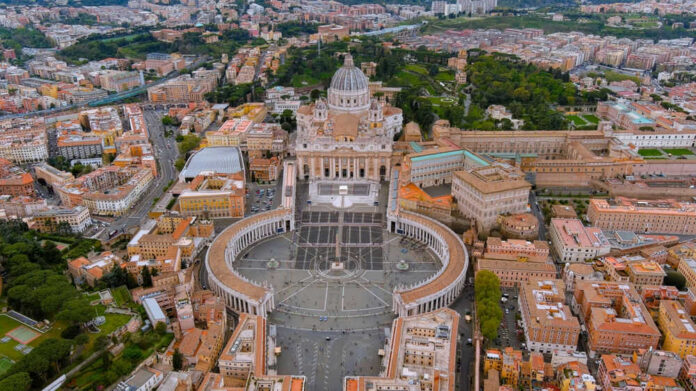
The Vatican is leveraging 21st-century technology to preserve and enhance one of Christianity’s most sacred sites while maintaining its 400-year heritage—a thoughtful approach to tradition that contrasts sharply with the left’s tendency to erase history rather than honor it.
Story Highlights
- AI-powered real-time Mass translations in 60 languages debut at St. Peter’s Basilica for 400th anniversary celebration
- High-tech structural monitoring replaces destructive renovation methods, ensuring the basilica’s preservation for 250+ years
- Expanded rooftop access, streamlined reservations, and weekly spiritual events enhance the pilgrim experience throughout 2026
- Cardinal Gambetti announces a yearlong program culminating in the November 18, 2026, Mass by Pope Leo XIV
Vatican Embraces Technology to Honor Sacred Heritage
Cardinal Mauro Gambetti announced a comprehensive modernization plan for St. Peter’s Basilica, marking the 400th anniversary of its consecration. The Vatican’s Archpriest unveiled AI-powered Mass translations in 60 languages, expanded rooftop access with historical exhibitions, and streamlined online reservation systems to reduce visitor queues.
The initiative contrasts Pope Julius II’s 16th-century approach—demolishing the original basilica—with modern preservation technology. This demonstrates how innovation can serve tradition rather than destroy it, a lesson lost on progressives who consistently prioritize trendy ideology over timeless values.
Cardinal Mauro Gambetti, Archpriest of St. Peter’s Basilica, announces several initiatives to mark the 400th anniversary of the Basilica’s dedication, including a multilingual platform for pilgrims and the launch of the new ‘Michelangelus’ font.https://t.co/mvRkKw2K0A
— Vatican News (@VaticanNews) February 16, 2026
Faith Meets Innovation in Preservation Efforts
The “Beyond the Visible” project, led by the energy company Eni and lasting over 4,500 hours, used geophysical surveys to scan the basilica’s foundations without invasive procedures.
These high-tech scans revealed 17th-century water-management solutions that architect Carlo Maderno implemented, confirming structural stability.
Cardinal Gambetti emphasized that this approach ensures the building’s viability for another 250 years, crediting technology for avoiding destructive methods.
The partnership between the Vatican and secular firms like Eni and Translated demonstrates practical cooperation focused on results—not the virtue-signaling public-private arrangements typical of leftist administrations that waste taxpayer dollars on ineffective programs.
Expanded Access Welcomes Global Pilgrims
St. Peter’s Basilica will offer enhanced visitor experiences throughout 2026, including expanded rooftop access featuring a larger snack bar and history exhibition.
Weekly “Spiritual Elevations” events begin on Saturdays at 3:30 PM, while a temporary Stations of the Cross display is inaugurated on February 20 during Lent.
The Dicastery for Communication partnered with tech firms to implement the AI translation platform, making liturgy accessible to pilgrims worldwide.
Meanwhile, the “Bernini and the Barberini” exhibition runs from February 12 to June 14, celebrating the artist’s contributions during Pope Urban VIII’s papacy. These initiatives prioritize genuine inclusion—welcoming believers of all languages—rather than the divisive identity politics the left calls “diversity.”
Anniversary Honors 400 Years of Catholic Heritage
Construction of the current St. Peter’s Basilica began in 1506 under Pope Julius II, replacing the 4th-century Constantinian structure. Designed by Bramante, Michelangelo, and Maderno, with Bernini adding the iconic piazza and interior elements, the 120-year project was consecrated on November 18, 1626, by Pope Urban VIII.
The basilica marks the tomb of St. Peter, venerated for over 1,950 years, and remains the largest church by interior volume. Pope Leo XIV will celebrate a culminating Mass on November 18, 2026, honoring this milestone.
The Vatican’s commitment to preserving sacred spaces reflects respect for history and faith—principles conservatives understand are essential to cultural survival.
Tourism and Faith Economy Benefit from Upgrades
The modernization initiatives follow the 2025 Holy Year, which saw the restoration of Bernini’s baldacchino and a surge in post-pandemic pilgrimage tourism.
Streamlined online reservations and enhanced amenities position Rome’s premier pilgrimage site to accommodate increased visitors while generating revenue through expanded facilities.
The 60-language AI translation system fosters inclusive worship without compromising doctrinal integrity, demonstrating how technology can serve religious freedom rather than undermine it.
This approach contrasts with the Biden administration’s fiscal mismanagement, which fueled inflation—here, Vatican partnerships with private firms like Eni and Translated leverage expertise without the reckless government spending that burdens taxpayers.
Sources:
For its 400th anniversary, St. Peter’s Basilica to get 21st-century upgrade, Vatican announces
400 years of St. Peters Basilica celebrated with Bernini exhibition
Vatican announces plans for 400th anniversary of St. Peter’s Basilica
Bernini and the pope who promoted him celebrated as Vatican marks 400 years of St. Peters Basilica
The 400th anniversary of the dedication of St. Peters Basilica