
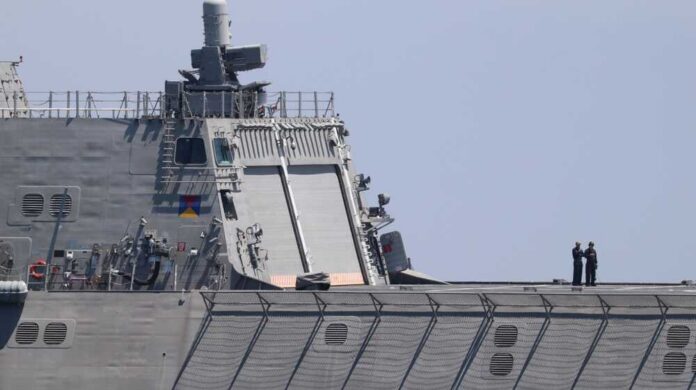
A U.S. Navy destroyer sat dead in the water for four days in the South China Sea, its sailors stuck without toilets, air conditioning, or hot food while the ship’s engineers scrambled to restart the power.
Quick Take
- The USS Benfold, a guided-missile destroyer, lost all power on July 24 after its generators failed while sailing with the USS George Washington Carrier Strike Group.
- Sailors went four days without propulsion, toilets, air conditioning, galley service, or clean drinking water.
- No crew members were hurt, and the Navy says the ship’s crew stayed steady through the ordeal.
- Tugs towed the Benfold to Subic Bay in the Philippines, where repairs wrapped up in August.
- It is the second Navy destroyer this year to lose power in the Indo-Pacific, after the USS Higgins in May.
What Happened Aboard The Benfold
The Navy’s 7th Fleet says the Benfold suffered what it calls an “engineering casualty” involving its generators on July 24.
Commander Matthew Comer, a fleet spokesman, confirmed the failure caused a full power loss while the ship operated in the South China Sea alongside the George Washington carrier group. The breakdown knocked out the ship’s ability to move under its own power for four straight days.
A power outage aboard a U.S. Navy destroyer in the South China Sea last month deprived the crew of drinking water, hot meals, functioning toilets and air conditioning for four days. pic.twitter.com/ZEEptraDl5
— Breaking911 (@Breaking911) August 19, 2026
Losing generator power on a warship means losing almost everything else too. Reports describe sailors going without working toilets, air conditioning, regular meals, and safe drinking water for the full four days.
Other Navy ships in the strike group reportedly sent over food and supplies while the crew waited out the repair effort in open ocean.
No Injuries, But A Long Wait For Repairs
Commander Comer said no sailors were hurt during the outage and praised the crew’s “resilience, grit, professionalism and unwavering steadiness” while they worked the problem. That matters.
A dead-in-the-water warship near contested waters is not just uncomfortable, it is a real safety risk if something else goes wrong while the ship cannot maneuver or defend itself at full capability.
Once the Benfold regained enough function to move, tugs brought the destroyer to Subic Bay in the Philippines for full repairs.
Coverage of the incident says the fix was completed there in August, weeks after the initial failure at sea. The Navy has not published a root cause. Officials have only confirmed the generators were involved, with the full investigation still open.
This Is Not An Isolated Incident
The Benfold is not the first Arleigh Burke-class destroyer to go dark in the Pacific this year. In May, the USS Higgins lost power and propulsion for several hours after what the Navy also labeled an electrical-system engineering casualty.
Two separate destroyers losing power within a few months of each other, in the same region, is the kind of pattern that deserves a closer look rather than a shrug.
Navy watchdogs have flagged deeper readiness issues in this destroyer class for years. A Pentagon inspector general audit tied Arleigh Burke-class casualties to sailor deaths and serious equipment damage in past incidents.
Separately, the Congressional Budget Office estimated these destroyers will spend up to 27 percent of their entire service lives tied up in maintenance and overhauls. That is a lot of downtime for ships meant to project American strength.
After a complete loss of power on the USS Benfold, sailors on board went four days with limited drinking water, and no working toilets or air conditioning.
https://t.co/S1qbQP6gpU— Central Oregon Daily News (@CODaily) August 19, 2026
An engineering casualty is a broad label. It tells the public that generators failed and power went out, but it does not say why. It could be worn-out parts, a maintenance schedule pushed too far, a design flaw, or plain bad luck. Until the investigation closes, the exact cause stays unknown, but the four-day outage itself is not in dispute.
Why This Matters For The Fleet
A destroyer without power in the South China Sea is a destroyer that cannot track threats, cannot maneuver away from danger, and cannot defend the ships around it.
In a region where American ships regularly operate near Chinese forces, that kind of vulnerability carries real weight beyond crew discomfort. Taxpayers fund a fleet expected to project strength, not drift helplessly for days at a time.
Congress and Navy leadership have already been warned about aging destroyer fleets facing rising maintenance burdens.
The Benfold incident, paired with the Higgins failure months earlier, gives lawmakers fresh, concrete evidence that the readiness concerns raised in prior audits are not theoretical. Fixing generators after the fact costs less than losing a ship’s edge when it counts most.
Sources:
cbsnews.com, stripes.com, youtube.com, usni.org, linkedin.com, timesofindia.indiatimes.com