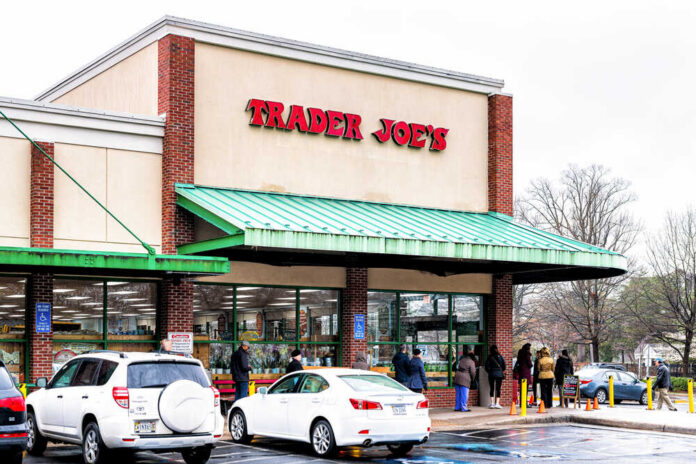
South Korea’s police moved fast against a familiar Trader Joe’s seasoning, and the reason is more unsettling than the snack aisle label suggests.
Story Snapshot
- Seoul police said the seasoning was pulled from online sales after a forensic test found trace morphine and codeine.
- Karrot, a major secondhand marketplace, added a transaction restriction and removed related listings.
- Police booked sellers on suspicion of violating South Korea’s Narcotics Control Act.
- The case fits a longer pattern: South Korea has treated this poppy-seed seasoning as restricted since 2022.
What Police Said Happened
Seoul Mapo Police Station said it blocked online sales of Trader Joe’s “Everything but the Bagel Sesame” after the National Forensic Service found morphine and codeine in the product’s poppy seeds. Police said they worked with Karrot to remove listings and added a “Transaction Restricted” notice for anyone trying to sell the seasoning.
South Korean police crack down on popular Trader Joe's seasoning after controlled substances detected https://t.co/1mbMRpFuYb
— FOX Business (@FoxBusiness) August 8, 2026
The enforcement was not abstract. Police identified a real marketplace, a real product, and a real legal problem.
They also said the seller had brought the seasoning into Korea from abroad and then listed it for resale, which gave authorities a domestic enforcement target rather than a simple border warning. A police official told reporters that even goods sold legally overseas can be barred under Korean law.
Why This Seasoning Drew Police Attention
The item looks like a normal pantry blend in the United States. But South Korea treats poppy-seed products very differently, because poppy seeds can carry trace opiate compounds under local drug-control rules.
Reporting from multiple outlets said the seasoning tested positive for morphine and codeine, the same substances police used to justify the crackdown.
This is why the story has kept resurfacing. The New York Times reported that South Korea has restricted the seasoning since 2022, and later reporting repeated that travelers still try to bring it in as a souvenir.
Another outlet likewise said the product has been prohibited there since 2022, and that people are surprised when a common grocery item becomes contraband at the border.
The Law Side Is the Whole Story
South Korean authorities framed the issue as a narcotics case, not a food-label dispute. Police said they booked the seller on suspicion of violating the Narcotics Control Act.
That matters because the product’s everyday image can hide the legal reality: a food item can still be treated as a prohibited import if its ingredients fall under drug-control rules.
That legal point also explains the public confusion. In the United States, the seasoning is sold as an ordinary flavoring. In South Korea, the same product can trigger seizure, sales blocks, and criminal investigation.
The United States Embassy in Korea also warns that food products containing poppy seeds, including bagel seasoning blends, are considered illegal in Korea.
The strongest public reporting still comes through police statements, not a full released laboratory file. That leaves some technical questions open, including the exact test method and the measured amounts.
But the core enforcement record is clear enough: Korean police said the seasoning contained prohibited substances, blocked its sale, and treated it as a narcotics-linked import problem, not a harmless spice mix.
Sources:
foxbusiness.com, cleveland.com, en.yna.co.kr, reddit.com