A rare public rebuke from inside Trump’s own party shows how quickly immigration can turn into a fight about faith, loyalty, and political power.
Story Snapshot
- Sen. Lindsey Graham criticized Donald Trump’s escalating rhetoric toward Pope Francis, warning it risked becoming a “holy war” that could alienate Catholic voters.
- The clash began after Pope Francis called Trump’s mass-deportation plans “madness,” prompting Trump to accuse the pontiff of “defaming” the U.S. and promoting “open borders.”
- The feud cooled after the 2024 election, but church-state friction remains a live issue as Trump’s second-term immigration agenda collides with Vatican messaging.
- Catholics remain a pivotal voting bloc, especially in swing states, and their priorities often split between cultural issues and economic concerns.
Graham’s warning signaled an unusual crack in GOP message discipline
Sen. Lindsey Graham went public in October 2024 with a message most politicians avoid: stop picking fights with a major religious institution.
Graham, typically a reliable Trump ally, said Trump’s exchanges with Pope Francis looked like a “holy war” and urged de-escalation.
The timing mattered. The dispute unfolded in the heat of the 2024 campaign, when Republicans were actively courting Catholic voters and trying to keep the coalition focused on inflation, energy, and border security.
Senator John Kennedy told Fox he loves Trump but opposes his holy war with Pope Leo XIV. The Louisiana Republican calls the feud a distraction after Trump's social media rant against the pontiff.https://t.co/FlWEJe4AWq
— tomwellborn3rd (@TomWellborn3) April 19, 2026
Graham’s intervention also highlighted a deeper, bipartisan frustration many voters share: politics now swallows everything, even religion.
How the Trump–Pope clash reignited: deportations, rhetoric, and “open borders”
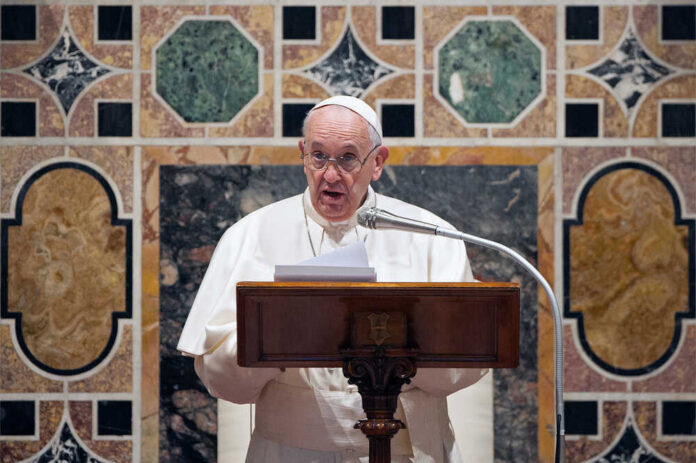
Pope Francis’s comments came during an October 2024 trip, when he criticized harsh anti-migrant rhetoric and described Trump’s deportation plans as “madness.”
Trump responded on Truth Social by accusing the Pope of “defaming” the United States and portraying the pontiff as sympathetic to “open borders,” which Trump said had harmed the world.
The argument wasn’t about a technical bill or a funding line item; it was about competing moral frameworks for immigration enforcement and national obligation.
The history between Trump and Pope Francis made the flare-up easier to predict. During the 2015–2016 cycle, the Pope criticized border-wall politics in terms of Christian duty, and Trump replied sharply.
The relationship later saw moments of reduced tension, including diplomatic engagement after Trump took office.
But immigration repeatedly pulled the two sides back into conflict—especially when enforcement proposals were framed not only as policy, but as a statement about national character and compassion.
Why Catholic voters became the strategic center of gravity
Catholics represent a large share of the American electorate and can be decisive in close contests, particularly in battleground states.
The 2024 context added another layer: the post-Dobbs landscape elevated abortion policy for many voters, while inflation and the border dominated day-to-day concerns.
Catholics are not monolithic, and analysts debated how much the Trump–Pope feud could move votes—especially among Hispanic Catholics who may weigh immigration differently than other Catholic subgroups.
The GOP’s broader 2024 strategy also aimed to reassure religious voters that the party’s “America First” approach did not mean hostility toward faith. Trump’s ticket emphasized outreach, including highlighting figures with Catholic ties.
That made the optics of a public clash with the Vatican especially risky, even if many conservative voters viewed the Pope’s criticism as political. Graham’s warning effectively acknowledged that symbolism can matter as much as policy—particularly when elections are won on margins.
Where things stand in 2026: quieter rhetoric, unresolved policy tension
After Trump won the 2024 election, the feud largely went dormant in the public eye. Trump later praised the Pope on topics like China while sidestepping immigration.
Pope Francis continued broad appeals for migrants without repeatedly naming Trump. Graham, for his part, shifted attention to border-security legislation and did not keep the dispute alive. The absence of new flare-ups suggests both sides recognized the downside of prolonged escalation.
Even so, the underlying conflict did not disappear: Trump’s second-term immigration priorities and the Vatican’s moral framing of migration still pull in opposite directions. For those who prioritize sovereignty, rule of law, and worker stability, mass illegal immigration can feel like a direct attack on national cohesion and wages—especially when Washington fails to enforce existing rules.
For critics, large-scale removals can raise humanitarian concerns. The main reality is political: institutions compete to define the “moral” position, and voters are left sorting through narratives.
Senate Republican knocks Trump over ‘holy war’ with popehttps://t.co/8ImUUspk5f
— The Hill (@thehill) April 20, 2026
The bigger takeaway is that fights like this reinforce why so many Americans—left and right—think the system serves elites and institutions more than ordinary citizens.
When the government can’t deliver basic border control, fiscal discipline, or public trust, symbolic conflicts fill the vacuum.
In that environment, a single phrase like “holy war” can become a warning label for the era: politics has become so totalizing that even religious leaders and elected officials struggle to keep policy disagreements from turning into cultural combat.