One man’s refusal to follow simple checkpoint commands at Trump National Doral triggered the fastest kind of security lesson: comply first, argue later.
Quick Take
- A disruptive man was arrested at a Secret Service screening area at Trump National Doral in Miami.
- Reports say he ignored orders and made physical contact with a Secret Service agent.
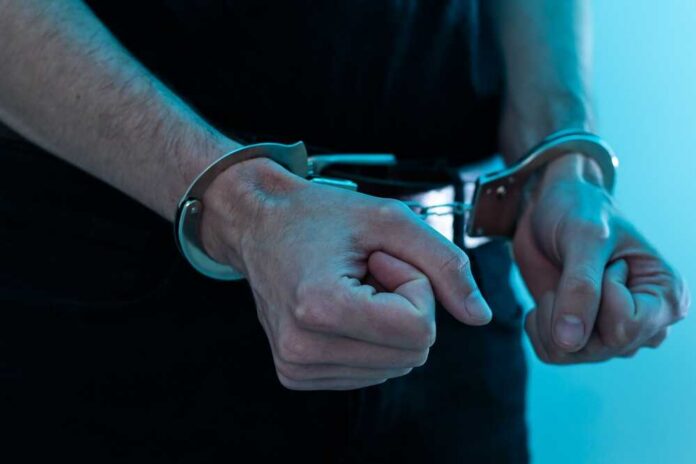
- He faced charges including disorderly conduct and resisting without violence, then went to local custody.
- Secret Service leadership said the incident did not affect the protectee’s security posture for upcoming visits.
A golf resort checkpoint became the real main event
The disturbance unfolded around 4:15 p.m. on a Saturday at a security screening area used to manage access at Trump National Doral, a high-profile property that routinely hosts major golf activity.
Secret Service personnel and local law enforcement staffed the checkpoint, a setup that signals a familiar reality at sites tied to protectees: you can be in a public-facing environment and still be inside a tight federal security bubble.
A man has been arrested after causing a disturbance at the Trump Doral National Golf Club in Miami on May 2. pic.twitter.com/IrfeEnHwne
— Firstpost (@firstpost) May 3, 2026
According to the Secret Service account carried by multiple outlets, the man became disruptive, refused to comply with orders, and escalated matters by making physical contact with an agent.
Those details matter because they draw a bright line between “loud” and “actionable.” In security work, physical contact collapses the benefit of the doubt. A loudmouth can be managed; hands-on behavior forces control, quickly and decisively.
Why “resisting without violence” still lands you in handcuffs
The charges reported—disorderly conduct and resisting without violence—sound almost mild to anyone who has watched crime shows. They aren’t. Disorderly conduct in a screening area can mean you’re interfering with operations designed to keep crowds orderly and protectees safe.
Resisting without violence often means refusing lawful commands, pulling away, or preventing an officer from doing the job without throwing punches. In a controlled checkpoint, the delay itself becomes the threat.
The booking location, Turner Guilford Knight Correctional Center, underscores how fast a moment of stubbornness can become a formal case. The Secret Service arrested the man and then transferred him to the Doral Police Department, which handled local custody and booking.
That handoff reflects normal jurisdictional choreography: federal agents neutralize the immediate situation, then local authorities process the criminal side unless the facts demand federal charges.
The Secret Service message was simple: the bubble held
Acting Special Agent in Charge Michael Townsend, speaking for the Miami field office, emphasized that the disturbance never impacted “the established security posture” for protectees and upcoming visits.
Reports also indicated Donald Trump had been on site earlier in the day with family but not at the time of the incident. That detail dampens the temptation to treat the arrest as a direct attempt on a protectee.
The stronger conclusion, based on available facts, points to a more ordinary problem that security teams face daily: someone treats a checkpoint like a suggestion box, discovers it’s a boundary, then tests it the hard way.
The conservative common-sense angle: rules matter most at the door
American tend to prize ordered liberty: you can speak your mind, but you don’t get to shove past the guardrails that keep everyone else safe.
A screening point is one of those guardrails. People can complain about inconvenience all day, but security screening still isn’t optional when a site poses an elevated risk. The man’s motives remain unknown, so speculation doesn’t help. The clear behavioral lesson is: escalation starts where compliance ends.
Plenty of Americans over 40 remember when public life ran on clearer expectations: show respect, follow instructions, and handle disputes afterward. Checkpoints compress those expectations into seconds.
If you think a guard is wrong, the mature move is to step back, ask for a supervisor, and keep your hands to yourself. Touching an agent—especially in a heightened-security environment—forces an immediate and unavoidable response. That is prudence, not politics.
What this incident hints about security at public-facing Trump properties
Trump National Doral sits in a unique category: it functions like a resort, but it can flip into protectee-adjacent status without much warning, especially around major events. That dual identity creates friction. Visitors expect hospitality; agents prioritize control.
The PGA Tour event context raises the stakes because crowds expand, screening points get busier, and the opportunity for one person’s impatience to ripple outward grows. A single disruption can jam an entire flow line.
Man arrested at Trump's Miami golf club for disorderly conduct, Secret Service says https://t.co/ltYwKJvozM
— CBS News (@CBSNews) May 4, 2026
Limited data is available beyond the initial arrest and booking details, including the suspect’s identity and what happened after intake. That gap is normal in early reporting and, in a way, reassuring: the system didn’t need a dramatic public postscript to work.
The open question isn’t whether security held—it did. The question is whether more Americans will relearn the boring virtue that prevents most confrontations: cooperate first, contest later.