
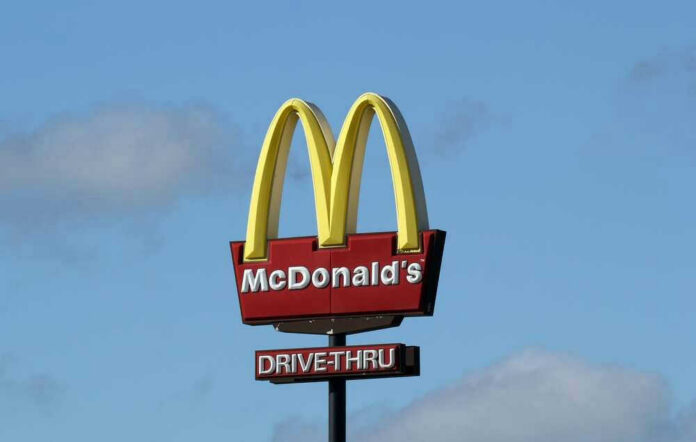
McDonald’s just axed the self-serve soda fountain you’ve loved for decades, but what hidden business genius lurks behind this quiet goodbye?
Story Snapshot
- McDonald’s will phase out self-serve soda stations nationwide by 2032, shifting to crew-served drinks for hygiene and efficiency.
- Change started with COVID-19 in 2020; now tied to store remodels with 20-30% of U.S. locations already converted.
- Refills are still available on request, preserving value while cutting waste and boosting service speed by 5-10%.
- International markets succeeded without them, posting 3.2% sales growth, signaling U.S. success ahead.
- Drive-thru and digital orders now dominate 70%+ of sales, making dining rooms—and soda fountains—relics.
Historical Rise of Self-Serve Soda Stations
McDonald’s introduced self-serve soda fountains in the 1970s and 1980s. These stations let customers refill drinks endlessly and mix flavors freely. Families gathered around them during meals, turning quick stops into casual hangouts.
This feature symbolized fast-food freedom, setting McDonald’s apart from rigid counter-service rivals. For decades, it defined the in-store experience across thousands of U.S. locations.
McDonald’s is quietly ditching a popular in-store feature nationwide https://t.co/pzw2ByW9BJ
— FOX Business (@FoxBusiness) May 4, 2026
COVID-19 Sparks the Initial Shift
COVID-19 hit in 2020, exposing hygiene risks from shared soda nozzles and levers. McDonald’s switched to crew-served drinks nationwide to limit touchpoints. Many stations stayed covered even after restrictions eased.
This temporary measure revealed operational upsides: less waste from overflow spills and unpaid refills, which cost stores up to $100,000 annually. The pandemic accelerated a rethink of dining room perks.
Strategic Rollout and Business Motivations
McDonald’s confirmed the full U.S. transition in 2023, targeting completion in 2032 during routine remodels. CEO Chris Kempczinski drives this under the “Accelerating the Arches” strategy.
Goals include uniform drinks across drive-thru, app, delivery, kiosks, and in-store orders. International markets ditched self-serve years ago, installing kiosks that cut labor needs by 10-20%. U.S. franchisees, who own 93% of stores, implement changes despite $1-2 million in remodel costs.
Stakeholders Navigate the Change
Franchise owners balance efficiency gains against upfront expenses, relying on corporate royalties for funding. Crew members prepare drinks behind counters, gaining workflow control through McDonald’s University training.
Customers request refills from staff, losing DIY autonomy but adapting to trends. Suppliers like Coca-Cola remain steady via volume contracts. U.S. President Joe Erlinger oversees operations, prioritizing 95% digital sales by 2027 amid labor shortages and rising wages.
Current Progress and Menu Evolution
By 2026, 20-30% of U.S. stores will serve crew-prepared drinks during remodels. International locations fully transitioned without sales dips. McDonald’s announced a “new era of beverages” in April 2026, rolling out Refreshers and crafted sodas nationwide.
Dining room traffic dropped from over 50% to under 20% of sales, as drive-thru and apps dominate. Full U.S. rollout continues gradually through 2032, with no plans to reverse.
McDonald’s is quietly ditching a popular in-store feature nationwide https://t.co/Hsj1eziNf1
— FOX Business (@FoxBusiness) May 3, 2026
Impacts and Expert Views Align with Common Sense
Short-term, customers face minor delays requesting refills; service speeds rise 5-10%. Long-term, standardized processes boost margins by 10-15% through labor efficiency and by shrinking underused dining rooms.
Low-income families lose a cheap perk, but hygiene trumps nostalgia—common sense post-COVID. Expert Debi Murray calls it “collateral damage” from irrelevant dining rooms. BTIG’s Peter Saleh praises scalability.
Competitors like Wendy’s and Taco Bell follow suit, with industry kiosks up 40% since 2020. McDonald’s stock holds steady, proving smart business over sentiment.
Sources:
McDonald’s is eliminating a popular customer perk nationwide: self-serving soda
McDonald’s is quietly ditching popular in-store feature nationwide