
The world’s seventh-largest oil producer just walked away from a six-decade alliance, and the shockwaves will reshape how the planet fuels itself.
Story Snapshot
- The UAE exits OPEC and OPEC+ effective May 1, 2026, ending over 50 years of membership and marking the first major departure in decades
- The decision allows the UAE to escape production quotas and increase output independently as global energy markets tighten amid Iran war disruptions
- UAE made the unilateral move without consulting Saudi Arabia or other members, signaling deep fractures in cartel unity
- The exit represents a potential turning point for OPEC’s ability to control global oil prices through coordinated supply management
Breaking the Cartel Consensus
The United Arab Emirates announced on April 28, 2026, that it would withdraw from both OPEC and the broader OPEC+ alliance. Energy Minister Suhail al-Mazrouei framed the departure as a “sovereign national decision” following careful evaluation of the country’s energy strategy. The timing strikes at a critical moment.
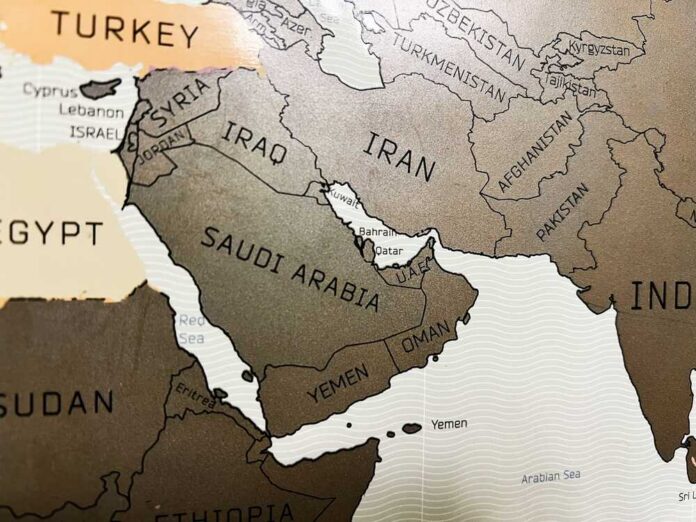
Global energy markets face severe supply constraints driven by the ongoing Iran war and persistent disruptions in the Strait of Hormuz, the vital chokepoint through which much of the world’s oil transits. The UAE’s move grants immediate freedom to boost production without cartel restrictions precisely when demand pressures mount.
National Interest Over Collective Coordination
Al-Mazrouei emphasized that flexibility drove the decision. “Being a country with no obligation under the group will give us flexibility” to meet future global demand, he stated.
The UAE reaffirmed appreciation for OPEC’s historical role but declared “the time has come to focus our efforts on what our national interest dictates and our commitment to our investors, customers, partners and global energy markets.” This represents more than diplomatic language.
The UAE made this choice without consulting other producers, including Saudi Arabia, OPEC’s de facto leader. That unilateral action signals reduced deference to the consensus-building processes that held the cartel together for decades.
The United Arab Emirates said it was quitting OPEC and OPEC+, dealing a heavy blow to the oil exporting groups and their de facto leader, Saudi Arabia, at a time when the Iran war has caused a historic energy shock and unsettled the global economy https://t.co/WDnS1uI42H pic.twitter.com/7cNqPwihK3
— Reuters (@Reuters) April 28, 2026
The Geopolitical Fault Lines
Long-standing tensions between the UAE and Saudi Arabia over production strategy created friction within OPEC well before this rupture. The Iran war intensified these pressures. The UAE criticized Arab states for insufficient protection against repeated Iranian attacks during the conflict, contributing to strategic reassessment.
Supply disruptions from the war created urgent pressure for flexible production responses that cartel quotas constrained. Saudi Arabia retains the most significant spare production capacity and functions as OPEC’s political engine, yet this structural advantage could not prevent the UAE’s departure.
The exit demonstrates that geopolitical instability and immediate security concerns can override traditional cartel coordination incentives.
Market Implications and OPEC’s Uncertain Future
The UAE committed to bringing additional production to market gradually, aligned with demand and market conditions. This measured approach aims to reassure markets about stability even as the country claims new freedom. Yet the precedent poses profound questions. If a major producer can walk away during a supply crisis, what prevents others from following?
OPEC loses not just production discipline from a significant member but also the credibility that collective action remains viable. Global oil consumers may benefit from increased supply and competitive pricing if the UAE expands output. Energy-dependent economies, however, face potential volatility as OPEC’s stabilizing influence diminishes and production coordination fragments.
A Win for American Energy Interests
Analysts characterize the UAE exit as a “heavy blow” to OPEC arriving at the worst possible moment. Some observers note the move represents a “big win for US President Donald Trump,” who has long criticized OPEC for inflating prices through coordinated supply restrictions.
The Trump administration views increased production flexibility outside cartel control as favorable to American interests and global consumers. The UAE’s decision aligns with a broader American preference for market-driven oil pricing rather than cartel manipulation.
Whether intentional or coincidental, the timing benefits U.S. energy policy objectives at a moment when supply security dominates strategic thinking.
The UAE’s exit reflects a calculated bet that independent action serves national economic objectives better than cartel membership during periods of supply disruption and geopolitical uncertainty.
The country invested significantly in domestic production capacity to meet evolving demand efficiently, and those investments now position it to capitalize on market opportunities without quota constraints. The decision embodies policy-driven evolution aligned with long-term market fundamentals rather than short-term political pressures.
Yet uncertainties remain. The full implications for OPEC’s future structure and influence cannot be definitively assessed at this early stage, and Saudi Arabia’s strategic response to the departure has yet to fully materialize.
Sources:
UAE announces decision to exit OPEC, OPEC+ – Gulf News
UAE says it will leave OPEC effective May 1 – Fox Business