

President Trump is signaling a weeks-long, escalating campaign against Iran—setting up a high-stakes test of American strength, energy security, and the limits of regime warfare.
Story Snapshot
- U.S. operations against Iran are expected to last weeks and intensify, according to reporting tied to Trump’s public remarks and ongoing strike activity.
- U.S. and Israeli forces launched coordinated strikes beginning Feb. 28, 2026, hitting Iranian leadership targets, nuclear-related sites, missile assets, and infrastructure.
- Iran retaliated with missiles, drones, and proxy attacks across the region, with the conflict reportedly involving multiple countries by early March.
- Strait of Hormuz threats and the prospect of U.S. escorts for oil traffic have raised the stakes for global energy markets.
Trump Sets the Timeline as the Air Campaign Expands
President Donald Trump’s public messaging has pointed to a campaign measured in weeks, not days, as U.S. forces back a widening strike effort against Iran. Reporting summarized in the research describes a four-week timetable discussed around March 1, 2026, alongside indications the operation could intensify.
The campaign began after Trump ordered a major operation on Feb. 27, with strikes commencing Feb. 28 in coordination with Israel.
As conflict in Mideast widens, US says attacks on Iran will last weeks and intensify https://t.co/ZDSXvj1EwE
— WPMT FOX43 (@fox43) March 3, 2026
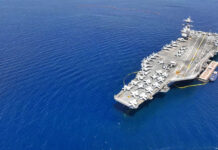
Military activity described in the research includes U.S. air and naval assets supporting strikes on Iranian missile and nuclear-related targets, with Iran responding through missiles and drones.
The research also references Trump’s comments that he would not rule out ground forces, a statement that underscores how quickly a limited air campaign can broaden. Public reporting remains fluid, and the research itself flags areas of uncertainty as events move fast.
Leadership Decapitation Claims and the Fog of Fast-Moving War
The research describes an unprecedented focus on Iranian leadership targets during the initial wave, including claims that Supreme Leader Ali Khamenei was killed on Feb. 28 and that additional senior figures were targeted.
It also reports a leadership reshuffle by March 3, with Mojtaba Khamenei cited as being selected as the new supreme leader, and President Pezeshkian described as heading provisional leadership with power decentralized to governors.
Information warfare and incomplete battle damage assessments are shaping public understanding. The research highlights a tension between sweeping claims—such as Trump’s statement that “48 leaders” were gone—and separate reporting that left questions about who survived.
The Institute for the Study of War’s analysis, as summarized, cautions that no single entity has full visibility and that early public information can be wrong, a key reminder for Americans trying to separate confirmed facts from wartime narrative.
Iran’s Retaliation Strategy: Missiles, Drones, Proxies, and Regional Spillover
Iran’s response, as described, has leaned on missiles, drones, and proxy forces across several theaters. The research cites attacks impacting U.S. positions and partners in the Gulf and Iraq, including reported strikes near Erbil and claims of attacks on numerous U.S. bases across the region.
It also describes Bahrain intercepting large numbers of incoming missiles and drones, underscoring the scale of the aerial threat and the burden placed on regional air defenses.
Iranian messaging in the research includes threats around the Strait of Hormuz and oil shipments—an issue that hits Americans at home through gasoline and inflation pressures. The research notes U.S. consideration of escorting oil through the strait if required.
For voters who watched the prior era’s energy policies drive up costs, Hormuz brinkmanship is a reminder that foreign policy and domestic affordability are directly connected, especially when global shipping lanes are threatened.
Civilian Risk, Infrastructure Strikes, and What Can Be Verified
The research reports substantial casualties and damage claims on multiple sides, including 555 Iranian deaths cited by the Iranian Red Crescent and six U.S. deaths referenced via U.S. military reporting summarized in the timeline.
It also describes strikes on multiple Iranian cities and references reports involving hospitals and media facilities. Because these claims carry serious legal and moral implications, the research emphasizes verification limits, noting cross-references from multiple outlets but acknowledging disputed or unverified details.
As Mideast conflict widens, US says attacks on Iran will last weeks and intensify https://t.co/brBRbFW6tQ
— Yuri Kageyama (@yurikageyama) March 3, 2026
The Institute for the Study of War assessment summarized in the research frames the strikes as aimed at preventing nuclear advancement, degrading missile capacity, and weakening Iran’s regional network. That framing matters for Americans concerned about national security without open-ended nation-building.
At the same time, the weeks-long timeline and intensifying tempo raise questions Congress and the public will demand answers to—especially as the conflict reportedly spreads to more countries and retaliation expands.
Sources:
Timeline of the 2026 Iran conflict
Iran Update Special Report: US and Israeli Strikes, February 28, 2026