President Trump deleted an AI-generated image portraying him as Jesus Christ from Truth Social after swift backlash from his own conservative base, exposing risks of unchecked AI in political messaging.
Story Snapshot
- Trump posted an uncaptioned AI image on Truth Social depicting him in a Jesus-like pose, sparking immediate outrage.
- Loyal supporters and conservative influencers criticized it as blasphemous, prompting rapid deletion.
- Trump defended himself by claiming he saw it as himself as a doctor tied to Red Cross work, blaming “fake news.”
- Incident highlights growing AI misuse concerns amid elite-driven misinformation eroding public trust.
Event Timeline
President Trump posted the uncaptioned AI-generated image on Truth Social, showing him in a robe with a red cross symbol that many interpreted as Jesus Christ. Backlash erupted immediately from his evangelical base and conservative influencers who deemed it disrespectful to religious values.
The post went viral due to Truth Social’s minimal moderation, amplifying calls for removal within hours. Trump deleted it shortly after, avoiding further escalation.
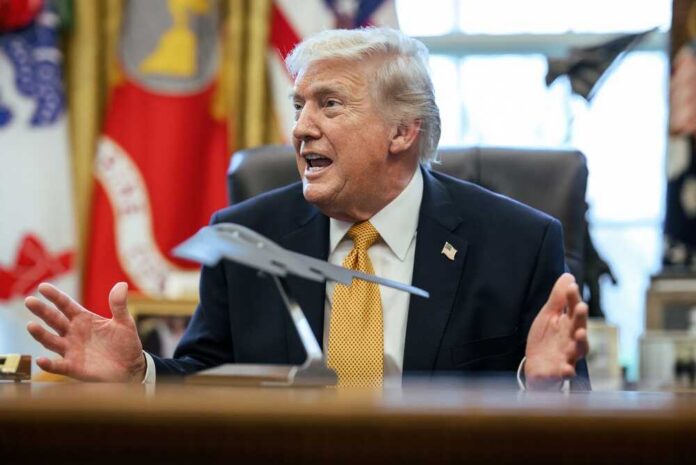
President Trump explains the reason behind his AI-generated image that appeared to show him as Jesus.
"It's supposed to be me as a doctor making people better, and I do make people better. I make people a lot better!" pic.twitter.com/Ub9IVjS3wb
— Jack (@jackunheard) April 13, 2026
Trump’s Explanation and Media Clash
Trump addressed the controversy publicly, insisting the image showed him as a doctor or Red Cross worker, not a religious figure. He stated, “It wasn’t depicted. It was me… I thought it was me as a doctor and had to do with Red Cross… only the fake news could come up with that one.”
He tied it to his record of “making people better,” referencing aid to a reporter’s husband. No White House comment followed, leaving staff involvement unclear.
This deflection fits Trump’s pattern of using Truth Social for direct, unfiltered engagement with supporters. Critics from his own side highlighted blasphemy risks, forcing accountability. The episode underscores how AI tools like Midjourney blur lines between satire and sacrilege, challenging traditional respect for faith.
Broader Context of AI in Politics
AI-generated political imagery has proliferated since Trump’s presidency, with tools enabling deepfakes and memes. Precedents include Trump’s 2024 muscular variants and retweets of himself as Pope. This incident echoes global hoaxes and Biden deepfakes, raising alarms over misinformation. Truth Social’s lax rules enabled quick spread, contrasting stricter platforms.
Conservative supporters balance loyalty with faith sensitivities, demonstrating base influence over leadership. Evangelicals felt offended, straining ties amid 2026’s polarized climate. Both left and right express frustration with elite manipulations, seeing AI as another tool of the deep state to undermine truth and values.
Trump on AI Jesus image: ‘I thought it was me as a doctor’ https://t.co/fgM7CbgNqP
— Bo Snerdley (@BoSnerdley) April 13, 2026
Implications for Trust and Regulation
Short-term, the backlash amplified scrutiny on AI in elections and social media. Long-term, it fuels demands for content labeling and watermarking to combat deepfakes. Political impacts include bolstered “fake news” narratives while eroding visual trust. Religious discourse polarizes further online.
Affected communities include Trump’s faith-based voters and AI ethics advocates. Minimal economic effects, but spotlights Truth Social’s role in unvetted content. This reveals federal government’s failure to address tech threats, frustrating Americans on both sides who seek honest leadership over elite games.