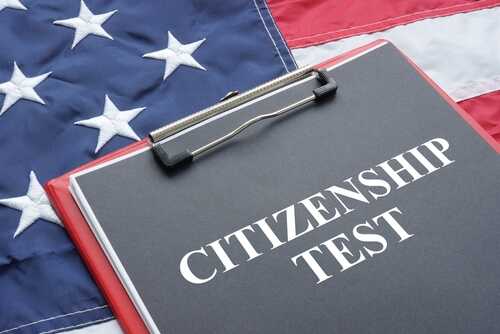
Trump administration officials declare the current U.S. citizenship test “just too easy” and prepare sweeping changes that could include essay questions and standardized testing centers, marking the most significant overhaul of naturalization requirements in decades.
See the video a bit further down this report.
Story Highlights
- USCIS Director Joseph Edlow announces plans to toughen citizenship test standards dramatically.
- Proposed changes include essay questions, standardized testing centers, and higher English proficiency requirements.
- Administration cites concerns about “coaching” and a lack of genuine constitutional understanding among applicants.
- The move represents a reversal of Biden-era rollbacks and an expansion of Trump’s “extreme vetting” immigration agenda.
Administration Targets “Coaching” and Low Standards
U.S. Citizenship and Immigration Services Director Joseph Edlow delivered a clear message at a Center for Immigration Studies conference in early September: the current naturalization test fails to assess whether immigrants truly understand American civics and values adequately.
Edlow criticized the existing system for being vulnerable to coaching and argued that many applicants pass without developing a genuine “attachment to the Constitution.”
The administration views this overhaul as essential to maintaining the integrity of American citizenship and ensuring that new citizens possess a meaningful understanding of their adopted country’s principles.
The proposed changes represent a dramatic shift from current practices, which rely primarily on multiple-choice questions covering basic civics and history.
Under the new system, applicants would face essay questions requiring written responses demonstrating their understanding of constitutional principles and American governance.
This approach aims to eliminate the memorization and coaching strategies that Edlow believes undermine the test’s effectiveness in measuring genuine civic knowledge.
Sweeping Changes to Test Format and Administration
The Trump administration’s vision extends beyond simply adding essay questions to include comprehensive reforms of how and where the test is administered.
Officials are considering establishing standardized testing centers, similar to those used for professional certification exams, which would replace the current system of USCIS office-based testing.
These facilities would provide consistent testing environments and reduce opportunities for irregularities that officials believe compromise the current process.
English proficiency requirements would also face significant enhancement under the proposed changes.
The administration argues that current language assessments fail to ensure immigrants can effectively participate in American civic life and democratic processes.
Higher English standards would affect both the speaking and writing components of the naturalization process, potentially requiring more extensive demonstration of language skills than the current brief oral examination.
Reversal of Biden Administration Policies
These proposed changes directly reverse course from Biden administration policies that rolled back similar Trump-era reforms implemented in 2020.
During Trump’s first term, USCIS introduced a more difficult citizenship test that increased the number of required questions and raised passing thresholds.
The Biden administration eliminated these changes in 2021, citing concerns about fairness and accessibility for immigrant communities, particularly older applicants and those with limited educational backgrounds.
The current initiative represents a more aggressive approach than the previous Trump-era changes, incorporating essay components and standardized testing infrastructure that were not part of the 2020 reforms.
This expansion suggests the administration learned from earlier implementation challenges and aims to create more durable policy changes that would be difficult for future administrations to reverse quickly.
Broader Immigration Enforcement Strategy
The citizenship test overhaul fits within Trump’s comprehensive “extreme vetting” immigration agenda, which emphasizes raising standards across all legal immigration pathways.
Edlow has indicated that the new testing regime would also support increased denaturalization efforts, referring more suspected fraud cases for review and potential citizenship revocation.
This dual approach of preventing unqualified applicants from gaining citizenship while reviewing existing citizens represents a significant expansion of immigration enforcement priorities.
Critics argue these measures constitute discrimination against vulnerable immigrant populations and contradict America’s historical role as a nation welcoming newcomers seeking better lives.
However, supporters contend that higher standards preserve the value and meaning of American citizenship while ensuring national security interests.
The administration maintains that a genuine commitment to constitutional principles should be demonstrable through rigorous testing rather than basic memorization of facts.