
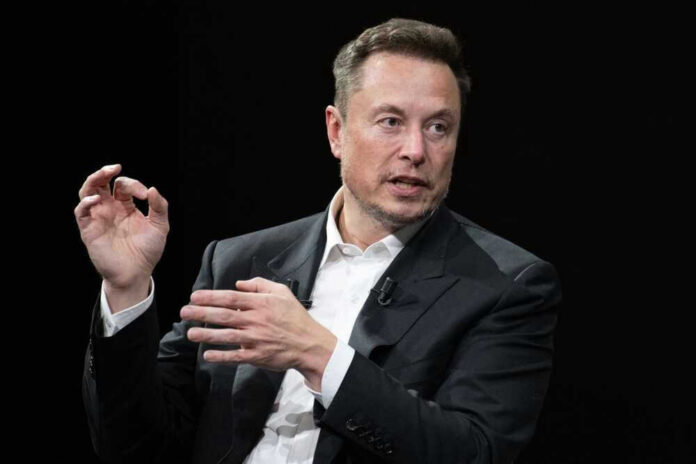
Tech billionaire Elon Musk now advocates for massive federal government income payments to counter AI-driven unemployment, a proposal that raises urgent questions about fiscal sustainability and government expansion as artificial intelligence threatens to eliminate up to 25 million American jobs.
Story Snapshot
- Musk endorses “universal high income” via federal checks to address AI job displacement affecting 17-25 million workers within five years
- Proposal claims AI productivity gains would prevent inflation despite massive government spending increases
- Economists sharply dispute the feasibility, warning the program “will bankrupt any government that attempts it”
- Boston Consulting Group predicts 10-15% of US jobs could vanish by 2031 due to artificial intelligence
Musk’s Federal Income Proposal Emerges
Elon Musk pinned a post to his X account in April 2026 declaring “Universal HIGH INCOME via checks issued by the Federal government is the best way to deal with unemployment caused by AI.” The Tesla and SpaceX CEO distinguished his proposal from traditional universal basic income by emphasizing prosperity rather than subsistence.
Musk argued that artificial intelligence and robotics would generate goods and services exceeding money supply growth, thereby preventing inflation despite massive federal expenditures. The proposal aligns him with OpenAI CEO Sam Altman and former presidential candidate Andrew Yang, who championed similar concepts.
Elon Musk says Universal High Income from the Federal government is the best way to deal with AI-driven unemployment.
"AI/robotics will produce goods & services far in excess of the increase in the money supply, so there will not be inflation." pic.twitter.com/TAmw5QlWM1
— The Crypto Times (@CryptoTimes_io) April 17, 2026
Job Displacement Projections Fuel Debate
Boston Consulting Group released projections in April 2026 estimating 10-15% of United States jobs could be eliminated within five years, affecting approximately 17-25 million workers. This forecast intensified discussions among tech leaders and policymakers about managing technological unemployment at unprecedented scale.
Unlike previous automation debates focused on manufacturing, current AI capabilities threaten white-collar positions across finance, legal services, healthcare administration, and creative industries. The sheer magnitude of potential displacement has prompted serious consideration of interventions previously dismissed as impractical or economically unsound.
Economic Viability Questioned by Experts
Economists sharply challenged Musk’s claims about inflation-proof government spending. One economist stated bluntly that “Elon Musk’s universal high income will bankrupt any government that attempts it,” arguing that AI productivity gains do not automatically translate into price stability when money supply dramatically expands.
James Ransom from University College London advocated for worker retraining instead, noting “If we can afford generous universal high income, we can afford to retrain and reskill—and the evidence suggests that’s what most people actually need.”
These criticisms highlight fundamental disagreements about whether direct payments or skills development better serve displaced workers.
Personal finance experts told Business Insider that Musk’s messaging was “dangerous and misleading,” emphasizing that effective distribution of AI-generated economic gains requires deliberate government policy frameworks rather than automatic market outcomes.
The experts noted that without proper implementation mechanisms, productivity increases could concentrate wealth among AI system owners while leaving displaced workers without sustainable income sources. This concern resonates with Americans across the political spectrum who increasingly distrust both corporate and government elites to manage technological transitions fairly.
Alternative Perspectives on AI Economics
Karl Widerquist from Georgetown University-Qatar validated aspects of Musk’s reasoning, confirming that automation has reduced the GDP percentage required for universal income programs. Peter Diamandis proposed that universal high income becomes viable through AI-driven cost reductions in food, energy, healthcare, and education rather than increased payment amounts.
Under this framework, a $3,000 monthly check could represent genuine prosperity if AI simultaneously reduces living costs. Andrew Yang tweeted support, stating “It’s clear that AI will wind up funding universal income. Let’s make that happen ASAP.”
Elon Musk backs ‘universal high income’ to combat AI job losses https://t.co/ga1SGxM62X #FoxBusiness
— #TheRebelDemocrat (@ejnyamogo) April 17, 2026
The proposal exposes tensions between American principles of self-reliance and pragmatic responses to technological disruption. Conservatives traditionally oppose government dependency programs, yet many recognize that unprecedented AI-driven unemployment may require unprecedented solutions.
The reframing from “basic” to “high” income attempts to address these concerns by emphasizing abundance rather than welfare.
However, fundamental questions remain about whether such programs reduce human initiative, whether government can effectively administer massive income transfers, and whether elite tech billionaires proposing expanded government dependency should be trusted given their financial interests in AI acceleration.
Sources:
Elon Musk backs ‘universal high income’ to combat AI job losses