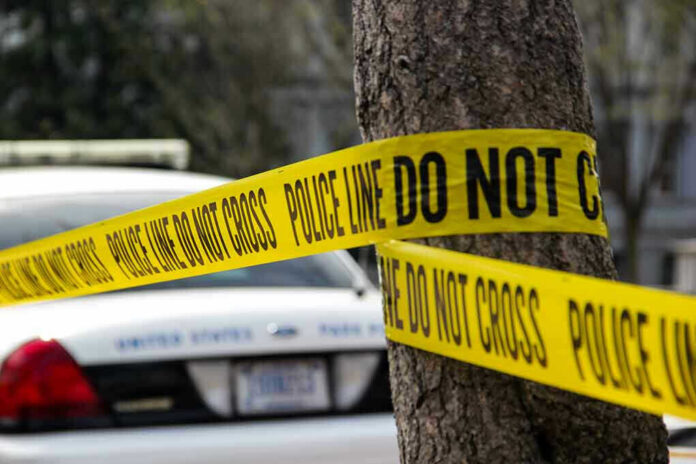
A janitor’s call about a bad smell in a quiet Queens school ended with a decomposing body pulled from deep inside the chimney.
Story Snapshot
- Human remains were found inside the chimney at P.S./I.S. 113 Anthony J. Pranzo in Glendale, Queens.
- An exterminator traced a foul odor, opened the ash dump, found a shoe, then felt a human foot.
- The school was closed for summer construction, with no students or staff inside when police arrived.
- The Office of the Chief Medical Examiner must still confirm identity and cause of death, and the case is under active New York City Police Department investigation.
A routine odor call turns into a crime scene inside a school chimney
Police officers and crime scene investigators did not show up at P.S./I.S. 113 in Queens for a lockdown drill or a bomb scare. They came because a janitor smelled something wrong coming from the chimney and called an exterminator to check for dead animals.
The exterminator followed the smell to the ash dump, opened it up, saw a shoe, and then felt what turned out to be a human foot. That moment turned a normal summer maintenance visit into a full-scale death investigation.
New York City Police Department officers responded around 9 a.m. to a 911 call reporting possible human remains at the school. The building, P.S./I.S. 113 Anthony J. Pranzo, sits in Glendale, Queens and was closed for the summer for construction and repairs.
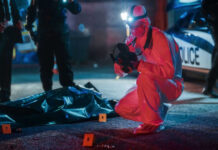
When officers arrived, they found human remains inside the chimney, not in a hallway or classroom, but hidden inside the building’s old infrastructure. Detectives from the New York City Police Department Crime Scene Unit stayed on site to secure the area and start documenting every detail.
What investigators know and what they still do not know
Reporters love to jump to conclusions in a case like this, but the confirmed facts are tighter than the headlines. As of the afternoon of the discovery, police said no identification had been made and no cause of death had been determined.
The Office of the Chief Medical Examiner is now responsible for figuring out who this person was and how they died. That means an autopsy, toxicology tests, and likely DNA work if fingerprints are not usable because of decomposition.
The remains were found in the chimney’s ash dump, a low-access point where soot and debris collect. That detail matters. A person usually does not accidentally end up in an ash dump. Someone had to enter the chimney or be placed there.
How exactly that happened is still unknown. Investigators must study the chimney structure carefully, look for entry points on the roof or in boiler rooms, and determine whether construction scaffolding provided easier access over the past year. This is slow, careful work, and pressure for quick answers does not change the physics of bricks and steel.
A closed school, a decomposing body, and rising community anxiety
The school had dismissed students for the summer the Friday before the discovery. City education officials said clearly that there were no students in the building when the remains were found and that the campus was closed for construction.
Contractors, not children, were the main people on-site. Detectives planned to question the workers and check if any of their employees were missing. That is simple: if a body is found in a work zone, you start by asking about the people who work there every day.
Exterminator finds human remains in chimney of Queens middle school https://t.co/JGahOfHoSp via @gothamist
— leonie haimson (@leoniehaimson) July 1, 2026
Parents and neighbors reacted with shock when they heard a body had been found in a chimney at their local public school. New York City Public Schools called the discovery “deeply upsetting and concerning” and promised support for the school community while police investigate.
From this point of view, clear facts and calm leadership matter most. The public needs straight answers about safety, not vague reassurances. The building is old, it is under repair, and something went very wrong inside its walls. People deserve to know how and why.
Balancing media drama with hard questions and basic common sense
Television segments and social media clips have framed the case with words like “terror” and “gruesome,” leaning into shock value. That hype may pull clicks, but it does not solve the case and can push officials to speak before they have real evidence.
A Facebook post even labeled the discovery a “homicide” without public proof, showing how fast some outlets jump from mystery to murder.
The harder, less glamorous questions sit under the surface. Was this person connected to the school at all or simply using the site during construction? Did weak security around scaffolding and roof access invite trespassers, or worse, create chances for foul play?
Why has the New York City Department of Education not yet publicly explained the safety plan for a building that was under repair all summer? Americans who care about basic accountability should insist that those questions be answered, even after the cameras move on.
What happens next inside the investigation
The next important steps do not happen on television. They happen in labs and interview rooms. The Office of the Chief Medical Examiner must finish its work: identify the victim, establish a timeline of death, and rule on cause of death.
New York City Police Department detectives will cross-check missing-persons reports, talk to contractors, review any available camera footage around the school, and reconstruct how someone ended up in a chimney ash dump. These tasks are slow but basic parts of any serious investigation.
This case also fits a wider pattern that older cities face. When schools and public buildings go through long, messy repairs, safety corners sometimes get cut and people slip into dangerous spaces.
Bodies are sometimes found months later in walls, boiler rooms, or other hidden spots only when a smell finally forces someone to look.
None of that excuses what happened at P.S./I.S. 113. It does remind us that “safe school” is not just about metal detectors and cameras. It is also about old brick, dark spaces, and whether adults are doing their jobs watching them.
Sources:
abcnews.com, abc7.com, people.com, facebook.com, ca.news.yahoo.com, x.com