
The most dangerous animal in Yellowstone is not the grizzly bear you fear, but the heavy, quiet bison that people keep walking toward with a phone in their hand.
Story Snapshot
- A 12-year-old was injured by a bison near Yellowstone’s Mud Volcano boardwalk.
- Bison have injured more visitors in Yellowstone than any other animal on record.
- Park rules demand at least 25 yards of space from large wildlife, including bison.
- Decades of data show most bison injuries happen when people ignore those rules.
What Really Happened On That Quiet Friday Morning
Around 9:15 a.m., near the Mud Volcano area just north of Fishing Bridge, a 12-year-old visitor was injured during an encounter with a bison.[4] Emergency crews took the child to a nearby hospital, and officials have not released their condition or the exact nature of the injuries.[4][6]
The National Park Service confirms the incident is under investigation and has withheld details about how close the child was, who was nearby, or what happened in the seconds before the bison reacted.[4][6]
12-year-old hospitalized after being injured by bison in Yellowstone National Park https://t.co/CLJoovR849 pic.twitter.com/IpuzbVvlQ7
— New York Post (@nypost) June 28, 2026
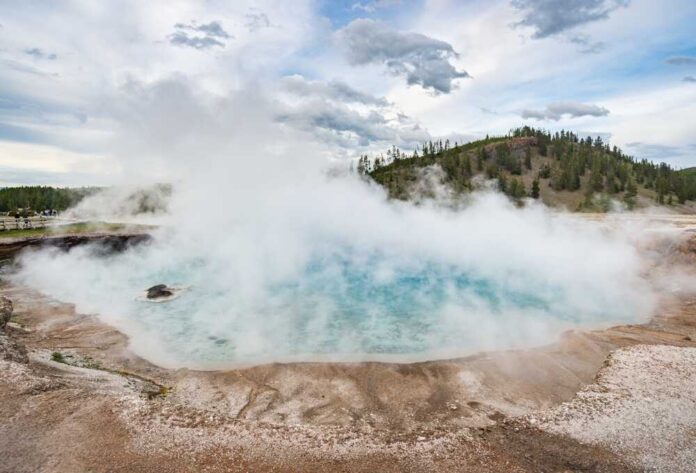
Mud Volcano is not a remote backcountry trail. It is a popular stop with short boardwalks that carry families, seniors, and bus tours over steaming vents and boiling pools, with bison often visible in the same landscape.[6]
That mix of easy access and wild animals is not an accident; it is what people pay to see. But it also means a large, unpredictable animal can be only a few steps away from a distracted crowd at any time, which is exactly why the rules there matter so much.[4][6]
Yellowstone’s Clear Rules And The Hard Math Of Risk
Yellowstone’s own regulations are blunt: stay at least 25 yards away from large animals like bison, elk, deer, moose, bighorn sheep, and coyotes, and 100 yards from bears, wolves, and cougars.[4][6] If an animal moves toward you, you are supposed to move away to keep that distance.[4][6]
Those numbers are not guesswork. They come from years of watching what happens when people get closer, then measuring the broken bones, puncture wounds, and helicopter flights that follow.[2][7]
Since 1980, bison have injured more pedestrian visitors in Yellowstone than any other animal.[7][8] After a spike of 33 bison-related injuries between 1983 and 1985, the park flooded visitors with flyers, signs, and warnings.
That campaign worked, dropping injuries to an average of 0.8 per year between 2010 and 2014.[8] But a Centers for Disease Control and Prevention review found every recorded bison injury in 2015 happened because people failed to keep the required 75-foot distance, often standing within 3 to 6 feet while taking photos.[7]
Why The Bison Is More Dangerous Than The Bear You Imagine
Bison do not stalk people like predators, but they defend their space with sudden, explosive force. Yellowstone warns that bison are unpredictable, run up to three times faster than humans, and will protect their territory when they feel threatened.[4][6]
Adult males can weigh around 2,000 pounds, with females around half that, which means even a short charge can throw a person into the air or crush them against the ground or a railing.[6] That power matters more than teeth when you are standing too close.
Peer-reviewed research on bison injuries shows a clear pattern: most victims actively approached bison or refused to move away when the animal came closer.[1][2]
Many were in groups of three or more, and nearly half were injured while taking photos.[1][2] A smaller number even admitted they knew they were too close.[1]
This is the uncomfortable truth: the typical bison injury is not a random attack in deep wilderness. It is a human choice, made in a developed area, with a camera out and warnings already posted nearby.
The Missing Details And The Battle To Shape The Story
In this case, officials have not said how close the child was, whether adults were crowding nearby, or if anyone ignored verbal warnings from rangers.[4][6]
That silence leaves critics room to claim the park failed to protect a vulnerable child, or that the 25-yard rule is not enough for such a powerful animal. Media headlines that stress “12-year-old injured” without context nudge readers to see a helpless victim and a careless bureaucracy, not a long-standing pattern of risky visitor behavior.[1][6]
‼️ BISON INJURY: A 12-year-old was hospitalized after being injured by a bison on Friday morning while visiting Yellowstone National Park. This is the first reported bison attack in Yellowstone this year.
Read more: https://t.co/gV7bIICZGQ pic.twitter.com/OEoNg3N7F6— FOX Weather (@foxweather) June 27, 2026
From this view, the core principle does not change because a child is involved: wild parks are wild places, and personal responsibility does not stop at the gate. Yellowstone prints the distance rules on flyers, posts them on signs, and repeats them in every release about wildlife injuries.[4][6][7]
When decades of data show most bison injuries happen after people ignore those rules, it is hard to blame the park for the consequences of choices made inside a clearly marked danger zone.
Sources:
[1] Web – 12-year-old visitor injured by bison at Yellowstone National Park
[2] Web – 12-year-old injured by bison at Yellowstone National Park – 6ABC
[4] YouTube – Bison injures 12 year old visitor in Yellowstone near Mud Volcano
[6] Web – A child visiting Yellowstone National Park in Wyoming was injured …
[7] Web – Yellowstone – (NEWS RELEASE) A 12-year-old visitor was injured …
[8] Web – 12-year-old injured by bison in Yellowstone National Park. https …