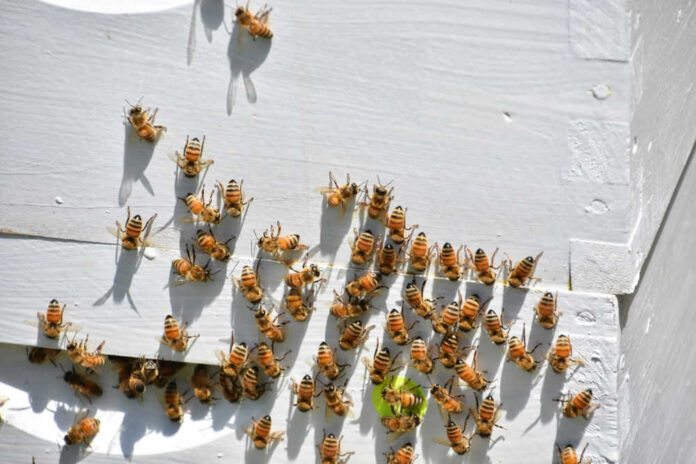
Millions of honeybees burst loose on a Texas freeway, and the rescue plan was foam.
Story Snapshot
- About 400 hives spilled on I-35 near downtown San Antonio, unleashing millions of bees [1].
- Firefighters used foam to reach an injured driver, which killed many bees at the scene [1].
- Responders reported no bees were recovered; most either died or flew off [1].
- A local beekeeper said most likely did not survive, though some could form new colonies [3].
What Happened On I-35 And Why It Escalated Fast
The semi rolled at the Finesilver Curve near downtown San Antonio, shutting down lanes on Interstate 35. Crews faced a crash site littered with broken bee boxes and a growing cloud of agitated insects.
Reports placed roughly 400 hives on the truck, with 20,000 to 25,000 bees per hive, which means millions were lost or crushed. Firefighters had to reach an injured driver. They used foam to suppress the bees and make a safe path through the swarm [1].
San Antonio Fire Department crews and a pest control company later said no bees were recovered. The bees either died in the wreckage or from the foam, or they escaped into the air and scattered. A beekeeper at the scene backed that account.
He said hives cannot be “pied pipered” back after a wreck, and that experience shows most colonies in such a spill do not survive. He added a few survivors might find new nest sites nearby [1][3].
Safety First Decisions And Their Tradeoffs
Emergency teams prioritize human life. On a city freeway, with drivers, medics, and police exposed, that means clearing a path and controlling the swarm fast. Foam does that. It smothers flying bees and reduces stings so medics can work.
Some viewers recoil at the kill, but the alternative is risk to people in open lanes and neighborhood yards. A wire report noted that the owner of the hives was not publicly identified, which also slowed the development of any specialized recovery plan [4].
Beekeepers often prefer a different playbook. When location and time allow, they right the boxes, set spare equipment, and wait for night. Bees return to dark, stable hives after sundown.
Recovery rates can climb if hives are intact and responders avoid bright lights and harsh chemicals. Extension guidance advises cooling stranded loads with water, calling local beekeepers, and removing gear after nightfall, with destruction as a last step if public risk remains high [12].
How Media Frames Collide With Field Reality
Headlines love “millions of bees” and “disaster.” That hook is not always wrong, but it can skip the part where many bees survive and re-cluster. The San Antonio case is hard to parse because official agencies did not publish a final tally of bee survival.
A local beekeeper estimated that most colonies were lost, while also saying some might rebuild nearby. Without recovery logs, that remains an experienced guess, not a certified count. The gap invites rumor and spin [3].
Other bee crashes show a range of outcomes. When crews stabilize boxes and wait for night, most bees often re-enter hives and can be moved. When crashes occur in dense urban areas or near hospitals, responders may choose foam to quickly end the threat.
That saves people but costs bees. Common sense says the right answer depends on location, weather, traffic, and how badly boxes were smashed. A one-size-fits-all storyline does not fit every wreck [12].
What A Measured Response Looks Like Next Time
Dispatchers should flag bee cargo the moment a call comes in. Incident command should set a cold zone fast and stop gawkers. Call local beekeepers right away and prepare spare hive equipment.
If traffic and weather allow, right boxes, shade the load, and use water to cool hives. Dim red lights help at night. If bees remain a hazard after best efforts, end the threat and document why. Publish an after-action note so the public can see the trade-offs [12].
Authorities in Texas have reported an incident in which a semitrailer transporting approximately 400 beehives overturned in a rural neighborhood, resulting in the release of a large number of honeybees into the surrounding area. The event occurred in a sparsely populated… pic.twitter.com/fchP1nmgi1
— Global World TV News (@GlobalC83910) June 23, 2026
Taxpayers deserve clear facts when public safety choices kill livestock that also serve farms. That means naming the cargo owner, logging hive counts, and stating what tactics were tried before using foam.
Transparency builds trust and deters inflated loss claims. It also respects working beekeepers who shoulder real risk moving pollinators for the country’s food supply. Smart policy protects people first while saving the bees we can, and proving it on paper [4][12].
Sources:
[1] Web – Millions of bees get loose after truck carrying 400 hives crashes in …
[3] Web – Millions of Bees Swarm Highway After Truck Carrying Multiple Hives …
[4] YouTube – Load of bees spilled during crash on I-35 likely headed to …
[12] YouTube – Saving bees after semitruck loaded with hives crashes in …