A federal judge said the government built a voter-screening machine Congress never allowed, and she hit the kill switch.
Story Snapshot
- A judge blocked the revamped federal citizenship check for voter rolls, citing privacy and voting rights risks [1]
- The court said Congress barred centralized databases like the one agencies tried to assemble [1]
- The SAVE system was built for benefits, not voter screening, and cannot confirm who a noncitizen is [5]
- States racing to purge voters with federal data risk false flags and wrongful removals despite safeguards [3][4]
The ruling that froze a federal voter-screening engine
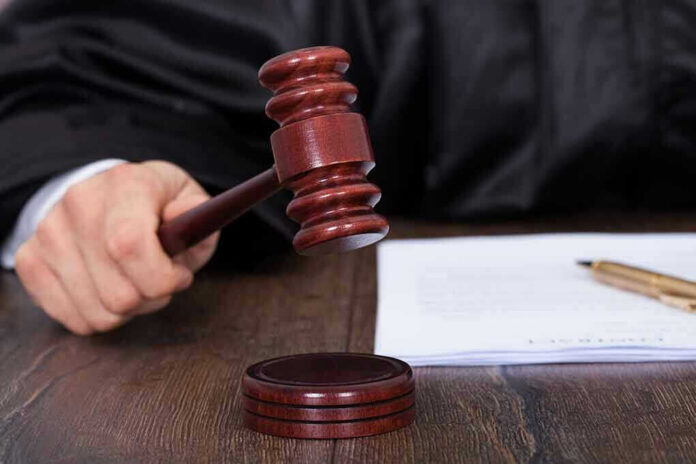
U.S. District Judge Sparkle L. Sooknanan blocked the government’s new use of an immigration status system for voter roll checks, saying it violated privacy rules and risked stripping citizens from the rolls.
The order noted that Congress barred the creation of such centralized databases and that agencies understood the conflict yet moved ahead anyway [1].
That finding strikes at the heart of the legal theory behind the program. It also signals courts will weigh privacy and accurate matching as part of voting rights.
The White House order that set this in motion directed the Department of Homeland Security and the Social Security Administration to compile “State Citizenship Lists” from federal records and transmit them to states ahead of elections [2].
The plan sought speed and scale. The court’s pause forces a slower path with more guardrails. The message is simple: election integrity measures must obey federal privacy law and must not sweep eligible voters into an error-prone dragnet.
What the SAVE system can and cannot prove
The Systematic Alien Verification for Entitlements program checks immigration records to verify their contents. It was built to verify eligibility for public benefits, not to police voter rolls.
Federal guidance explains it cannot confirm that a person is a noncitizen; it can only verify citizenship when records support that conclusion.
It also requires specific immigration identifiers to work as designed. Bulk screening of all voters does not fit that model [5]. That mismatch invites false leads.
Supporters say states can use SAVE to flag “possible noncitizens” and then follow up before removal. North Carolina’s elections board signed an agreement to check rolls and promises notice and an opportunity to respond before any action [4]. Those steps are better than instant purges.
They still rest on initial data that may be stale, mismatched, or incomplete. It says a flag is only as good as the inputs and the match rules that create it. If the front end is noisy, the back end must be cautious.
Where policy meets risk: errors, incentives, and politics
States moving to aggressive checks risk tagging citizens, including naturalized voters, as ineligible when federal files lag or contain old entries. Legal analysts warn that broad proof-of-citizenship schemes and database sweeps function as blunt tools that overshoot, affecting lawful voters [3].
Advocates of tighter checks claim many states already do this and call it routine. That skips the core legal question the court raised and bypasses the error-rate question most people care about [1]. The law and the math both matter.
Financial carrots add pressure. Proposed federal grant bonuses would reward states that adopt SAVE-based verification, nudging them toward speed over accuracy [1][3]. That incentive can clash with values of limited government and due process.
An approach would demand narrow targeting, transparent error metrics, and ironclad appeals. If Washington cannot show error rates, it has not earned the power to mass-screen voters with pooled personal data. The judge’s order reflects that restraint [1][2].
The path forward that balances integrity and liberty
Election officials need tools to keep rolls clean. They should use sources built for identity and address hygiene and reserve immigration files for case-by-case checks backed by clear identifiers.
Policymakers should demand an independent audit of any federal-state screening program, including public error rates, sample-match logic, and a record of how many flags are cleared for citizens at the end. If a system cannot publish those basics, it should not touch voter rolls at scale [3][5].
The Trump admin plans to withhold millions of dollars in federal funding from the DHS to states that resist rules aimed at beefing up election security.
….They must also run their voter roles through a citizenship verification database managed by DHS.
— 𝖬 𝗋 𝗌 𝖱𝖤𝖣 ❥❥🇺🇸🇺🇸🇺🇸 (@MRSRedVoteR) June 23, 2026
States that proceed should keep three hard rules. First, no one gets removed without direct notice, simple instructions, and months to respond.
Second, clerks must accept many forms of proof, not only passports or hard-to-find documents.
Third, every removal must log the exact data fields used so courts and the public can review them later. That is election integrity the American way: targeted, transparent, and accountable to the people, not to a black box [4][5].
Sources:
[1] Web – Judge blocks use of federal database to check citizenship, saying it …
[2] YouTube – Judge blocks Trump admin’s federal voter-screening database
[3] Web – Ensuring Citizenship Verification and Integrity in Federal Elections
[4] Web – States Already Enacting Harmful SAVE Act Policies, Requiring Proof …
[5] Web – State Board to Check Voter Rolls to Identify, Remove … – NCSBE.gov