

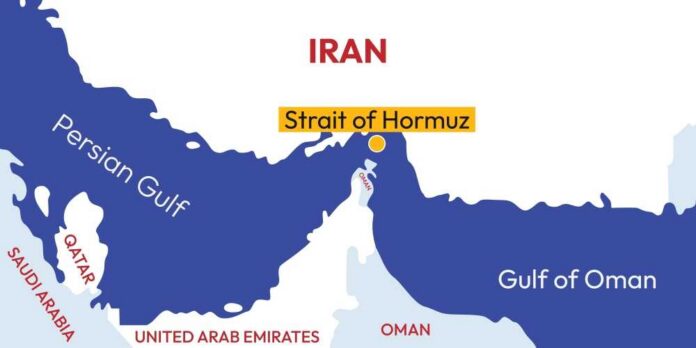
The United States has resumed strikes on Iran after fresh attacks on commercial ships in the Strait of Hormuz.
Story Snapshot
- U.S. Central Command said its forces carried out strikes in response to Iran’s attack on M/V Ever Lovely on June 25.
- Central Command later said it launched additional strikes after another commercial ship attack on June 26.
- The U.S. said the targets included missile and drone storage, radar, communications, air defense, and minelayer capabilities.
- The confrontation fits a broader pattern of maritime retaliation in the Strait of Hormuz, where each side uses force to signal limits without widening the war.
U.S. Response Follows Two Ship Attacks
U.S. Central Command said its forces struck Iran on June 26 as a “powerful response” to the attack on the Singapore-flagged M/V Ever Lovely the day before. The ship was transiting the Strait of Hormuz when Iran hit it with a one-way attack drone, according to the U.S. account.
Reuters reported that the U.S. military described the strike as a response to Iranian drone activity against commercial shipping and said the operation had concluded. Central Command later released a second statement saying it had carried out additional strikes after what it called Iran’s latest commercial ship attack.
What the Strikes Hit
Central Command said U.S. aircraft targeted Iranian missile and drone storage locations, coastal radar sites, communication systems, air defense assets, and minelayer capabilities. Those targets show a clear message. Washington aimed not just to punish, but to reduce Iran’s ability to threaten ships in the strait again.
That choice matters because the Strait of Hormuz is one of the world’s most important shipping lanes. When the waterway comes under pressure, the cost reaches far beyond the Gulf. Oil markets, insurance rates, and global trade all feel the impact fast, and that is part of why these clashes carry such weight.
Why the Strait of Hormuz Keeps Flare-Ups Small but Dangerous
This episode follows a pattern that has become familiar in the wider U.S.-Iran conflict. Both sides have used maritime attacks, retaliatory strikes, and public statements to draw lines without triggering a full regional war. That makes each new exchange easy to underestimate at first and hard to contain once it starts.
Iran said its forces responded after the U.S. strike, while Reuters noted Tehran gave no details about what may have been hit. That gap matters because it leaves both sides claiming success without full proof in public. Still, the U.S. position was explicit: Iran attacked commercial shipping first, and Washington answered in kind.
BREAKING: U.S. Central Command says American forces launched a new wave of strikes Tuesday, hitting more than 80 targets across Iran after Tehran’s latest attacks on commercial vessels in the Strait of Hormuz. The operation targeted Iranian air defenses, command-and-control… pic.twitter.com/cqiZ3wNsMt
— Breaking911 (@Breaking911) July 8, 2026
The Strategic Signal Behind the Operation
Central Command said it remained present to support safe passage for ships crossing the strait. That line turns the operation into more than a single military event. It is also a warning that the United States sees freedom of navigation as something it is willing to enforce, even after repeated clashes.
The political effect is immediate, too. Each strike raises the stakes for Gulf states, shippers, and insurers, while also testing how far Iran is willing to push before it faces another round of punishment. That tension is why the Strait of Hormuz has become one of the most closely watched flash points in the region.
The fragile US-Iran ceasefire appears to be breaking down again.
The US military said it struck more than 80 targets across Iran after accusing Tehran of attacking commercial vessels in the Strait of Hormuz.
According to US Central Command (CENTCOM), the operation targeted… pic.twitter.com/xE4bLLGsuZ
— Global South World (@g_s_world) July 8, 2026
The latest strikes show a hard truth about this conflict: small actions at sea can produce fast and costly answers on land. In the Strait of Hormuz, a single drone or missile strike is never just a ship story. It is a message, a test, and sometimes the start of the next round.