
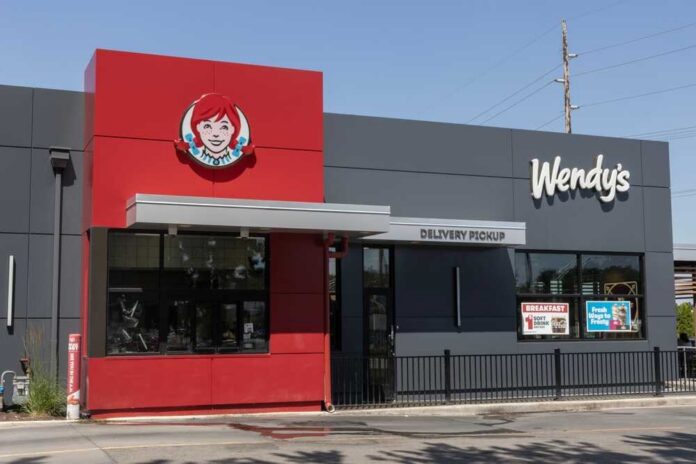
A California man says Wendy’s used hidden computer software to keep burger and fry prices high at thousands of restaurants across the country.
Quick Take
- Andy Garcia filed a federal class-action lawsuit against Wendy’s and point-of-sale company NCR Voyix in Maryland.
- The complaint claims Wendy’s acted as a single “common decisionmaker” setting prices for franchise owners who are supposed to compete with each other.
- The suit says shared sales data from cash registers helped coordinate pricing nationwide, not just within single stores.
- A nearly identical lawsuit hit McDonald’s two months earlier, suggesting a wider legal trend against tech-driven pricing in fast food.
- Wendy’s told the public in 2024 that its new pricing technology would not raise prices during busy hours.
What The Lawsuit Actually Claims
Plaintiff Andy Garcia filed his complaint in the U.S. District Court for the District of Maryland. He says he eats at Wendy’s at least once a week and paid inflated prices because of the chain’s pricing system. The lawsuit names both Wendy’s and NCR Voyix, the company that makes the point-of-sale software many Wendy’s locations use to process orders and track sales.
The complaint argues Wendy’s franchisees are legally separate businesses that are supposed to set their own menu prices independently. Instead, the lawsuit claims Wendy’s corporate office became the real decision-maker behind the scenes, directing pricing choices across thousands of locations as if they were one company instead of competitors.
How The Alleged Scheme Worked
Court filings describe a specific mechanism. Transaction-level sales data collected at the register allegedly flowed back to Wendy’s and its software partner, who then used it to guide pricing recommendations sent out to franchise owners nationwide. The lawsuit says this turned what should be independent business decisions into a coordinated pricing network.
Garcia’s attorneys argue this setup violates federal antitrust law, which bans competitors from agreeing to fix prices instead of competing honestly. Because franchisees operate as separate legal businesses, any behind-the-scenes coordination through shared data or centralized recommendations could cross that legal line, according to the complaint filed in Maryland federal court.
Part Of A Bigger Pattern In Fast Food
Wendy’s is not the only burger chain facing this kind of claim. A separate 2026 lawsuit accused McDonald’s of using artificial intelligence tools to help franchisees share nonpublic pricing data and effectively fix menu prices together. Legal experts say both cases reflect a new wave of antitrust lawsuits targeting software-driven pricing in the restaurant industry.
Researchers who study pricing algorithms have warned for years that software built to maximize profit can learn to settle on higher, more uniform prices even without anyone explicitly ordering it to collude. That risk sits at the center of why regulators and private plaintiffs are now scrutinizing shared pricing technology across entire franchise systems, not just individual stores.
Wendy’s Earlier Promises On Pricing
This is not Wendy’s first brush with pricing controversy. Back in February 2024, the company announced plans to test digital menu boards that could adjust prices and offers throughout the day. The announcement triggered backlash after many assumed it meant Uber-style surge pricing during busy lunch and dinner rushes.
Wendy’s pushed back hard at the time, stating publicly that it had no plans to raise prices during peak hours. The company said the technology was meant to offer discounts and value deals during slower periods instead. The Verge and other outlets reported Wendy’s insisting the system would never function as surge pricing against customers.
Why This Case Matters To Everyday Customers
For a chain built on dollar menus and value meals, allegations of coordinated price inflation cut against the brand’s own marketing promises. If courts find that pricing software turned independent franchise owners into a single coordinated pricing machine, it could reshape how fast-food chains manage technology partnerships with vendors like NCR Voyix going forward.
The case remains in early stages, and Wendy’s has not yet filed its formal response in court. Still, the complaint lands at a moment when consumers already feel squeezed by years of rising fast-food prices, making the underlying claim of hidden price coordination land with real weight among everyday diners watching their grocery and takeout budgets shrink further.
Sources:
cbsnews.com, reuters.com, news.bloomberglaw.com, us.headtopics.com, theolympian.com