A federal appeals court just told President Trump, in plain English, that he cannot rewrite how almost half the country votes by mail with the stroke of a pen.
Story Snapshot
- First Circuit judges kept in place a block on Trump’s mail-in voting executive order in 23 states.
- The order would have created a federal “eligible voter” list and tied mail ballots to that list.
- A Boston federal judge said the Constitution does not give the President direct power over elections.
- The case shows a clash between federal power, state control of elections, and voter trust before key midterms.
A sweeping mail voting order meets a hard judicial stop
President Trump signed a March executive order that tried to tighten mail-in voting rules nationwide before high-stakes midterm elections for control of Congress.
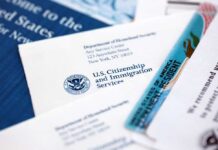
The order told the Department of Homeland Security to build and send each state a master list of confirmed United States citizens who were eligible to vote, using federal citizenship and naturalization records. It then tied mail ballots to that list, aiming to limit delivery of mail ballots only to people on the federal roster.
A U.S. appellate court on Saturday upheld a federal ruling that, in nearly half of all states, blocked President Trump's executive order to create a list of eligible voters and limit the delivery of mail ballots to people on that list. https://t.co/Kp0DGk1EZl
— CBS News (@CBSNews) July 26, 2026
Twenty-three Democratic-led states and the District of Columbia sued almost immediately, arguing the order was an unconstitutional power grab that invaded state control of election rules.
They went to federal court in Boston and asked for a preliminary injunction, saying the order risked mass errors and confusion if rushed into place just months before voting. United States District Judge Indira Talwani agreed and blocked key parts of the order in those suing states for the upcoming elections.
What the district court said about presidential power over elections
Judge Talwani’s ruling cut to the heart of the separation of powers question. She concluded that the President lacked authority to direct Homeland Security to compile voter eligibility lists for each state and that the United States Postal Service had no legal power to issue binding mail-in voting rules on its own.
In reporting on a related challenge to Trump’s broader election overhaul, the Associated Press quoted another judge saying, “The Constitution does not grant the President any specific powers over elections,” capturing the core logic behind these injunctions.
The Boston injunction also described the risks to state officials. The judge said Trump could not try, through criminal penalties written into the order, to pressure or intimidate local election officials into using the new federal lists, which would be “necessarily incomplete” as a measure of who was allowed to vote.
That language echoed long-standing concerns about federal overreach: laws must be clear, grounded in statute, and checked by courts, not improvised by executive branch threats.
The First Circuit keeps the block in place for 23 states
The Trump administration asked the First United States Circuit Court of Appeals in Boston to lift Judge Talwani’s injunction while its appeal moved forward, arguing that no real harm could exist yet because agencies had not finished detailed rules for how to carry out the order.
A three-judge panel rejected that request in a two-to-one ruling and kept the injunction in place for the 23 states and the District of Columbia. CBS News reported the appellate court “upheld a federal ruling” blocking the order and stopping the mail-ballot limits in nearly half the states.
The appeals court’s refusal to narrow or pause the injunction showed it viewed the legal concerns as serious, not speculative.
One judge wrote that “under the Constitution, state and local officials are responsible for administering federal elections,” reinforcing that the White House cannot unilaterally redesign mail-ballot systems in states that do not consent. For readers who care about checks and balances, that sentence reads like a civics lesson wrapped in a court order.
Split results create an uneven national landscape
The story does not end in Boston. A separate federal appeals court in Washington, D.C., temporarily lifted a broader injunction in a related case, giving the Trump administration a short-term win in states that had not joined the Boston lawsuit.
That left the United States Postal Service and other agencies facing a patchwork map: blocked from enforcing the new mail rules in the 23 plaintiff states, while free, at least in theory, to explore them elsewhere.
Election law scholars warned that such uneven rules could sow confusion among voters and officials if the administration pushed ahead. States that sued would keep their existing mail voting systems, while others might see new federal lists and stricter ballot limits appear close to Election Day.
For those who value local control and clear rules, that kind of split is a reminder that rushed federal experiments in election policy almost always trigger courtroom whiplash.
How this fight fits the larger Trump-era legal pattern
This mail voting case joins a growing stack of decisions that define the edges of presidential power in the Trump era. In Trump v. Anderson, the Supreme Court held that individual states cannot use Section 3 of the Fourteenth Amendment to decide who may run for federal office and said that power belongs to Congress.
That ruling, while about ballot disqualification, also reinforced a basic principle: when it comes to federal elections, no single actor gets to change the rules alone.
At the same time, federal courts have told Trump that presidents can be prosecuted for criminal acts and that “former President Trump has become citizen Trump” once he leaves office, subject to the same laws as anyone else. Together, these decisions carve a bright line around executive authority.
Presidents can argue, set policy, and sign orders, but they cannot override statutes, seize state election powers, or escape court review simply by claiming a broad mandate.
Why this ruling matters beyond one election cycle
For many voters, mail ballots are about convenience, health, or distance from the polling place. For politicians and activists, they are about turnout and control of Congress. This First Circuit ruling sits at the crossroads of those interests.
It protects state power to run elections as their legislatures design them, and it blocks a federal move that could have sharply narrowed who gets a ballot in the mail in large blue-leaning states.
From a common-sense view, the court’s message is clear. If Washington wants to change election rules, it must go through Congress, follow the Constitution, and respect the role of states. Executive orders are not magic wands. In the long run, that restraint may be the best guardrail both for secure elections and for keeping presidential power in its proper lane.
Sources:
en.wikipedia.org, scotusblog.com, supremecourt.gov, apnews.com, abcnews.go.com, pbs.org, supreme.justia.com