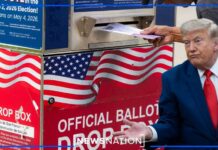
A federal judge’s decision to block President Trump’s proof-of-citizenship order has ignited fierce debate over election security, constitutional authority, and the battle to safeguard America’s ballot box.
Story Snapshot
- Judge permanently halts Trump’s executive order requiring citizenship proof for federal voter registration.
- Ruling underscores constitutional limits on presidential power over election law.
- White House vows to appeal, defending the order as essential for election integrity.
- Partisan divide deepens as Democrats celebrate the decision and Republicans warn of election vulnerabilities.
Judge Blocks Trump’s Citizenship Proof Order, Sparking Constitutional Showdown
On November 1, 2025, U.S. District Judge Colleen Kollar-Kotelly issued a permanent injunction stopping the Trump administration from enforcing its executive order mandating documentary proof of citizenship for federal voter registration.
The court ruled that the President overstepped constitutional boundaries, as federal election procedures fall under the authority of Congress and the states.
This case highlights the ongoing struggle between executive power and the legislative framework established by the Founders to protect American elections from unilateral government action.
The legal battle was triggered in March 2025, when President Trump signed the order in a bid to strengthen election integrity after years of public concern about non-citizen voting.
Democrat state attorneys general and major party committees responded swiftly, filing lawsuits and arguing the measure would suppress eligible voters and represent executive overreach.
The court’s preliminary injunction in April foreshadowed the final ruling, setting the stage for a highly politicized clash over who controls the rules of the ballot box.
Separation of Powers and the Role of the Judiciary
The judge’s decision draws a sharp line on the separation of powers, underscoring that the U.S. Constitution grants Congress—not the president—the authority to regulate federal elections.
Legal experts point to Supreme Court precedent, including Arizona v. Inter Tribal Council of Arizona (2013), which blocked states from imposing additional proof-of-citizenship requirements beyond federal law.
By permanently barring the Trump administration’s order, the court reaffirmed that any fundamental change to federal voter registration must come through legislative, not executive, action. Supporters of the ruling view it as a check on presidential overreach and a protection against voter disenfranchisement.
White House spokesperson Abigail Jackson criticized the ruling, calling the executive order “commonsense” and accusing opponents of putting politics above the integrity of U.S. elections.
The administration has signaled its intent to appeal, arguing that requiring proof of citizenship is an essential safeguard to ensure that only eligible Americans cast ballots—a position strongly supported by many conservatives who remain wary of ongoing vulnerabilities in the current system.
Federal judge rules Trump can’t require citizenship proof on the federal voting form https://t.co/pDIM5QOTZo
— O.C. Register (@ocregister) October 31, 2025
Partisan Fallout and the Battle Over Election Integrity
This ruling comes amid deeply polarized debates about election security and access, intensified by memories of alleged irregularities in the 2020 and 2024 contests. For many Republicans and Trump supporters, efforts to require citizenship proof are seen as common sense reforms that uphold the value of each American’s vote and deter fraud.
Democrats and their allies, by contrast, argue that such measures risk disenfranchising eligible voters, particularly naturalized citizens and those lacking ready access to documents.
The case features high-profile Democrat plaintiffs—including party committees and leaders—who hailed the decision as a win for democracy and the separation of powers. The White House and conservative advocates counter that the judiciary, by blocking the order, is undermining efforts to fix a system they see as vulnerable to abuse.
This episode illustrates the persistent power struggle over who sets the rules for American elections and the ongoing influence of the courts in refereeing those battles.
Implications for Voters and the Future of Election Law
In the short term, the ruling means the federal voter registration process remains unchanged: there will be no proof-of-citizenship requirement for now. Election administrators avoid the administrative burden of verifying documents, while millions of eligible voters sidestep potential new hurdles.
The long-term impact is significant, setting a precedent that limits presidential authority to alter federal election procedures unilaterally. This decision may deter similar executive actions in the future, pushing any substantial changes back to Congress and fueling continued partisan debate over election security and access.
The White House’s planned appeal ensures the battle over who controls the rules for federal voting is far from over.
For many conservative Americans frustrated by years of lax enforcement and leftist resistance to commonsense election safeguards, the fight to ensure that only citizens vote will remain a defining issue as the nation heads into future elections.
Sources:
Elias Law Group press release and legal analysis