

A sweeping executive order to require voter ID nationwide is igniting panic in the Democrat Party and fierce constitutional battles, as it promises to reshape America’s elections and challenge state authority at its core.
Story Snapshot
- President Trump announces a plan for an executive order mandating voter ID in all U.S. elections, restricting mail-in ballots, and requiring paper ballots.
- Federal courts have repeatedly blocked similar actions, citing constitutional limits and state sovereignty over election law.
- Nineteen states have already sued to block Trump’s voter ID order, with preliminary injunctions issued.
- Polls show overwhelming public support for voter ID, but deep divisions persist regarding the restriction of mail-in voting and federal overreach.
Trump’s Nationwide Voter ID Plan: Constitutional Clash Looms
President Donald Trump declared that he intends to sign an executive order requiring voter identification for every ballot cast in U.S. elections, with no exceptions.
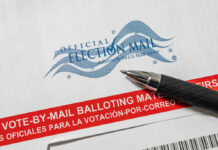
The plan also proposes major restrictions on mail-in voting, limiting it solely to the very ill and military personnel overseas, and mandates the exclusive use of paper ballots.
Trump’s announcement follows a series of previous attempts to impose federal voter ID standards, all of which have faced swift legal opposition and were blocked by federal courts for violating constitutional boundaries reserved for states.
Trump’s latest push arrives as states continue to debate election integrity reforms. As of 2025, thirty-six states have their own voter ID laws; however, the federal government has historically held limited authority over election procedures.
The U.S. Constitution grants states the primary power to regulate elections, with Congress allowed to modify regulations only by passing new laws.
Previous executive orders targeting election integrity have consistently been struck down, and the Supreme Court has never endorsed a federal voter ID mandate.
Trump’s proposal marks an unprecedented attempt to standardize election law nationwide through executive action, challenging long-held principles of state sovereignty.
Legal Roadblocks and State Resistance Intensify
The legal landscape surrounding Trump’s executive order is fraught with obstacles. Earlier in March 2025, Trump issued an executive order requiring proof of citizenship for federal elections, which was immediately blocked by the courts.
In June, a federal judge issued a preliminary injunction, calling the order a violation of the Constitution and an interference with states’ inherent authority.
Nineteen states have already filed lawsuits to prevent implementation of Trump’s latest plan, and legal experts widely agree that the president lacks unilateral power to override state election laws.
The judiciary’s repeated interventions highlight the enduring tension between federal executive ambition and the constitutional safeguards that protect local control over voting procedures.
Congress remains a critical factor in this evolving confrontation. While the legislative branch has the authority to regulate federal elections, recent attempts to pass comprehensive election law reforms—including mandatory voter ID and strict mail-in ballot limitations—have stalled amid fierce partisan debates.
Republican leaders generally support efforts to tighten voting rules, citing the need for election security, while Democrats argue such measures risk disenfranchising vulnerable communities.
The courts serve as the final arbiters, ensuring that executive actions adhere to constitutional limits and do not erode the foundational rights of states or voters.
Public Sentiment and Partisan Divides Over Election Integrity
Despite the legal challenges, Trump’s voter ID initiative taps into strong public sentiment. Polls indicate that 84% of Americans support mandatory voter ID for elections, with near-universal backing among Republicans and broad approval from independents.
However, the proposal to restrict mail-in voting and impose federal mandates remains highly controversial, exposing deep partisan divides.
Some Republican election officials have voiced concern over banning mail-in ballots, underscoring its importance for secure and accessible voting—especially for overseas military and the ill.
Trump says he will require voter ID with executive order | Anders Hagstrom, Fox News
President announces plan on social media along with restrictions on mail-in voting
President Donald Trump says he plans to sign an executive order aimed at requiring voter ID in elections… pic.twitter.com/LMoVxRwx9y
— Owen Gregorian (@OwenGregorian) September 1, 2025
Election security experts caution that widespread voter fraud—the rationale for these sweeping changes—has not been substantiated by official investigations. Most existing state laws already incorporate robust safeguards against fraud.
Constitutional scholars warn that imposing federal election requirements by executive order sets a dangerous precedent, risking unintended consequences such as reduced turnout among disadvantaged groups and undermining the balance of powers.
While Trump’s plan energizes conservative voters frustrated by previous lax policies and perceived government overreach, it also faces a formidable coalition of legal, political, and grassroots resistance determined to uphold the Constitution’s allocation of election authority.
Sources:
President Donald Trump Announces Plan for Executive Order Requiring Voter ID Nationwide
President Trump plans to issue executive order to require voter identification
Trump says he plans to issue unconstitutional order requiring voter ID and banning mail ballots
Preserving and Protecting the Integrity of American Elections