
One line at a Michigan rally turned a policy messenger into the story, and the receipts arrived fast.
Story Snapshot
- Kennedy told a Grand Rapids crowd that 500 million Arabs “don’t produce science” or win top prizes.
- News outlets and experts answered with named Nobel and Fields Medal winners who are Arab.
- Backlash labeled the remarks racist and factually wrong; calls for a correction grew.
- The debate shifted from data on institutions to sweeping claims about people.
What Kennedy Said And Why It Landed Like A Brick
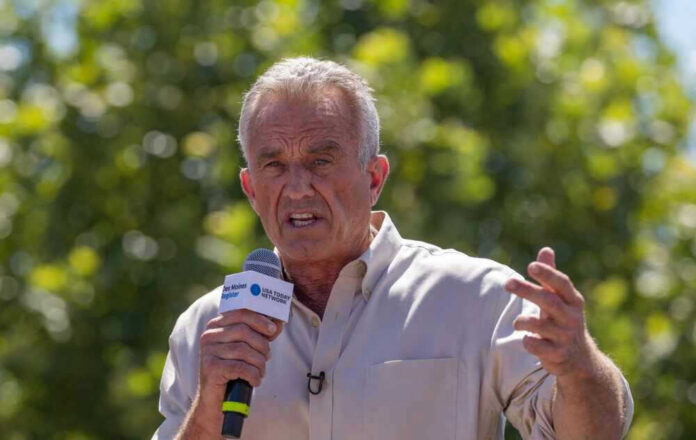
Robert F. Kennedy Jr., the United States health secretary, told voters in Grand Rapids that Arabs do not produce science, do not win the Nobel Prize, the Fields Medal, or the Wolf Prize, and do not produce literature. He added that Arab and Muslim brilliance in earlier centuries was later destroyed by the Muslim Brotherhood, which he blamed for stagnation and hate. The quotes were clear and on camera. The categorical framing—“don’t produce”—turned a debate on outcomes into an attack on identity.
Arabs 'don't produce science, they don't win the Nobel Prize… They don't produce literature' — RFK Jr
His statement sparked a heated reaction in the comments pic.twitter.com/fic76EzUjs
— RT (@RT_com) October 27, 2026
Voters can judge with plain facts. The Associated Press pointed to Egyptian-American chemist Ahmed Zewail, who won the 1999 Nobel Prize in Chemistry for femtochemistry, and Egyptian novelist Naguib Mahfouz, the 1988 Nobel Prize in Literature laureate. The Nobel Foundation’s own press release says Mahfouz was the first literary Nobel winner whose native language was Arabic. These examples do not nibble at the edges; they break the claim. Zero is not the right number.
The Backlash And The Line Between Critique And Caricature
Major outlets framed the comments as false and bigoted. Al Jazeera reported critics calling the remarks racist, Islamophobic, and factually wrong. Open magazine quoted public health leader Nirav Shah calling Kennedy “unserious and incurious about the world,” while a Middle East studies professor labeled the comments “bigoted”. That charge sticks because the words attacked a people, not a policy. American conservative values demand clear speech and fair judgment; this missed both.
Some defenders say Kennedy was pointing to low output in certain countries. That is a different claim than “Arabs don’t produce science.” If the point is weak institutions, say that and bring numbers. United Nations Educational, Scientific and Cultural Organization reporting finds many Arab states underinvest in research and development and struggle with brain drain and conflict. That explains gaps in labs and patents without smearing millions of people. Aim at systems, not citizens.
Prizes, People, And What Counts As Evidence
Prizes are imperfect, but they are visible. Zewail’s Nobel is in the record. Mahfouz’s Nobel is in the record. There are also Arab Peace laureates and a roster of Arab-born or Arab-identified scientists with top honors that rebut a word like “don’t”. A serious argument would define terms up front: who is “Arab,” which time period, and whether diaspora success counts. Kennedy’s remarks supplied none of that, then leaped to blame the Muslim Brotherhood. That leap lacked sourced proof in the reporting.
Policies ride on trust. Voters can handle hard truths about education, censorship, or weak research networks. They will not accept claims that wipe away the work of named people they can look up in minutes. The fix is simple: separate people from regimes, measure outputs per capita across decades, control for war and oil shocks, and credit diaspora gains. That is rigorous. That is how you honor merit, personal responsibility, and the basic fairness most Americans expect.
What A Credible Case Would Look Like Next
Start with an open dataset on Nobel, Fields, and Wolf recipients. Code birthplace, self-identified ethnicity, language, citizenship at award, and where the work was done. Publish the method. Then run a bibliometric study on Arab-majority institutions and Arab-identified researchers worldwide. Compare funding, collaboration, and citations. If a political movement harmed universities, test that claim with country comparisons over time. Until then, broad claims about 500 million people are rhetoric, not analysis.
Sources:
newsweek.com, apnews.com, aljazeera.com, al-monitor.com, soapcentral.com, huffpost.com, boston25news.com