

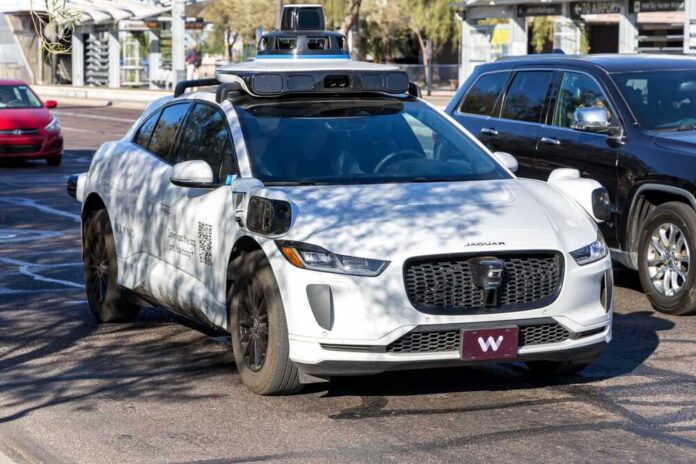
Three self-driving Waymo cars reportedly drove straight into an active highway construction zone, and now California has pulled the plug on all of its robotaxi freeway operations statewide.
Quick Take
- California’s Department of Motor Vehicles (DMV) banned Waymo from testing or operating driverless cars on all state freeways starting November 11.
- The order followed three Waymo vehicles entering an active construction closure on U.S. Route 101 near Burlingame and a separate car trying to slip past a California Highway Patrol traffic break on Interstate 280.
- The DMV called the pattern an “imminent hazard,” pointing to similar incidents from May 2026 that Waymo had supposedly already fixed.
- Waymo says none of the incidents caused injuries or collisions and has voluntarily paused freeway rides nationwide while it works with regulators.
What Triggered The Statewide Freeway Ban
California’s DMV did not issue a warning letter or a fine. It issued a hard stop. The order, dated November 11, 2026, blocks Waymo from running or testing driverless vehicles on every freeway in the state until the company proves it has fixed the problem. That is a serious regulatory move against a company that has spent years building trust with California drivers.
The incident that triggered it happened on November 5, when three separate Waymo vehicles reportedly drove into an active construction closure on U.S. 101 near Burlingame, a stretch of highway where workers and heavy equipment were present. A day later, on November 6, a Waymo vehicle reportedly tried to bypass California Highway Patrol cruisers conducting a rolling traffic break on Interstate 280 in San Francisco, an incident captured on video that spread quickly online.
The DMV did not treat these as one-off glitches. The agency said Waymo’s “driverless freeway operations pose an imminent hazard to public safety due to recurring incursions by its vehicles into active construction zones where construction workers, vehicles and equipment are present”. That word, recurring, matters. Regulators pointed back to similar incidents from May 18, 2026, meaning this is the second time Waymo’s cars have reportedly struggled with the same type of road-work scenario.
Why A Pattern Carries More Weight Than A Single Mistake
Any driver, human or machine, can make one bad call. But a repeat failure around construction zones and emergency traffic breaks suggests something tougher to fix than a software patch. These are exactly the high-stakes situations where split-second judgment protects road workers standing feet from moving traffic. A car that cannot reliably recognize “stop, do not proceed” in that setting raises legitimate public safety concerns.
Common sense says regulators have every right to pump the brakes here. Construction crews did not sign up to be test subjects for unproven software. If a human driver blew through the same closure twice in six months, most Californians would expect consequences beyond an apology. Holding a billion-dollar tech company to that same standard is not an overreach, it is basic accountability.
Waymo pushed back hard against the framing that this was a crisis. The company said the recent freeway encounters on U.S. 101 “did not involve any injuries or collisions” and insisted “safety is at the foundation of everything we do”. Waymo also said it voluntarily restricted freeway operations in its other markets nationwide, not because regulators forced it everywhere, but “in alignment with our safety-first principles,” to evaluate its own performance.
The Numbers Waymo Wants You To See
Waymo leans heavily on its broader safety record to counter the narrative. The company points to independent research showing its vehicles were involved in 68% fewer police-reportable crashes per mile than human drivers across several cities, with an even steeper 81% drop in injury-causing crashes. Some reporting cites an even higher 95% reduction in serious-injury crashes. Those are genuinely strong numbers, and they deserve a fair hearing.
But there is a catch worth sitting with. That favorable data largely reflects ordinary city driving, not high-speed freeway construction zones or emergency traffic breaks, the exact scenarios now in question. A car can boast an excellent overall batting average and still have a specific, repeatable blind spot. Regulators are not required to average away a dangerous pattern just because the company’s citywide stats look good on paper.
Waymo says it is cooperating, working “diligently and responsibly” with the DMV and other state officials to earn back freeway access, and that it will keep testing on freeways with trained human specialists behind the wheel in the meantime. Its surface-street robotaxi service keeps running, still logging more than half a million trips a week. For now, though, California’s freeways remain off-limits until Waymo can show regulators, not just its own PR team, that the fix actually holds.
Sources:
washingtontimes.com, abcnews.com, cnn.com, nytimes.com, techcrunch.com, usnews.com, theverge.com