
American aviation technology proved its life-saving worth when Garmin’s emergency Autoland system executed its first real-world activation, safely landing a pilotless aircraft in Colorado after the pilot became incapacitated during flight.
Story Highlights
- Garmin’s Autoland system completed its first emergency activation, landing a Beechcraft Super King Air without pilot assistance at Rocky Mountain Metropolitan Airport
- The pilot reported pressurization problems after takeoff from Aspen before becoming incapacitated, triggering the automated safety system
- Two passengers survived the December 20th incident thanks to American-developed technology that represents a breakthrough in aviation safety
- The FAA-approved system can activate automatically or manually, demonstrating how private sector innovation enhances flight safety without government overreach
Technology Saves Lives When Human Error Fails
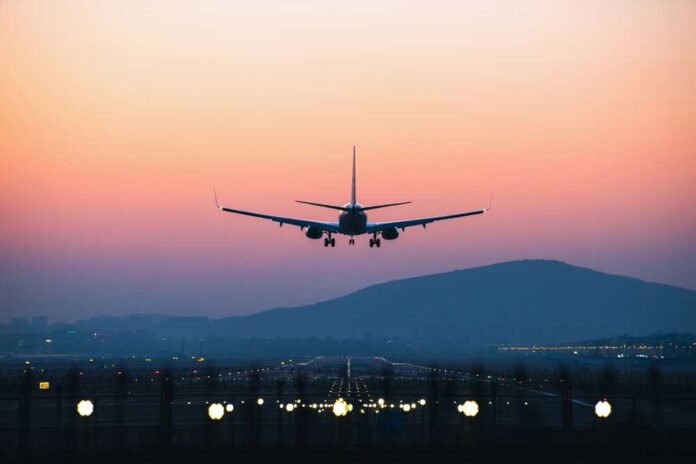
Garmin’s Autoland system executed a flawless emergency landing at Rocky Mountain Metropolitan Airport in Broomfield, Colorado, on December 20th, marking the technology’s first real-world activation since its 2019 debut. The Beechcraft Super King Air, operated by Buffalo River Aviation, encountered pressurization issues shortly after departing Aspen airport.
Air traffic control recordings captured a robotic voice announcing “Pilot incapacitation, two miles south… emergency Autoland in 19 minutes on runway 3-0,” demonstrating the system’s autonomous decision-making capabilities when human pilots cannot respond.
On Saturday, Dec. 20 at approximately 2 p.m., North Metro Fire responded to an Alert II airplane incident at Rocky Mountain Metropolitan Airport in Jefferson County with ARFF65, BC61, E61, E64, E65, E68 and M61.
From Westminster Fire Department, SAM11, WFDBC1, WFDM4 and WFDTRK5… pic.twitter.com/7hgQrwVen2
— North Metro Fire (@NMFirePIO) December 22, 2025
American Innovation Delivers Where Government Cannot
This successful deployment showcases how private American companies develop solutions that save lives without bureaucratic interference. Garmin, a Kansas-based technology company, spent years perfecting this system through collaboration with the FAA rather than government mandates.
The Autoland technology represents exactly what conservatives champion: market-driven innovation that solves real problems. While pilot incapacitation cases are rare, they’re typically fatal without intervention. This technology provides a fail-safe that protects passengers when human capability fails, embodying the self-reliance principles that make America strong.
Smart Technology Prevents Tragic Outcomes
Aviation journalist Larry Anglisano explained the system’s intelligence: it identifies pilot incapacitation, selects appropriate landing sites based on runway requirements, and autonomously navigates around weather obstacles. Local flight instructor Adam Lendi witnessed the landing with his student, recognizing the historic moment as emergency vehicles responded.
The system can be activated by passenger intervention or automatically upon detecting prolonged pilot inactivity. Flight instructor Lendi expressed reassurance knowing such backup systems exist, reflecting the peace of mind that comes from American technological advancement and preparedness.
FAA Confirms Successful Private Sector Solution
The Federal Aviation Administration confirmed two people were aboard the aircraft and launched an investigation, following standard protocol for unusual landing circumstances. The agency’s statement validated the system’s effectiveness while maintaining proper oversight without stifling innovation.
This incident demonstrates how proper regulatory frameworks can support rather than hinder technological advancement. Garmin’s six-year development process, culminating in this life-saving deployment, proves that American companies excel when given freedom to innovate within reasonable safety parameters rather than facing excessive government interference.