
A suspected Molotov cocktail attack on a Tesla facility in New Orleans is testing whether the government can still deliver basic law-and-order when political tensions spill into real-world violence.
Quick Take
- Investigators say a suspected Molotov cocktail ignited a fire at a Tesla sales office/service center in New Orleans just before 8 a.m. Tuesday, April 14, 2026.
- No one was injured, but the front entrance area was damaged; ATF and New Orleans police are jointly investigating and have not announced arrests.
- Authorities have not confirmed a motive, and reports differ slightly on how the location is described and how the street name is spelled.
- The incident comes amid broader reporting on corporate arson and a prior surge of Tesla-related vandalism that drew federal attention.
What happened at the Tesla site in New Orleans
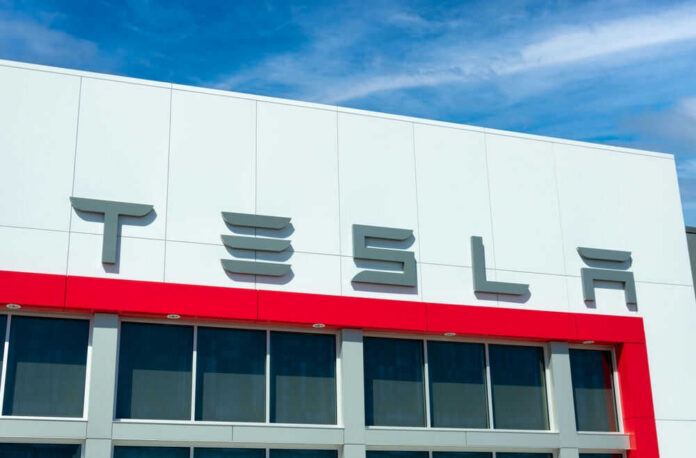
ATF agents and New Orleans Police Department officers responded after a fire broke out at a Tesla sales office—also described in some coverage as a service center—in New Orleans, Louisiana.
Reports place the start of the incident just before 8 a.m. this Tuesday, when an improvised incendiary device believed to be a Molotov cocktail was thrown at the front door. Officials reported no injuries, but the business sustained damage.
Investigators have not announced any arrests, and public statements have been cautious about motive. ATF’s New Orleans Field Division indicated that special agents and certified fire investigators were involved, underscoring that the case is being treated as more than a routine fire call.
Local police have confirmed the basic facts—fire, damage, no injuries—while the federal presence signals potential criminal seriousness if the device and intent are confirmed.
Why federal involvement matters in an arson case like this
ATF’s role is significant because Molotov cocktails are not only dangerous—they are also straightforward tools of intimidation.
When an incendiary device is used against a business in a major city, investigators often look for patterns: similar devices, prior threats, surveillance footage, or links to broader cases.
The public record so far is thin, and authorities have not tied this incident to other events, but federal coordination typically reflects concern about escalation.
Unanswered questions: motive, target selection, and public trust
Authorities have not publicly identified a suspect or offered a motive, and that vacuum invites speculation that responsible outlets have largely avoided.
Still, the dispute over what, exactly, the facility is called—sales office versus service center—and minor uncertainty about the street name highlight a familiar public frustration: Americans are asked to trust institutions while getting incomplete information in the early days of an investigation. For many voters, this fuels the belief that the government struggles with basic competence.
Molotov cocktail apparently used to start fire at Tesla sales office: ATF https://t.co/K24GWYTesi pic.twitter.com/nEP6SV6Y4B
— WHIO-TV (@whiotv) April 15, 2026
The broader trend: corporate arson fears and Tesla’s unique visibility
Some coverage frames the New Orleans fire as part of a wider “wave” of corporate arsons, and it also points to earlier Tesla-focused vandalism that prompted federal scrutiny in 2025.
Those prior cases matter because they establish precedent: Molotov-style attacks on dealerships have been treated as serious federal crimes with potentially steep penalties.
Until investigators release more evidence, the most responsible conclusion is simple: a dangerous attack appears to have occurred, and the public deserves transparent results, not narratives.
Sources:
Molotov-slinging menace allegedly targets Tesla shop amid wave of corporate arson attacks
Molotov cocktail apparently used to start fire at Tesla sales office: ATF
Molotov cocktail apparently used to start fire at Tesla sales office: ATF