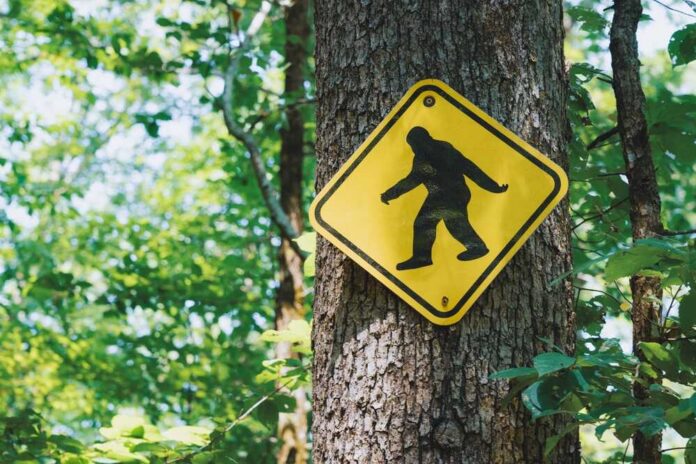
A booze brand just put $1 million on the line to settle Bigfoot once and for all.
Story Snapshot
- Hard Mountain Dew launched a Bigfoot “bounty” paying $1 million for verified proof.
- Entrants must be 21 or older and submit at least four of seven strict evidence types.
- Specs include giant prints, thermal video, hair with unknown DNA markers, and audio.
- Skeptics cite decades of hoaxes and failed DNA tests as the big hurdle.
A corporate bounty turns folklore into a rules-based contest
Hard Mountain Dew opened a national “Bigfoot Bounty,” promising $1 million to anyone who can submit verified proof by November 30. The brand directs entries to its site and requires participants to be 21 or older.
The offer is not an open-ended myth debate. It is a contest with stated criteria, deadlines, and judges. That structure matters. It shifts the question from belief to evidence packages that meet set standards co-developed with a named Bigfoot expert.
To qualify, entrants must hit at least four of seven evidence categories. Reports describe detailed specs: a footprint measuring roughly 37 to 38.5 inches and pressed six inches into hard ground, a 13-inch handprint with distinct proportions, thermal footage showing a 7 to 9 foot heat signature moving fast, audio that lines up with reported calls, hair with unknown DNA markers, and more.
The bar is high by design. The rules push hunters to bring multiple, testable forms, not a single shaky clip.
The marketing logic behind monster money
Brands know a giant prize plus strict “proof” talk earns headlines. Spike TV used the same playbook in 2012 with a $10 million Bigfoot bounty backed by insurance, turning curiosity into prime-time buzz.
The value here rides on attention and the aura of verification, not only on a payout that likely never triggers. Regulators generally warn that prize promotions must avoid misleading odds and must disclose terms with care. Clarity protects consumers and the sponsor alike.
Malt liquor company offers $1M for proof that Bigfoot exists https://t.co/33arGWSxtQ pic.twitter.com/6deUUGZ3Gc
— New York Post (@nypost) September 21, 2026
In this case, Hard Mountain Dew gets weeks of free media and social chatter. Fans get a game with rules that feel scientific, even if the science is borrowed shine. The contest format also shifts risk. If no one wins, the brand still cashes in on the story.
If someone gets close, the judging panel and lab checks absorb the scrutiny. That is smart commerce. It also nudges enthusiasts to document, measure, and chain custody their finds better than before.
The scientific headwind is fierce
Skeptics keep one question on loop: where is the body? Decades of searches have not produced remains, bones, or a clear capture. Peer-reviewed DNA studies of alleged hair and tissue almost always point to known animals, like bears, horses, or dogs.
Museums and journals cite hoax histories, unreliable eyewitness reports, and the famous Patterson-Gimlin film’s costume dispute. That body of doubt sets a steep climb for any contest entry, no matter how dramatic it looks.
Hard Mountain Dew offers $1M bounty to anyone who can prove Bigfoot is real. Adults 21 and older have until November 30 to submit alleged Bigfoot evidence
https://t.co/xiZy87wQO4— RandyRamey 🇺🇸 (@randy_ramey) September 22, 2026
That does not mean a contest cannot sharpen the hunt. Requiring four different evidence types discourages one-off fakes and forces cross-checks. Thermal video alone can fool. A big print alone can be carved. Unknown DNA alone often turns out to be a lab mismatch.
Tie them together with time stamps, location data, third-party tests, and chain-of-custody notes, and weak claims fall apart faster. Strong ones, if any exist, stand a chance to be heard without the usual noise.
What common sense says to would-be millionaires
Read every rule twice. Document everything like a crime scene. Record wide, then tight. Keep samples sealed, labeled, and cold. Capture a clean trackway, not just a single print. Get independent witnesses on camera. Log GPS, weather, and time.
If the brand asks for four categories, aim for five or six. That overshoot guards against a single lab result or expert opinion knocking you out. The path to the check runs through redundancy and boring details, not campfire lore.
The likely outcome—and why it still matters
The safest bet is that no one claims the million. The public record has crushed many bold claims before, often with simple tests. But this contest could still raise the floor on evidence quality. It could also teach casual fans the gap between a viral clip and lab-grade proof.
From a common-sense view, that is healthy. Demand hard facts. Reward disciplined work. Enjoy the spectacle, but keep your wallet and your wits in the same pocket.
Sources:
foxbusiness.com, nypost.com, dexerto.com, manilatimes.net, claytribune.com, science.howstuffworks.com, popsci.com, skepticalinquirer.org