The first conviction under America’s new anti-deepfake “Take It Down Act” is a warning shot to online predators who thought AI made them untouchable.
Story Snapshot
- Federal prosecutors secured the first conviction under the 2025 Take It Down Act after an Ohio man pleaded guilty in an AI-driven cyberstalking case.
- Authorities say the defendant used dozens of AI tools to create and spread non-consensual sexually explicit “deepfake” images and videos, including those involving minors.
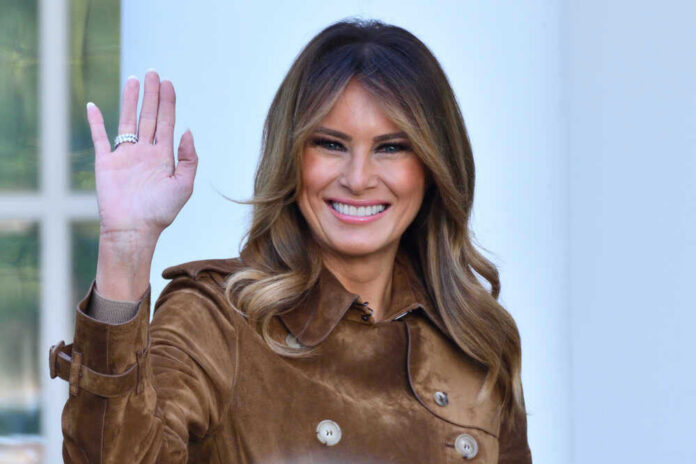
- First Lady Melania Trump publicly praised the case as proof the law has teeth, tying it to her long-running anti-cyberbullying focus.
- The case tests how quickly federal law enforcement and tech platforms can respond to AI-enabled harassment and exploitation.
First federal “Take It Down Act” case targets AI-fueled sexual exploitation
Federal authorities announced the first conviction under the Take It Down Act after James Strahler II, a 37-year-old from Columbus, Ohio, pleaded guilty to charges tied to cyberstalking and AI-generated sexual content.
Reports say the conduct ran from late 2024 into mid-2025 and involved non-consensual explicit images and videos of at least six female victims, including minors, paired with threats of violence. Sentencing details were not reported in the available coverage.
The first conviction under the federal "Take It Down Act," a new law aimed at combating non-consensual AI-generated sexually explicit images and online harassment, was secured this week.
READ MORE:https://t.co/azXT0B3t4a
— ABC News 4 (@ABCNews4) April 9, 2026
Prosecutors say Strahler relied on more than two dozen AI platforms and kept extensive AI tools on his phone, enabling the rapid creation and distribution of digital forgeries.
That detail matters because it underscores how cheap and scalable this kind of abuse has become: one person with a smartphone can manufacture convincing fakes that spread faster than victims can respond.
The guilty plea also signals that federal charges can reach beyond “revenge porn” and into broader intimidation campaigns.
Melania Trump claims an enforcement win—and the White House amplifies it
First Lady Melania Trump publicly celebrated the conviction, thanking U.S. Attorney Dominick S. Gerace II and framing the outcome as a milestone for the law she championed.
White House Press Secretary Karoline Leavitt also highlighted the conviction in a briefing, describing it as a major achievement and emphasizing protection for America’s youth.
The coordinated messaging is political, but it is also practical: a new federal statute only deters future offenders if the public sees real consequences.
The administration’s emphasis on victim protection is notable because it lands in a rare area of broad public agreement. Many conservatives prioritize law-and-order and the protection of children; many liberals prioritize harassment prevention and accountability for online abuse.
The Take It Down Act’s first conviction gives both sides something concrete: a case where the federal government acted against a clear harm instead of arguing over abstractions. The limited public record, however, leaves unanswered questions about sentencing and restitution.
What the Take It Down Act changes compared with older “revenge porn” rules
The Take It Down Act—short for the Tools to Address Known Exploitation by Immobilizing Technological Deepfakes on Websites and Networks Act—was signed on May 19, 2025, after overwhelmingly bipartisan votes in Congress.
Coverage describes it as targeting non-consensual intimate imagery and AI-generated deepfakes, areas where previous laws often lagged behind technology.
The law also heightens pressure on online platforms by focusing on the rapid removal of harmful content, aiming to reduce the length of time victims are exposed.
From a perspective, the central appeal is straightforward: the government’s basic job is protecting citizens from predatory conduct, especially against children, while preserving ordinary Americans’ ability to live and work without intimidation.
Unlike sprawling regulatory schemes, this is a narrow criminal-justice tool aimed at a specific abuse. The first conviction suggests enforcement can happen without turning the statute into a generalized censorship lever—though future cases will determine how carefully that line is kept.
Why this conviction matters in the bigger AI and trust-in-government debate
AI has made “seeing is believing” less reliable, creating new avenues for harassment, extortion, and reputational sabotage. The Strahler case shows the threat is not theoretical: prosecutors say explicit deepfakes were used alongside threats, amplifying the damage and fear for victims.
Supporters argue this is exactly where federal resources should go—toward stopping coercion and exploitation—while skeptics will watch for selective enforcement, given long-running public distrust of institutions.
A first conviction under a new law does not solve that credibility crisis, but it is a measurable act: an arrest, a guilty plea, and a public marker that AI-driven sexual exploitation is prosecutable in federal court.
Sources:
First ‘Take It Down Act’ conviction marks win for Melania Trump-backed law
Leavitt highlights first conviction under Melania Trump-backed Take It Down Act