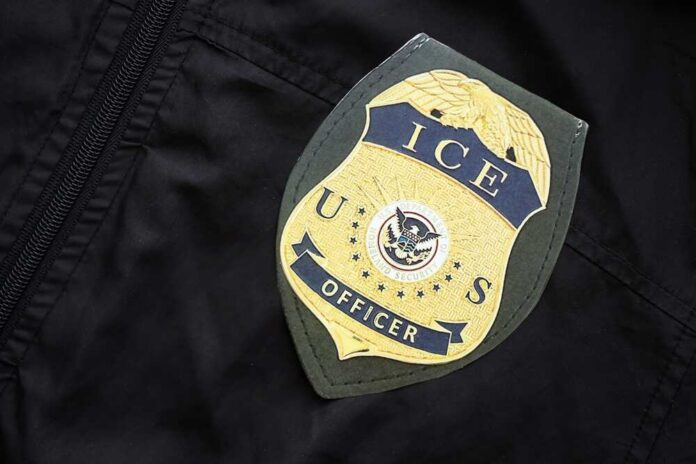
Two ICE officers are now under a perjury probe after video evidence reportedly contradicted sworn testimony in a Minneapolis shooting—an outcome that threatens public trust in lawful immigration enforcement.
Quick Take
- ICE Director Todd Lyons placed two officers on administrative leave after announcing a joint ICE–Justice Department perjury investigation.
- The January 14, 2026, incident began with an attempted traffic stop, escalated into a crash and foot chase, and ended with an ICE officer shooting Venezuelan national Yorman Sosa-Celis.
- Federal charges against Venezuelan nationals Yorman Aljorna and Sosa-Celis were dropped after video and other evidence allegedly undermined key sworn claims.
- Minnesota authorities are conducting a separate shooting investigation, while the FBI has reportedly withheld evidence from the state inquiry.
What Happened in Minneapolis: From Traffic Stop to Shooting
ICE officers attempted a traffic stop in Minneapolis on January 14, 2026, involving Venezuelan national Yorman Aljorna, according to reporting that later became central to federal court proceedings. The stop allegedly turned into a crash, a foot chase, and a confrontation at an apartment duplex.
During that encounter, an unnamed ICE officer allegedly shot and wounded another Venezuelan man, Yorman Sosa-Celis. Early accounts said Sosa-Celis and others assaulted officers with objects.
Federal court filings and law enforcement narratives initially described violent resistance, including claims that Sosa-Celis struck an officer with a snow shovel and broom handle. That story mattered because it supported arrests and helped frame the shooting as a response to an immediate threat.
When cases like this depend heavily on agents’ sworn descriptions of fast-moving events, the integrity of those statements becomes the foundation for prosecutions, public confidence, and the legitimacy of enforcement actions.
Why the Cases Collapsed: Video and Eyewitness Accounts Challenged Sworn Testimony
A court hearing on January 21 revealed major disputes between ICE officers’ sworn testimony and other accounts, including statements from defendants and eyewitnesses. Reporting described a lack of corroboration for the alleged shovel-and-broom assault during early review of available footage.
In early February, additional video reportedly emerged that further contradicted what two ICE officers had stated under oath. After those developments, federal charges against Aljorna and Sosa-Celis were dropped.
ICE has not publicly released every piece of evidence discussed in court, and the shooter’s identity has reportedly been withheld by the FBI. Defense attorneys argued the government’s case depended on statements that were not supported by the video.
Attorney Brian D. Clark said his clients were “overjoyed,” and he described the shooting as “reckless,” urging accountability for the officer who fired. Attorney Robin M. Wolpert said she welcomed the probe and emphasized her client’s status as a victim.
ICE says 2 of its officers may have lied under oath about shooting migrant in Minnesota https://t.co/9sxt1vzBg0
— Bo Snerdley (@BoSnerdley) February 15, 2026
ICE Leadership Moves to Police Its Own: Perjury Probe and Administrative Leave
ICE Director Todd Lyons announced on February 13 that ICE and the Justice Department opened a perjury investigation and placed two officers on administrative leave. Lyons said lying under oath is a serious federal offense and indicated consequences could include termination or prosecution.
For Americans who support strong borders and lawful deportation, that statement cuts both ways: it defends the principle that government power must be exercised honestly, especially when liberty and due process are on the line.
The political context around Minneapolis complicates the debate. Reporting described tensions between federal immigration operations and Democratic leadership in Minnesota, including criticism that enforcement actions amount to overreach.
After the shooting, DHS Secretary Kristi Noem blamed local officials for “encouraging” assaults on federal officers, while later reporting said DHS did not address those earlier remarks. The current probe is narrow—focused on possible perjury—but its ripple effects reach broader enforcement legitimacy.
What Comes Next: State Investigation, Federal Withholding, and Trust in Enforcement
Minnesota state authorities are conducting a separate criminal investigation into the shooting, but reporting indicated the FBI has withheld evidence from that state probe. That kind of federal-state friction can slow fact-finding and prolong uncertainty for everyone involved, including the wounded man, the agents, and the community.
At the same time, the federal government still retains immigration authority, and the long-term status of the two Venezuelan men—especially deportation exposure—was not clearly resolved in available reporting.
The larger takeaway is straightforward: aggressive immigration enforcement depends on credible, verifiable facts, because a single collapse in sworn testimony becomes a gift to activists who want to paint all enforcement as illegitimate.
Conservatives can support ICE’s mission while still demanding constitutional guardrails—truthful affidavits, transparent evidence handling, and accountability when officers cross the line. If the allegations hold, the case will test whether the federal government can enforce the law without eroding the trust that makes enforcement sustainable.