More than 600,000 bags of popular potato chips just got the Food and Drug Administration’s (FDA) most serious danger label — and no one has gotten sick yet.
Story Snapshot
- The FDA upgraded the Zapp’s and Dirty potato chip recall to Class I, its highest risk level, in July 2026 — nearly two months after Utz Quality Foods first pulled the products in May.
- The recall covers 10 specific product varieties sold nationwide, all tied to a seasoning ingredient containing dry milk powder that may be contaminated with Salmonella.
- More than 600,000 bags are affected, but no illnesses have been reported and the seasoning batches tested negative for salmonella before use.
- Class I means the FDA believes there is a reasonable chance the product could cause serious harm or death — even without confirmed cases.
What the FDA’s Class I Label Actually Means
A Class I recall is not the FDA’s way of saying people are getting sick. It is the agency’s way of saying the risk is serious enough that it could happen.
The FDA defines Class I as a situation where there is a “reasonable probability” that using the product will cause serious harm or death. That standard does not require a single confirmed illness. It requires a credible threat — and salmonella in a seasoning ingredient qualifies.
Salmonella is not a minor stomach bug for everyone. It hits hardest in children, the elderly, pregnant women, and people with weak immune systems. In rare cases, it enters the bloodstream and causes infections in arteries, the heart lining, or joints.
The FDA’s own model recall language for salmonella cases notes “no illnesses have been reported to date” as a standard phrase — meaning this recall follows a well-worn playbook, not an unusual one.
Which Products Are Being Recalled Right Now
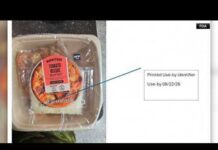
Utz Quality Foods issued the original voluntary recall in May 2026. The affected products include Zapp’s Bayou Blackened Ranch in 1.5 oz, 2.5 oz, and 8 oz bags; Zapp’s Big Cheezy in 2.5 oz and 8 oz bags; Dirty Salt and Vinegar in 2 oz bags; and Dirty Sour Cream and Onion in 2 oz bags.
These products were sold at retailers across the country. If any of these are in your pantry, stop eating them and check with the store for a refund.
The FDA has upgraded its recall of hundreds of thousands of bags of "Zapps" and "Dirty" potato chips. The chips have been upgraded to a Class I recall, which means there's a "reasonable" chance that consuming the product could cause illness or death. https://t.co/LrO7aC9pdQ
— ABC15 Arizona (@abc15) July 6, 2026
The Dry Milk Powder Connection Nobody Is Talking About
The suspected source is a seasoning ingredient that contains dry milk powder. Dry milk powder has a history of Salmonella contamination in the food industry because low-moisture dairy products can harbor the bacteria in ways that allow them to survive standard processing.
Here is the twist: the seasoning batches used in these chips tested negative for salmonella before they were used in production. Utz and the FDA both say the recall is precautionary. No specific batch numbers or supplier details have been made public.
That lack of detail is worth noting. Without knowing which supplier made the dry milk powder, or which production dates are at risk, consumers and retailers cannot fully trace the problem. The FDA upgrade to Class I came nearly two months after Utz first pulled the products.
That gap does not suggest a cover-up, but it does suggest the agency moved carefully rather than quickly — which is its own signal of how seriously officials view the potential risk.
Why a Precautionary Recall Can Still Be the Right Call
Some people will look at this and ask: if no one is sick and the tests came back clean, why the highest danger label? That is a fair question.
Research on food recalls in the United States from 2002 to 2023 found that Salmonella and Listeria together accounted for 40% of all food and beverage recalls, and biological contamination accounted for 96% of all Class I recalls. Precautionary Class I recalls for salmonella risk — with no confirmed illnesses — are not rare. They are the norm.
The FDA chose to apply its highest risk label. Both decisions reflect the kind of responsible, front-end caution that protects the public without waiting for a body count. The absence of illness does not mean the absence of risk. It may mean the recall is working exactly as intended.
Sources:
foxbusiness.com, thehill.com, instagram.com, facebook.com, fda.gov, wausaupilotandreview.com, aarp.org, reddit.com, yahoo.com, marlerclark.com, sciencedirect.com, foodsafety.gov, mergenai.ca