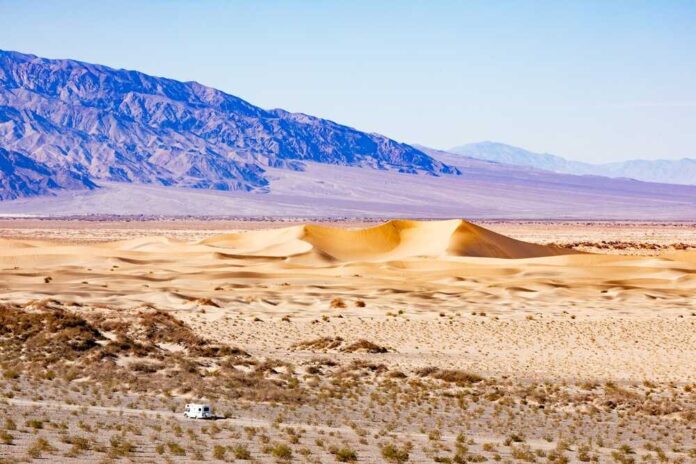
Record-breaking rainfall in Death Valley has resurrected a prehistoric lake, sparking concerns about climate shifts and environmental impacts.
Story Highlights
- Lake Manly reemerges in Death Valley after record rainfall.
- The basin collected more rainwater in two months than the yearly average.
- Lake Manly’s history dates back to the last Ice Age.
- This phenomenon raises questions about climate patterns and their implications.
Lake Manly’s Reemergence: A Natural Wonder
Lake Manly, a shallow body of water that formed during the Ice Age, has resurfaced in Death Valley National Park, California. The lake formed at the Badwater Basin, the lowest point in North America, after unprecedented rainfall from September to November 2025.
The National Park Service reported that although the lake is smaller than last year’s formation, it remains notable, drawing attention from visitors and researchers alike.
The recent rainfall in Death Valley broke historical records, with 2.41 inches falling in just two months. This is more than the area usually receives in a full year. The National Weather Service confirmed that this fall was the wettest on record for Death Valley, surpassing previous highs and highlighting significant shifts in weather patterns.
Ice Age lake at Death Valley National Park reemerges after record rainfall https://t.co/jryI9a37zq
— CBS Mornings (@CBSMornings) December 10, 2025
The History of Lake Manly
Lake Manly’s origins date back between 128,000 and 186,000 years ago, when the Sierra Nevada mountains were ice-covered. Rivers from these mountains fed into the expansive lake, which at its peak stretched nearly 100 miles with depths of up to 600 feet. This ancient lake eventually dried up as the climate warmed, leaving behind vestiges of its once vast presence.
Today, Lake Manly’s appearances are rare, occurring only when exceptional rainfall fills the usually dry salt flats of Death Valley. The recent formation is a reminder of the region’s dynamic climate history and the potential for future environmental changes.
Implications and Future Considerations
The resurgence of Lake Manly raises questions about ongoing climate trends. While this natural event is captivating, it also serves as a reminder of the broader climate challenges.
The extreme weather that led to the lake’s reemergence could signify shifting patterns that may affect ecosystems and human activities in the region.
As we observe these changes, it’s crucial to consider their implications on local and global scales. The unpredictability of weather events like those in Death Valley underscores the need for preparedness and adaptability in the face of potential climate shifts.