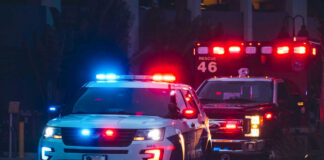


Nearly two dozen runners landed in emergency rooms after a Santa Barbara half marathon, and police are now digging into why.
Story Snapshot
- Hospital officials reported 19 race participants with similar, unexplained symptoms.
- Patients reached two Cottage Health emergency rooms by ambulance, car, and on foot.
- Santa Barbara police opened an investigation into the cluster and its cause.
- Later counts rose to 25 treated runners as officials assessed possible heat factors.
Police Launch Inquiry After Hospital Alert
Santa Barbara police opened an investigation after Cottage Health alerted them that 19 half marathon participants showed up at emergency departments with similar symptoms of undetermined cause. The patients arrived at Santa Barbara and Goleta Valley Cottage Hospitals by ambulance, self-transport, and walk-ins, which points to a broader intake than one isolated incident. Police described the situation as “suspicious circumstances” and said detectives were gathering facts while the cause remained unknown.
Lt. Ethan Ragsdale of the Santa Barbara Police Department confirmed the active inquiry and said the department had not identified a cause as of early evening that day. Officials did not release symptom details or medical findings. Cottage Health stated it was working to determine whether heat or other factors played a role. Police underscored that the investigation sought to explain an unusual cluster, not to declare a crime or a definitive source.
From Nineteen To Twenty-Five: The Count Shifts
Initial reports centered on 19 affected runners. Later coverage cited Cottage Health as saying 25 race participants were treated at its emergency rooms, with most discharged by the next morning. Shifting tallies are common during fast-moving medical responses and often reflect updated intake logs rather than a new event. The broader count still points to a single race-day cluster that warranted a closer look by city police and hospital leaders.
Race organizers said they had no reason to believe anything beyond typical race stressors occurred, pointing to possible heat-related illness or exhaustion. That view matches what event medical teams often see when conditions run warm and runners push hard. Hospital officials also kept heat on the table as they reviewed cases, even as police pursued parallel fact-finding to rule out a shared exposure.
Why A Cluster Triggers A Probe At Endurance Events
Large road races regularly tax medical systems, especially when heat and humidity rise. Research across 19 ten-kilometer races and more than 90,000 finishers found 6.2 medical events per 1,000 finishers, led by heat-related illness and fluid or electrolyte problems. Another long-running analysis from the Falmouth Road Race documented hundreds of exertional heat cases over multiple years, with reliable survival when treated fast. Those base rates explain why heat sits high on the list even when numbers spike.
SANTA BARBARA, Calif. (KEYT) – Multiple hospitalizations from the Santa Barbara half-marathon are under investigation, according to Cottage Health.
Several runners in Sunday's event needed admission to Cottage Hospital for various health concern..,https://t.co/zqKk1ALCSI
— 21 South News (@21SouthNews) November 9, 2026
Police still have good reason to check for a common exposure when many patients show similar symptoms in a short window. A shared source could be environmental, logistical, or consumable. That includes water, sports drinks, energy gels, ice, or even course conditions. The Santa Barbara investigation fits that standard playbook: verify the number of cases, map times and locations, and test any likely shared touchpoints while hospitals assess clinical patterns.
What To Watch As Facts Settle
Officials will look for simple patterns first: where runners fell ill, when symptoms began, what they ate or drank, and which aid stations they used. Investigators may also review weather data, timing chips, and replenishment logs to match case clusters with heat index curves and course flow. If heat is the driver, the clinical picture often shows cramping, confusion, or collapse, with quick improvement after cooling and fluids. If another source appears, testing tends to surface it fast.
Readers should separate two things. Police investigate because the cluster looks unusual for one event, not because a crime occurred. Hospitals assess because patients need answers now, not later. Both tracks can be true at once. That approach aligns with common sense and with public safety: check the basics, keep people calm, and share confirmed findings when ready. Officials have said only this so far: the cause is still under review.
Sources:
foxnews.com, cleveland.com, abc7news.com, espn.co.uk, upi.com, espn.in