

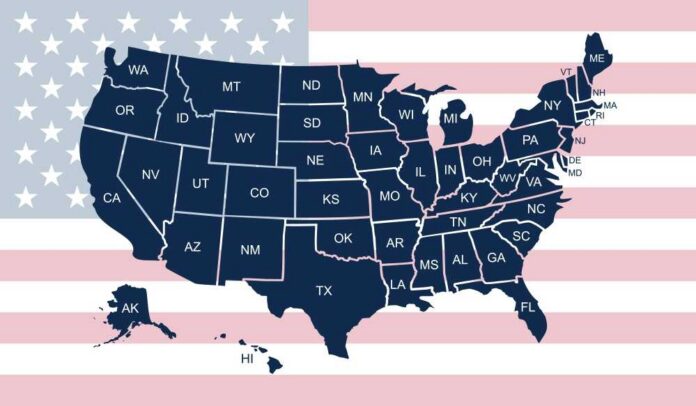
Democrats quietly locked down new state trifectas across key battlegrounds, and the policy map just shifted.
Story Snapshot
- Democrats gained full control of multiple state governments, including Arizona and Wisconsin.
- New Wisconsin maps ordered by the state’s high court helped fuel big seat gains.
- Arizona’s chamber flips delivered first full Democrat control there since 1966, per the Associated Press.
- Trifectas raise stakes for budgets, voting rules, and future district maps in some states.
Democrats convert close states into full control
Democrats captured full control of state government in several battlegrounds, including Arizona and Wisconsin, with reports also highlighting Michigan, Minnesota, Pennsylvania, and Nevada as part of the new or expanded map of Democratic power. The Associated Press reported that Arizona Democrats won both chambers and the governor’s office for the first time since 1966, ending a six-decade drought. National coverage framed the trend as a broader shift toward Democratic majorities in statehouses that matter for national policy fights.
Democrats have six new state government "trifectas" pic.twitter.com/x4Nk5XoTjn
— Politics Watch (@politics_watch1) November 8, 2026
Arizona’s chamber gains did not come from flukes or one-off specials. The Associated Press pointed to sharp seat increases in both the Senate and House, enough to move from minority status to firm majorities. That delivers unified control over the legislative agenda and committee gavels. It also hands the governor a dependable path for budget and policy priorities. The result places Arizona on a different political track than the one that guided it for most of the past half century.
Wisconsin flips powered by court-ordered maps
Wisconsin Democrats won control of both chambers after the state Supreme Court struck down prior district lines and ordered replacement maps for the 2024 cycle, which reshaped the battlefield. Reporting noted that Democrats needed to flip a handful of specific seats to seize each chamber and that they exceeded those targets on election night. The new majorities change how Madison will handle taxes, schools, and election policy after years of gridlock under heavily tilted legislative lines.
Map changes alone never guarantee wins. But when a court calls for new districts that track voters more fairly, tight states can swing fast. This is what played out across dozens of Wisconsin seats. The outcome confirms a basic rule of American politics that conservatives long understood with the Redistricting Majority Project after 2010: maps shape margins, and margins shape laws. When maps match the actual vote, the party with broader appeal in swing suburbs often holds the pen.
Michigan’s narrow margins and durable stakes
Michigan remains a lesson in fragile control and long memory. Democrats secured a state government trifecta in 2022, but the state’s House margins have seesawed since, with independent redistricting changing the math across metro seats. That setup forces both parties to build majorities that can survive retirements, recounts, and special elections. Close chambers boost the value of candidate quality, district-level organizing, and turnout models built for mid-cycle drop-off.
Independent redistricting also limits how far any majority can push the lines. Michigan’s process aims to keep maps responsive to voters rather than party leaders. That reduces room for gerrymanders and raises the odds that control will keep trading hands when the vote is close. For readers tracking national impact, that means policy change will come, but it will come through persuasion and performance, not a mapmaker’s shortcut. That is healthy for accountability-minded conservatives and liberals alike.
What trifectas change next
Unified state control unlocks clear levers: taxes, spending, education rules, election law, and the timing and shape of legislative priorities. Redistricting adds a further prize in states without independent commissions or court control. The Hill framed the new Democratic strength as a larger shift in statehouse power that could influence national debates over voting rights, energy policy, and abortion access. The policy agenda will move faster in Arizona and Wisconsin because governors now face fewer veto-proof obstacles inside their own party.
Conservatives should draw two takeaways. First, maps matter, but message still decides close races. Wisconsin’s new districts opened doors; candidates and coalitions walked through them. Second, state power compounds over time. Republicans proved that truth after 2010 and turned legislative wins into redistricting advantages for a decade. Democrats now hold similar cards in several swing states. The side that plans for courts, commissions, and candidate benches will own the next map fight.
Sources:
apnews.com, en.wikipedia.org, washingtonexaminer.com, abcnews.com