

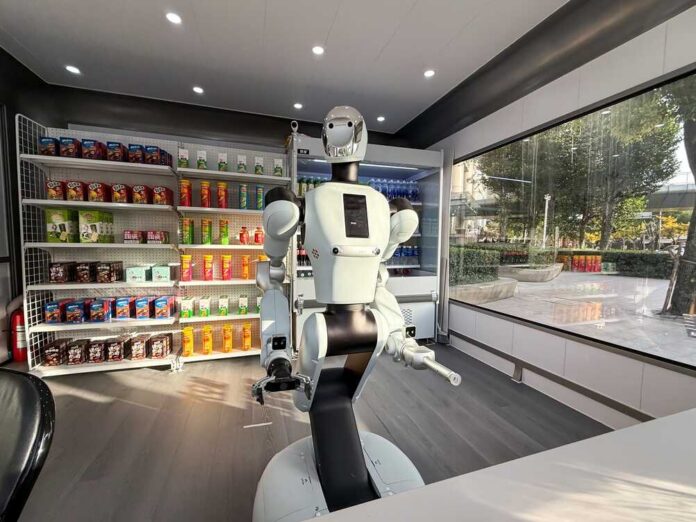
Washington has turned humanoid robots into a national security fight, and the move is far broader than many people first assume.
Quick Take
- The Federal Communications Commission added foreign-made humanoid robots, quadrupeds, and connected power inverters to its Covered List.
- The agency said the devices could create supply chain, cybersecurity, and national security risks.
- The restriction applies only to new or not-yet-authorized models, not existing authorized products.
- The decision fits a larger U.S. pattern of treating Chinese-connected hardware as a security problem.
What the FCC Did
The Federal Communications Commission said it would block imports of foreign-made humanoid robots and related devices on national security grounds.
Reports say the order covers humanoid robots, quadruped robots, and connected power inverters, all of them added to the FCC’s Covered List.
The agency framed the step as a way to protect supply chains and limit exposure to hostile access paths before those systems become deeply embedded in American life.
The most important detail is that this was not presented as a broad recall. Multiple reports say the rules apply only to models that have not yet received authorization for sale in the United States.
That makes the policy look less like an emergency seizure and more like a gatekeeping move aimed at future imports. The FCC’s logic is preventative: stop risk before it hardens into dependence.
Why Regulators Say the Robots Matter
Officials said advanced robotic devices can gather data through sensors, cameras, and network links, and that this data could be misused by malicious actors.
One report quotes the agency as saying these devices could “surveil Americans,” aid foreign intelligence services, or even be remotely commandeered.
That is the heart of the security case. A robot that can see, hear, move, and update itself is not just a machine. It is a networked endpoint on wheels or legs.
The FCC also tied the decision to a broader infrastructure risk. Reports say the government worried about effects on data centers, solar systems, and the power grid, which is why connected power inverters were swept into the same action.
That part matters because it shows the policy is not only about walking robots. It is about any foreign-made connected hardware that can become a weak point in critical systems.
The Pattern Behind the Ban
This move did not come out of nowhere. Reporters placed it inside a wider campaign to keep sensitive Chinese technology out of the United States. The FCC has used similar national security logic before, especially against Chinese telecom equipment and other connected hardware.
Once that pattern is set, every new device category gets judged through the same hard lens. That helps explain why robots, which once sounded futuristic and harmless, now sit in the same policy bucket as routers and inverters.
A White House-convened task force reportedly concluded that foreign-built robots could create cybersecurity risks that threaten critical infrastructure and residents’ safety. That detail strengthens the government’s public case because it shows the FCC was not acting alone.
It was following a broader interagency view that advanced robotics can carry the same kind of hidden risk as other connected devices, only with more mobility and more physical reach.
BREAKING: The FCC banned imports of new foreign-made humanoid robots and quadruped robots on Tuesday, citing national security risks.
The move targets China, which dominates the global humanoid robot market with an estimated 85% share. Chinese-made power inverters — critical for…
— Finance Spot (@financespotnews) July 30, 2026
Still, the public record leaves some important questions open. The reporting does not lay out the full technical dossier behind the decision, so outside readers cannot see the full test data or risk scoring.
It also does not show a public cost-benefit analysis weighing security gains against higher prices, fewer choices, or slower innovation. That does not erase the stated security concern. It does mean the public is being asked to trust regulators’ judgment without seeing every piece of the evidence.
What This Means Going Forward
For Chinese robot makers, the practical effect is severe. Without FCC authorization, market access becomes far harder, and the barrier will likely shape sales plans long before any actual robot reaches an American buyer.
For U.S. policymakers, the action sends a clear signal: advanced robots are no longer treated as novelty gadgets. They are now seen as strategic machines that can touch data, infrastructure, and physical security all at once.
The bigger story is not simply that imports were restricted. It is that the government now treats humanoid robots the way it once treated telecom gear, power systems, and other connected hardware from China. That shift tells you where the next battles will be fought.
The question will not just be what a robot can do on a factory floor or in a warehouse. It will be who controls the software, who owns the supply chain, and who can reach inside the machine after it arrives.
Sources:
cbsnews.com, nbcnews.com, theguardian.com, washingtonpost.com, aljazeera.com, thehill.com, bbc.co.uk, npr.org