
The most advanced missiles Iran could throw at American troops never made it to their targets—but what happened next tells you where this war is really headed.
Story Snapshot
- Iran fired multiple ballistic missiles at U.S. forces after a short pause in fighting.
- U.S. Central Command says every missile was intercepted and no American troops were hurt.
- Hours later, U.S. and Saudi Arabia hit Iran-backed militias inside Iraq.
- Both sides claim self-defense, but the facts tilt toward a clear pattern of Iranian escalation.
The missile barrage that broke the pause
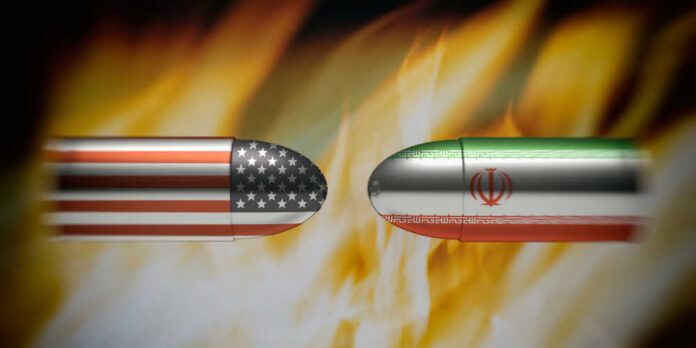
Iran did not ease back into the fight with words; it did it with missiles. According to the United States Central Command, Iran’s Islamic Revolutionary Guard Corps launched multiple ballistic missiles from inside Iran in what the U.S. called an “attempted surprise attack” on American forces in the Middle East.
This launch came after several days of relative quiet, as diplomats tried to stitch together an interim ceasefire and both sides briefly slowed their strikes.
The U.S. military says it successfully intercepted an Iranian missile barrage and worked with Saudi Arabia’s forces to strike sites in Iraq that Tehran-backed militias have used to launch attacks in recent days. U.S. Central Command in a statement Tuesd… https://t.co/IwQuhPd2Yi
— KSTP (@KSTP) July 29, 2026
Those missiles never reached their intended targets. Central Command reported that all of the Iranian missiles were successfully intercepted and that American forces remained “vigilant and at a high state of readiness.” Other outlets tracking the war echoed that every missile in this salvo was knocked down, and that the attack shattered the short pause in fighting rather than responded to fresh U.S. blows.
The interception meant no documented U.S. casualties this round, but it removed any doubt that Iran was willing to go after American troops directly again.
Joint U.S.–Saudi strikes inside Iraq
The answer did not come only from Washington. Very soon after the barrage, U.S. forces worked with Saudi Arabia to hit sites in Iraq linked to Iran-backed militias.
Central Command described these locations as “terrorist logistics and weapons sites” used by groups that had launched dozens of aerial drone attacks in recent days. In plain terms, these were the hubs feeding forces that attack Americans, not random civilian facilities.
Reports say those militias are aligned with Iran and have used Iraqi soil to fire drones and missiles at U.S. and partner bases around the region. That matters for any fair view of self-defense. When armed groups fire across borders at American forces from third countries, they turn those compounds into hostile launchpads.
Letting those hubs stay untouched would be closer to negligence than restraint. Still, critics argue that hitting anything inside Iraq without its full blessing raises sovereignty questions.
Iran’s “retaliation” story and the self-defense debate
Iran and its supporters do not tell this story the same way. State-linked messaging calls the missile and drone attacks a response to earlier U.S. and allied strikes, framing them as retaliation for “aggressive actions” and insisting they target specific bases, not cities.
Iranian statements name places like Harir airbase and other U.S-linked sites and warn people to stay away, which suggests at least a claimed effort to avoid random civilian harm.
Here is where the self-defense claims clash. The United States says its joint strikes in Iraq answered more than 30 drone attacks tied to Iran’s Revolutionary Guard in just three days, but it has not publicly released detailed target packets or radar logs that a courtroom would demand.
Iran, on the other hand, calls its barrages “defensive” while firing ballistic missiles from its own territory toward American troops based in Kuwait, Jordan, and across the Gulf. Under any normal reading of common sense and just-war ideas, launching rockets at foreign forces in multiple countries is a serious escalation, even if you shout “retaliation” when you do it.
Patterns of escalation and why the framing matters
This episode does not stand alone; it slots into a wider pattern that has been building for months. U.S. and Iranian forces have traded strikes from the Strait of Hormuz to Iranian coastal radar sites, to militia warehouses in Iraq.
Central Command describes its waves of attacks as aimed at degrading Iran’s ability to hit commercial shipping and American troops, including repeated strikes on missile and drone storage sites and the units that killed U.S. service members in Jordan.
Each round of fighting comes with quick claims and slow proof. Militaries rush out statements that say “all missiles intercepted” or “only military targets hit,” and major media repeat those lines before independent experts can examine satellite pictures or debris fields.
That does not mean the interception story here is false; in fact, no serious counter-evidence has surfaced to show Iranian missiles reached U.S. troops in this attack. It does mean skeptical citizens should watch for data, not just slogans, as this war grinds on.
What this means for American interests and values
From an American conservative standpoint, the basic instincts here make sense: you protect U.S. forces, you hit those who are shooting at them, and you try to keep vital trade routes open in the Strait of Hormuz. Iran’s decision to break a pause with a ballistic missile strike aimed at American troops undercuts its claim to be a restrained actor. When you fire first after a lull, you own that choice.
At the same time, Washington has a duty to show that every strike inside places like Iraq is tightly focused on real threats, not drift toward open-ended war.
The core facts right now are clear enough: Iran fired, the United States and its partners blocked the missiles, and then U.S. and Saudi jets hammered the militias Iran uses as muscle across the region.
The open question is whether leaders on either side are still looking for a way out—or whether this kind of “successful interception” becomes just the pre-show for the next, far more dangerous round.
Sources:
apnews.com, theguardian.com, goodmorningamerica.com, ctvnews.ca, defenseone.com, aljazeera.com, wsj.com, en.wikipedia.org, middleeastmonitor.com