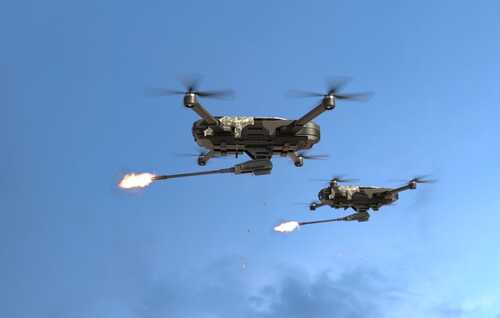
Florida’s unprecedented move to deploy armed drones in schools is igniting debate over student safety and the future of American education security.
Story Snapshot
- Florida is launching the nation’s first large-scale pilot of non-lethal, armed drones in three public school districts to deter and rapidly respond to active shooters.
- The initiative leverages new technology developed by Campus Guardian Angel, with remote operation and direct law enforcement integration.
- Supporters cite the urgent need for rapid intervention after years of failed “woke” security policies and continued violence.
- Critics warn about privacy, “security theater,” and the risk of normalizing militarized school environments for America’s youth.
Florida’s Armed School Drone Pilot: Technology Meets Constitutional Debate
In fall 2025, Florida will become the first state to deploy non-lethal, armed drones in public schools, aiming to neutralize active shooter threats in seconds.
This bold move, funded by a $557,000 state allocation, will see drones equipped with pepper spray pellets and glass-breaking tools stationed in three districts, including Miami-Dade.
The technology, designed by Texas-based Campus Guardian Angel, is operated remotely by FAA-certified pilots in Texas and promises real-time video, two-way communication, and rapid deployment at the push of a silent alarm.
This project arrives in response to a decade of tragic school shootings and perceived failures of conventional security policies. Since the 2018 Parkland massacre, Florida has faced more than 60 school shooting incidents, fueling demands for faster, more decisive protective action.
State leaders, including Governor Ron DeSantis, argue that the new drone initiative delivers a tangible response to parents’ cries for safety and addresses years of frustrated calls for stronger, common-sense security after left-leaning approaches failed to stem the violence.
Drones are stored in secure charging boxes on campus and can reach any point within 15 seconds, operating in direct coordination with law enforcement.
Stakeholders, Motivations, and the Conservative Response
The pilot program brings together key players: Campus Guardian Angel as the technology vendor; the Florida Department of Education and Miami-Dade County Public Schools as implementers; the state government as the funder and political driver; and local law enforcement as operational partners.
For conservatives, this initiative represents a victory for local control, innovation, and student protection—directly countering the bureaucratic stagnation and ineffective “gun-free zone” policies so heavily criticized in recent years.
Campus Guardian Angel’s CEO, Justin Marston, highlights the urgent need for speed, noting that “most of the death happens in the first 120 seconds,” a sobering fact motivating the project’s rapid response design.
The system also reflects the Trump administration’s broader push for law-and-order and state-driven solutions. By empowering local officials and integrating law enforcement, the drone program sidesteps federal overreach and positions Florida as a national leader in school safety.
This resonates with conservative values emphasizing individual rights, the sanctity of life, and the duty to protect children without surrendering basic freedoms or constitutional protections.
Costs, Impact, and the Constitutional Balancing Act
Financially, the program is a major investment: each box of six drones costs $15,000, with ongoing operational expenses of $1,000 per month for every 500 students.
Proponents argue the price is justified by the potential to save lives and deter would-be attackers, especially given the ineffectiveness of past policies and the high cost of inaction.
In the short term, the drones promise a visible deterrent and rapid intervention capability, with real-time intelligence provided to law enforcement.
Armed drones designed to neutralize school shooters in seconds are being tested in several Florida districts https://t.co/8AcLo205Qr pic.twitter.com/6cmRuY03XN
— New York Post (@nypost) August 25, 2025
However, critics caution that such technology may amount to “security theater”—providing the appearance of safety without solving the deeper issues of violence, mental health, or constitutional rights.
Privacy advocates and some school safety experts warn of potential overreach, psychological impacts on students, and risks of normalizing militarized environments.
These concerns echo longstanding conservative fears about government surveillance and the erosion of American freedoms, demanding vigilance even as new tools are embraced for protection.
Expert Perspectives and the Road Ahead
Expert analysis remains divided. Supporters emphasize the critical time advantage and non-lethal deterrence that drones can offer, framing the program as a necessary evolution in school security.
Critics, including Ken Trump of National School Safety and Security Services, argue that most school threats are not active shooters but everyday altercations, and warn against relying solely on technology instead of comprehensive, community-based solutions.
The long-term effectiveness and safety of the drone pilot remain unproven, and the ultimate balance between security and liberty will depend on results closely watched by parents, educators, lawmakers, and constitutional advocates across the nation.
Sources:
Florida schools will test armed drones this fall to thwart shooters
Technologies designed to prevent school shootings create ‘security theater,’ advocate says
Armed Drones to Be Deployed at Schools to Stop Mass Shooters
Armed drones designed to neutralize school shooters are being tested in several Florida districts