
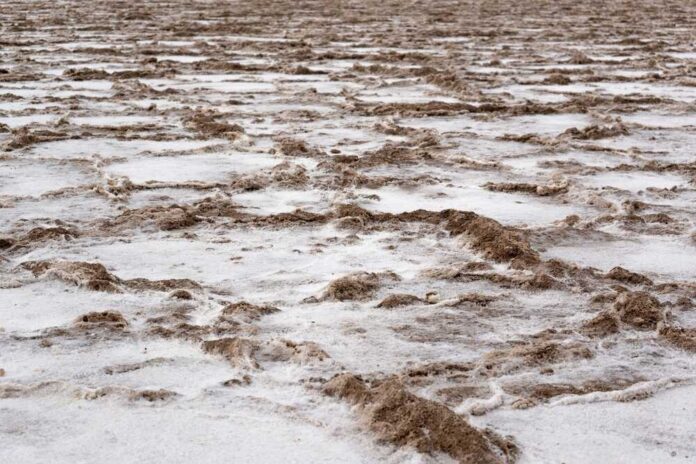
The West is watching its “frozen savings account” vanish as winter storms bring rain instead of snow, setting up a volatile mix of water shortages and higher wildfire risk heading into summer.
Quick Take
- Water Year 2026 has delivered record-low January snow cover, driven by unusually warm conditions that turn snow into rain.
- More than 80% of SNOTEL stations in several Western states have reported snow water equivalent below the 20th percentile, a key snow-drought threshold.
- Low snowpack threatens spring runoff, which many Western basins rely on for a major share of summer water supplies.
- Dry fuels and reduced mountain snow can raise the odds of a dangerous wildfire season, even if total precipitation has not been unusually low.
Record-Low Snow Cover Signals a Different Kind of Drought
Water managers across the Western U.S. entered 2026 facing a problem that doesn’t look like the classic “no rain” drought. Federal monitoring has described a snow drought fueled by warmth: precipitation arrives, but too much of it falls as rain, and existing snow melts during warm storms.
NASA reporting noted record-low January snow cover in early 2026 based on satellite observations, underscoring that the issue is temperature-driven as much as moisture-driven.
A record snow drought with unprecedented heat hits most of the American West, depleting future water supplies, making it more vulnerable to wildfires and hurting winter tourism and recreation. https://t.co/30bwuTGOjs
— NBC News (@NBCNews) February 10, 2026
A record snow drought with unprecedented heat hits most of the American West, depleting future water supplies, making it more vulnerable to wildfires and hurting winter tourism and recreation. https://t.co/30bwuTGOjs
— NBC News (@NBCNews) February 10, 2026
Ground data has reinforced the satellite picture. Snow telemetry sites used for water forecasting have shown widespread basins falling below critical percentiles, including large portions of Washington, Oregon, Colorado, Utah, Arizona, and New Mexico.
When snow water equivalent drops that low across multiple watersheds, the West loses its most dependable “slow release” reservoir. That matters because mountain snowpack is designed by nature to melt gradually, not rush downstream all at once.
Why “Snow Drought” Hits Families, Farms, and Power Bills
Western snowpack functions like infrastructure—quietly storing water until spring and summer demand arrives. Research summaries have emphasized that key basins rely on snowpack for a large share of their warm-season water, meaning low snowpack threatens municipal supplies, irrigation planning, and hydropower output.
The impacts are not limited to rural communities: major metro areas, industrial users, and multi-state water compacts all lean on predictable runoff timing.
Reservoir conditions add urgency, especially in the Colorado River system. Reporting highlighted low storage levels at major reservoirs in early February 2026, leaving less buffer if spring runoff disappoints.
That puts pressure on allocation decisions, conservation mandates, and the political friction that follows when states and sectors compete for the same shrinking supply. The hard truth is that warm winters can erase snow storage even when storms appear “normal” on paper.
California’s Relative Bright Spot Doesn’t Fix the Regional Picture
One reason this story has confused casual observers is the sharp regional split. AccuWeather reported that California was a rare exception, with reservoirs running well above average after storms, while much of the broader West remained locked in snow drought conditions.
That contrast matters: it shows why sweeping narratives can mislead. A strong reservoir year in California does not automatically translate into relief for the Pacific Northwest, the Great Basin, or the Colorado River Basin.
Federal outlooks have also pointed to shifting conditions across the region, including areas where drought may ease and others where it may persist.
That uncertainty is exactly why snowpack measurement matters so much: decision-makers can’t manage what they can’t measure, and the rain-versus-snow line can change quickly with temperature swings.
For households, the practical takeaway is that water restrictions and pricing pressures often follow supply volatility, even before headlines declare an “official” crisis.
Wildfire Risk Rises When Snowpack Disappears Early
Low snowpack doesn’t just threaten faucets; it changes the summer landscape. Multiple sources tied reduced snow water equivalent to drier soils, stressed vegetation, and an earlier start to drying in forests and rangelands—conditions that can intensify wildfire risk.
ABC News reported expert concern that low- to mid-elevation snow is entering “uncharted territory” in some places, which matters because those elevations often border communities and critical infrastructure corridors.
Record snow drought in Western US raises concern for water shortages and wildfires https://t.co/IHnY3LkQOW
— KMET1490AM (@KMETRadio) February 10, 2026
Record snow drought in Western US raises concern for water shortages and wildfires https://t.co/IHnY3LkQOW
— KMET1490AM (@KMETRadio) February 10, 2026
No report can forecast exactly where the first major ignition will occur, and the available research does not claim that 2026 fires are already underway.
The concern is structural: less snow and earlier melt typically mean a longer window for fuels to dry out before late-summer lightning or human-caused ignitions.
For voters demanding competence from government, the core issue is preparedness—water planning, forest management, and emergency response should be driven by measurable conditions, not political fashions.
Sources:
Snow Drought: Current Conditions and Impacts in the West (2026-01-08)
Western US faces worsening snow drought, with California being the rare exception
Worsening snow drought in the West has cascading impacts, experts say
Seasonal Drought Outlook Summary
The Conversation: The western US is in a snow drought. Here’s how a storm made it worse
How does this year compare to the snow droughts of the past?