
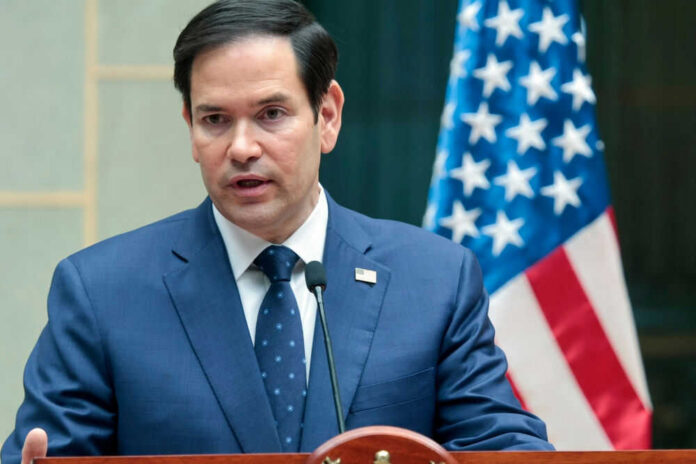
Secretary of State Marco Rubio has revoked green cards of Iranian nationals tied to the Tehran regime, including a relative of terrorist commander Qasem Soleimani who was living lavishly in Los Angeles while ordinary Iranians suffer under brutal modesty laws.
Story Highlights
- Rubio revokes green cards of regime-linked Iranians, spotlighting Soleimani relative’s luxury Los Angeles lifestyle
- Iranian diaspora celebrates action as “major win” after years of advocacy against regime affiliates in America
- Revocations coincide with ongoing US-Israeli military strikes on Iranian facilities amid heightened regional conflict
- Experts report no evidence of regime power loss despite targeting of leadership-connected individuals
Rubio Targets Regime-Connected Iranians in US
Secretary of State Marco Rubio executed revocations of green cards held by Iranian nationals with documented ties to the Tehran regime. The action targets individuals benefiting from American privileges while maintaining connections to a government designated as a state sponsor of terrorism.
The revocations leverage authority under the Immigration and Nationality Act, which permits the denial of immigration benefits to individuals posing national security threats.
Rubio’s decision represents a hardline approach consistent with the Trump administration’s renewed focus on immigration enforcement and countering adversarial foreign governments operating within the United States borders.
US revokes green cards and visas of several Iranian nationals connected to Tehran government | Click on the image to read the full story https://t.co/sf8lSjaUSQ
— WBAL-TV 11 Baltimore (@wbaltv11) April 5, 2026
Soleimani Relative’s Lavish Lifestyle Exposed
The most prominent case involves a relative of Qasem Soleimani, the Iranian military commander killed in a 2020 US drone strike. This individual resided in Los Angeles, enjoying a luxurious lifestyle that starkly contradicts the oppressive modesty laws enforced on ordinary Iranian citizens by the Tehran regime.
The contrast highlights the hypocrisy of regime-connected elites who escape the restrictive conditions they impose on their fellow Iranians. Soleimani, who led Iran’s Quds Force, symbolized the regime’s hardline militarism and terrorist activities throughout the Middle East.
His relatives’ presence in America enjoying Western freedoms while supporting the regime represents precisely the kind of exploitation this policy aims to eliminate.
Diaspora Victory After Years of Advocacy
Iranian diaspora communities have advocated for years to remove regime-affiliated individuals from American soil. These expatriates, many of whom fled religious persecution and political oppression, view the revocations as a significant victory in their long campaign for accountability.
A diaspora source characterized the action as a “major win,” reflecting widespread frustration among freedom-loving Iranians that regime elites exploit US immigration generosity while supporting a government that denies basic liberties to its own people.
The advocacy effort demonstrates how immigrant communities can effectively influence policy when their concerns align with national security priorities and American values of opposing tyranny.
Military Context and Regime Stability Questions
The revocations occur amid active US and Israeli military strikes on Iranian facilities, creating a broader context of escalating confrontation with Tehran. However, experts cited in NBC News reporting indicate no evidence that the Iranian regime has lost power or influence despite these external pressures on its leadership and military infrastructure.
This assessment raises questions about the strategic impact of targeting regime-connected individuals compared to the Tehran government’s domestic control.
The timing suggests coordination between immigration enforcement actions and military operations, signaling a comprehensive approach to applying pressure on Iran across multiple fronts while the regime continues supporting terrorism and pursuing regional destabilization.
Broader Immigration Enforcement Implications
The green card revocations establish precedent for stricter immigration enforcement against nationals connected to adversarial foreign governments. This approach signals potential application to other state sponsors of terrorism and hostile regimes whose affiliates may be exploiting American immigration benefits.
The policy reflects conservative principles of prioritizing national security over globalist approaches that historically permitted regime-connected individuals to maintain comfortable lifestyles in America. Short-term effects include disrupting the lives of targeted elites and boosting morale among diaspora communities.
Long-term implications point toward sustained enforcement that could deter regime officials from sending relatives to enjoy American freedoms while oppressing their countrymen, representing common-sense immigration policy that protects American interests and supports genuine freedom-seekers over tyrannical regimes.
Sources:
NBC News – Rubio Revokes Green Cards of Regime-Linked Iranians