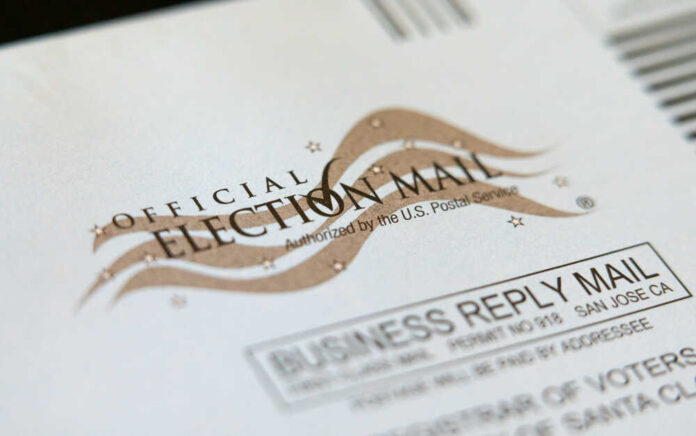
The Supreme Court agreed to decide whether states can count mail-in ballots received after Election Day, a pivotal case that could restore election integrity and end the chaotic ballot-harvesting practices that have undermined voter confidence for years.
Story Highlights
- Supreme Court will review Republican-led lawsuit challenging post-Election Day ballot counting in 15 states.
- RNC argues Mississippi’s five-day grace period violates federal election law requiring fixed election dates.
- The conservative 5th Circuit already ruled that Mississippi had violated federal law by accepting late ballots.
- The case could impact election laws nationwide and restore traditional Election Day finality.
Supreme Court Takes Up Critical Election Integrity Case
The Supreme Court announced Monday it will hear a Republican National Committee lawsuit challenging Mississippi’s law allowing mail-in ballots to arrive up to five days after Election Day.
This landmark case addresses a practice that has spread to fifteen states, creating a patchwork of conflicting election rules that undermine the constitutional principle of a unified national election date.
The RNC argues these extended deadlines violate federal law establishing Election Day as the definitive moment when voting must conclude.
Supreme Court to weigh mail-in ballots arriving after Election Dayhttps://t.co/ZleeypSuUZ pic.twitter.com/G0KU0fC5hD
— The Washington Times (@WashTimes) November 10, 2025
Federal Law Versus State Flexibility Debate
The RNC’s legal challenge centers on federal statutes that fix Election Day as a specific date, arguing states cannot arbitrarily extend voting beyond this constitutional deadline.
Republican attorneys told the Court that historically, states required ballot receipt by Election Day, but recent deviations have created dangerous precedents.
Mississippi officials counter that voters fulfill their obligation by casting ballots before the deadline, regardless of postal delivery delays. This fundamental disagreement highlights the tension between federal election uniformity and state administrative flexibility.
Conservative Circuit Court Backs Election Day Finality
The conservative 5th Circuit Court of Appeals already ruled in 2024 that Mississippi’s extended ballot acceptance period violates federal election law, providing strong precedent for the Supreme Court case.
However, the appellate court declined to block the policy before the 2024 presidential election, allowing the controversial practice to continue.
This measured approach demonstrates judicial restraint while establishing clear legal groundwork for the Supreme Court’s eventual decision on nationwide election standards.
Broader Implications for Election Reform
This case represents part of a broader Supreme Court effort to clarify election laws following years of confusion and controversy over voting procedures.
The Court is simultaneously considering challenges to Voting Rights Act redistricting requirements and other post-Election Day ballot policies, signaling a comprehensive review of modern election practices.
With Trump’s overwhelming 60% victory in Mississippi highlighting strong conservative support, the Court’s conservative majority appears positioned to restore traditional Election Day finality and eliminate practices that have eroded public confidence in electoral outcomes.