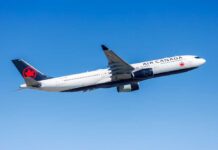


American families preparing for summer travel face sticker shock as United Airlines CEO warns airfares will surge “probably start quick” thanks to jet fuel prices skyrocketing over 50% in just one week due to the escalating Iran war—a predictable consequence of Middle East instability that hardworking Americans will now pay for at the ticket counter.
Story Snapshot
- United Airlines CEO Scott Kirby warns ticket prices will rise rapidly as jet fuel surges from $2.50 to $3.88 per gallon—a 55% jump driven by Iran war disruptions
- Strait of Hormuz closure and Iranian retaliation knock 9 million barrels per day offline, creating extreme fuel deficits across global markets
- Premium and business class fares are climbing $3-10 per ticket immediately, with international surcharges and budget carriers also affected
- Over 20,000 Middle East flights canceled since the conflict began, forcing costly rerouting and operational overtime for U.S. airlines
- Broader economic pain looms as U.S. gasoline jumps 43 cents and diesel soars 75 cents per gallon in just one week
Fuel Prices Explode as Iran Conflict Disrupts Global Supply
Jet fuel prices hit $3.88 per gallon on Friday, marking a staggering increase of over 50% from the previous week when fuel traded at $2.50 per gallon before the U.S.-Israel joint military operation against Iran.
The Strait of Hormuz, a critical chokepoint for global oil transport, remains effectively closed as Iranian retaliation strikes damaged Saudi refineries and Qatar’s LNG facilities, halting approximately 20% of global liquefied natural gas production.
Kuwait reduced oil output as a precautionary measure, contributing to an estimated 9 million barrels per day taken offline. West Texas Intermediate crude oil reached $91 per barrel, up 11%, while Brent crude climbed to $92.47, signaling sustained energy market turmoil.
United CEO Delivers Blunt Warning on Ticket Price Increases
United Airlines CEO Scott Kirby addressed the crisis Thursday at an industry event, stating the airline would face a “meaningful” financial impact this quarter from fuel cost spikes.
Kirby emphasized that consumers should expect ticket price increases to materialize rapidly, warning the impact will “probably start quick” as airlines struggle to absorb fuel costs that represent roughly 20% of total operating expenses.
Travel analyst Henry Harteveldt from Atmosphere Research Group confirmed premium cabin fares are already creeping upward by $3 to $10 per ticket, with international routes seeing new fuel surcharges added. Airlines are balancing the need to recover skyrocketing costs against potential demand destruction if prices rise too aggressively heading into peak summer travel season.
Plane ticket prices likely to soar as Iran war brings huge fuel price surge: United CEO says impact will 'probably start quick' https://t.co/LMe1ngfl8r pic.twitter.com/3GkXx6Ej5L
— New York Post (@nypost) March 7, 2026
Budget Travelers and Families Bear the Brunt
Contrary to initial assumptions that budget carriers might escape the worst impacts, experts confirm airlines like Spirit and Frontier face identical fuel market pressures. Families planning vacations and business travelers reconsidering trips now confront higher costs across all fare classes as airlines implement incremental daily price adjustments.
The conflict has already forced cancellation of over 20,000 flights to and from the Middle East region, compounding problems with costly aircraft rerouting that burns additional fuel and requires overtime staffing. Fitch Ratings analysts note these operational disruptions create secondary cost pressures beyond raw fuel prices.
Cornell University supply chain expert Shashank Mani warns that weeks or months of sustained energy constraints will ripple through manufacturing and logistics sectors, amplifying inflationary pressures Americans already struggle to manage.
Long-Term Economic Consequences and Strategic Concerns
The war shows no signs of abating as President Trump demands Iran’s unconditional surrender, escalating concerns about prolonged energy market instability. Europe and Asia face the most severe jet fuel shortages, with prices reportedly up 200% in some Asian markets, described as “stratospheric” by Sparta Commodities analyst Sarah Noel-Beswick.
Rystad Energy analyst Claudio Galimberti characterizes the 9 million barrel per day deficit as extreme, creating supply constraints that could force airlines to ground inefficient older aircraft if fuel remains elevated. Diesel prices jumping 75 cents per gallon to $4.51 and gasoline rising 43 cents to $3.41 nationally threaten broader economic slowdowns.
This crisis underscores the dangers of Middle East dependency and foreign policy missteps that leave American consumers vulnerable to global supply shocks—precisely the kind of strategic weakness that frustrates citizens who value energy independence and stable household budgets.
Sources:
Iran war: Experts warn airfares may increase as jet fuel prices surge
Iran war drives up oil prices. United Airlines CEO says U.S. airfares could soon rise
Iran conflict: Higher fuel prices could mean plane ticket additional fees, expert says
Oil and gas prices rapidly rise as Iran war shows no signs of letting up
Cost of plane tickets likely to soar as Iran war brings huge fuel price surge