President Trump has sparked fierce debate after signaling openness to a national holiday honoring Charlie Kirk, who was recently assassinated.
Story Highlights
- White House Press Secretary confirms Trump’s willingness to support a national holiday for Charlie Kirk.
- The proposal breaks a 42-year precedent since the establishment of Martin Luther King Jr. Day.
- Congressional action is required to establish a federal holiday honoring the founder of Turning Point USA.
- Conservative activists celebrate recognition while Democrats condemn political theater.
White House Confirms Presidential Support
White House Press Secretary Karoline Leavitt confirmed during September 2025 briefings that President Trump remains open to supporting Congressional legislation establishing a national holiday for Charlie Kirk.
The announcement represents Trump’s continued loyalty to conservative allies who champion America First principles.
Leavitt emphasized Kirk’s contributions to youth conservative activism and his role in mobilizing patriotic Americans against leftist indoctrination on college campuses.
Breaking Decades of Holiday Precedent
The proposal challenges traditional criteria for federal holidays, which have historically honored deceased figures with broad bipartisan appeal or commemorated significant national events.
Martin Luther King Jr. Day, established in 1983, marked the last major individual holiday creation after extensive national debate and overwhelming historical significance.
Congressional Authority and Political Reality
Establishing a federal holiday requires Congressional approval, which Republicans must navigate through complex legislative processes and potential Democrat opposition.
The Constitution grants Congress exclusive authority over federal holidays, meaning Trump’s endorsement alone cannot create the commemoration.
Conservative lawmakers face pressure from their base to honor Kirk’s decade-long fight against campus socialism.
Conservative Movement Celebrates Recognition
Turning Point USA supporters view the proposal as long-overdue recognition for Kirk’s tireless defense of constitutional principles and traditional American values.
The organization’s grassroots network mobilized social media campaigns highlighting Kirk’s impact on conservative youth engagement and his opposition to woke ideology infiltrating educational institutions.
Conservative commentators argue Kirk’s influence on preserving free speech and limited government principles merits national acknowledgment, especially given his role in countering decades of leftist campus dominance.
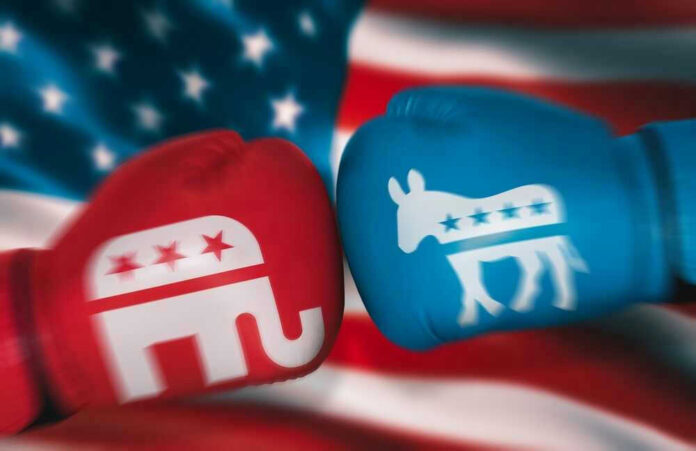
Democrat opposition predictably emerged, with progressive organizations condemning the proposal as partisan theater designed to distract from substantive policy debates.
The stark partisan divide reflects broader cultural battles over national identity and the appropriate boundaries between political activism and governmental recognition in modern America.