
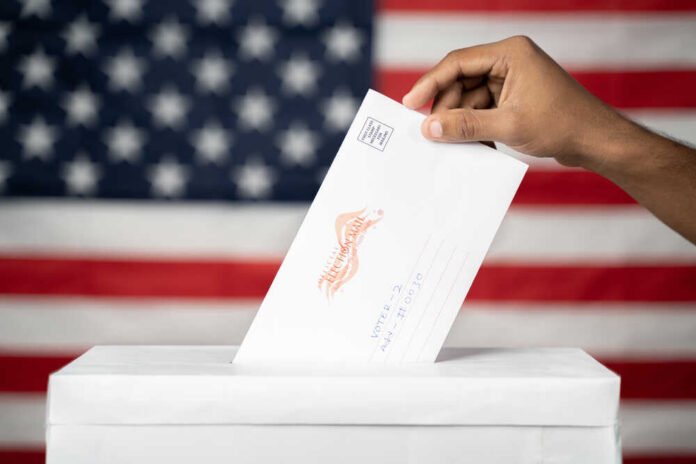
Millions of mail ballots are leaving print shops while courts argue over who controls the mailbox.
Story Snapshot
- Ballots are being mailed as a major court fight over a March executive order continues.
- The Supreme Court allowed parts of President Trump’s plan to move forward for now.
- The order directs federal agencies to verify eligible voters and guide Postal Service delivery.
- Lower courts have blocked key parts and say the president lacks election authority.
What the order actually does, and why the timing matters
President Trump’s March order tells the Department of Homeland Security to build state-by-state lists of adult United States citizens and tells the Department of Justice to focus on officials who issue ballots to ineligible voters.
It pushes the Postal Service to deliver ballots only to voters on approved lists, and to standardize handling rules. The White House says the goal is to prevent fraud and verify eligibility, not to reduce access. Ballots are already going out, so timing is tight.
The Supreme Court stepped in on August 24 and lifted a lower-court block, which lets parts of the plan move ahead during the appeal. The justices did not decide the final legality. They allowed implementation to proceed while the case continues in the lower courts.
That relief changes logistics on the ground. It also fuels more lawsuits from states and advocacy groups who argue the order reaches beyond presidential power.
Midterm elections have begun in the United States in a fog of confusion over mail-in voting, with ballots already going out as President Donald Trump presses courts to let him impose sweeping new restrictions on how they are handled.https://t.co/8S07JiNtez by @frankietaggart pic.twitter.com/ar0iYJZzMU
— AFP News Agency (@AFP) September 5, 2026
Why courts are split on authority and election control
Federal judges in Boston earlier ruled that core parts of the order likely exceed presidential authority. One decision called the provisions that set up a federal eligible-voter list and direct Postal Service ballot limits “legally void,” citing separation of powers and the states’ historic role in election rules.
That view says only Congress and the states set election procedures. The Supreme Court’s later order did not reject that view; it only changed what can move forward while appeals play out.
The administration argues it can coordinate federal resources to protect mail integrity, enforce existing law, and prevent the delivery of ballots to people who are not eligible.
It says prosecutors should target officials who ignore rules and that federal list matching will reduce errors. Critics say the record does not show broad fraud and that new lists can misfire and slow lawful votes. They also say shifting rules late can create confusion for voters and local offices.
The stakes for election integrity and access as ballots fly
States and local clerks planned their ballot schedules months ago. A federal green light, then a red light, then a partial green light, forces them to adjust processes in real time. That is where the Supreme Court’s own anti-chaos guidance often comes in.
Courts try to avoid late changes that could upend elections. The justices allowed some steps to proceed but left the final call for later, which keeps pressure on administrators to build backup plans and clear messaging.
With the midterm elections approaching, the Trump administration on Sunday again asked the Supreme Court to let new restrictions on mail ballots take effect before November. https://t.co/SXJQPqwT86
— ABC News 4 (@ABCNews4) September 6, 2026
Conservatives will judge this by two tests: does the plan confirm only citizens get ballots, and does it avoid sidelining lawful voters? A clear, accurate citizen list helps integrity, but it must be precise. A blunt tool that drops eligible voters would fail the common-sense test.
The right answer is high-accuracy verification with clear appeals, clean chain-of-custody for ballots, and visible audit trails. Courts will likely ask for that level of proof and process before blessing anything broad.
What to watch next as the clock keeps ticking
Expect more filings that show how the Department of Homeland Security built the citizen lists, what error rates they found, and how appeals would work for voters who get flagged. Watch for Department of Justice charging guidance that explains which cases rise to the level of prosecution.
Track Postal Service implementation memos, since carriers and sorting plants will need exact, testable rules, not slogans. Final answers may wait on a merits ruling, but the midterms will not wait.
Sources:
pbs.org, cnn.com, thehill.com, democracydocket.com, apnews.com, npr.org