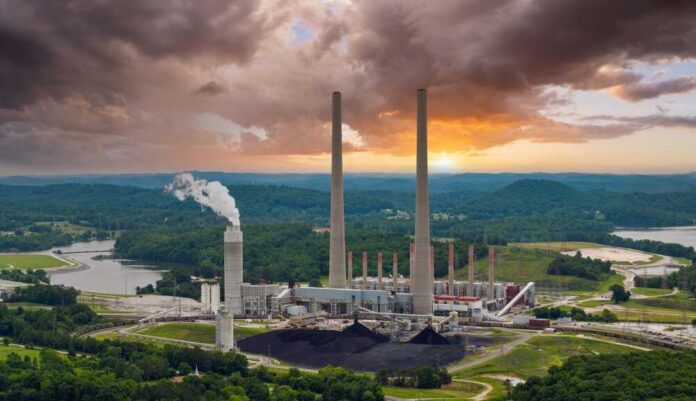
Amid high energy costs and grid reliability worries, President Trump just directed $700 million toward coal plants and a California export terminal, signaling a hard pivot back to dependable American power and blue-collar jobs [4].
Story Highlights
- White House commits $700 million to support coal plants, mines, and exports using emergency authorities [4][6].
- The plan includes $75 million for an Oakland, California coal export terminal at the former Army Base site [5][7].
- The administration frames coal as essential to grid reliability and national resilience [6].
- Opponents in California vow legal and political resistance to the export terminal [1].
What the $700 Million Package Does
President Trump announced nearly $700 million in federal support to stabilize coal-fired power plants, sustain mining operations, and expand export capability.
Reporting states the administration is invoking the Defense Production Act to prioritize and fund key coal facilities, reflecting a reliability and national security rationale [6].
Coverage from national outlets corroborates the claim that the package is aimed at keeping existing plants online and supporting new investments in coal production and logistics [4]. The plan directly addresses fuel diversity concerns that emerged after years of baseload capacity being shuttered.
Energy trade reporting adds that the package includes $75 million for a long-delayed coal export terminal in Oakland, California, located at the former Oakland Army Base [5].
Regional reporting indicates Department of Energy funds are earmarked for that terminal to unlock Western coal transport to overseas buyers, complementing domestic power plant support [7].
Together, these steps aim to reinforce the coal supply chain —mining, transport, generation, and exports—each intended to cushion consumers from price spikes and bolster grid stability during peak demand or supply disruptions.
Trump announced a $700 million plan to support coal plants and mines, citing national security concerns and the need for reliable electricity for AI data centers https://t.co/Y5QGvAxqpo pic.twitter.com/KrHsvLJ5bR
— Reuters (@Reuters) June 4, 2026
Jobs, Exports, And Local Pushback
Industry coverage reports the administration touts construction and operations jobs linked to both the plant support and the Oakland terminal, with claims of significant employment during the buildout and ongoing terminal operations [3].
California broadcast coverage shows organized opposition in Oakland, where activists and city officials have fought coal handling for years, citing environmental and health concerns [1].
Opponents argue the terminal primarily serves foreign buyers and therefore shifts impacts to local residents without clear local energy benefits, while supporters see union jobs and national economic gains through expanded exports [1].
Broadcast reporting describes a logistics plan to move coal by rail from interior Western states to the Bay Area for shipment to Asia, reinforcing that the terminal is oriented to export markets rather than California electricity load centers [1].
That export orientation is central to the policy debate. Supporters argue that foreign sales sustain American mining communities and improve the United States’ trade position, while critics counter that local air-quality risks and litigation costs could delay or derail promised benefits.
These competing priorities will shape the terminal’s permitting timeline and final economics [1][5].
Grid Reliability And National Security Framing
White House messaging links coal investments to resilience against blackouts, cyber threats, and fuel shortages by preserving on-site fuel capability at power plants.
The administration’s reference to the Defense Production Act underscores the view that firm, dispatchable generation is a strategic asset, not a relic [6].
National and sector reporting note that the initiative aims to preserve baseload resources that can run through extreme weather, complementing intermittent sources and mitigating risks from overreliance on imports or fragile supply chains [4][5].
[LA Times]
President announces #coal terminal in Oakland
…. Trump [y’day] said he will invoke Cold War-era emergency powers to direct a nearly $700-million investment into the waning #coal industry, including $75 million for the construction of [an] export terminal in Oakland.
— Jim Woster (@jimwoster) June 5, 2026
Independent energy coverage stresses that outcomes will depend on execution: whether supported plants can remain financially viable, whether the export terminal overcomes legal challenges, and whether projected jobs endure beyond construction [5][7].
Analysts caution that past “coal rescue” announcements rose or fell on permitting, litigation, and market prices.
The administration’s wager is that targeted federal backing, streamlined approvals, and a clear reliability mandate will outpace legal headwinds and deliver stable energy, stronger communities, and a healthier balance of trade [4][5].
Sources:
[1] Web – Trump announces $700 million investment in coal plants and California …
[3] YouTube – Trump announces $700M INVESTMENT in coal industry
[4] Web – Trump Announces $700M Investment in U.S. Coal Industry
[5] Web – Trump announces $700M in funding for US coal plants, export facility
[6] YouTube – ‘Big beautiful clean coal’: Trump uses Cold War-era act to …
[7] Web – How Trump’s $700M investment in coal could impact Mountain West …