
A Japanese atomic bomb survivor who spent four decades honoring 12 American POWs killed by our own atomic bomb in Hiroshima has passed away at 88, leaving behind a legacy that transcends wartime hatred and exemplifies the true meaning of forgiveness.
Story Highlights
- Shigeaki Mori survived the Hiroshima atomic blast at age 8 and dedicated over 40 years to researching American POW victims
- He personally contacted all 12 POW families using his own money, spending up to 70,000 yen monthly on international phone calls
- Mori’s independent work led to official recognition of American POWs in Hiroshima’s Peace Memorial Hall and a memorial he funded himself
- President Obama embraced Mori during his historic 2016 Hiroshima visit, bringing global attention to this remarkable reconciliation story
A Child’s Trauma Becomes Lifelong Mission
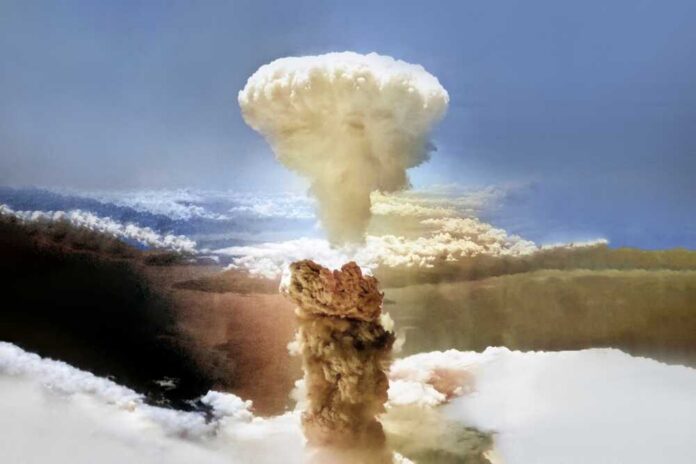
Shigeaki Mori experienced hell on August 6, 1945, when the atomic bomb detonated over Hiroshima. Walking to school on a bridge approximately 2.5 kilometers from the blast’s center, the eight-year-old boy was hurled into a shallow river.
He emerged to witness total darkness, charred bodies scattered everywhere, and raging fires consuming his city. His classmates and school vanished in an instant, leaving physical and emotional scars that would shape the rest of his life.
Shigeaki Mori, the hibakusha survivor of the August 1945 U.S. atomic bombing of Hiroshima who was embraced by then-U.S. President Barack Obama in 2016, died Saturday at the age of 88. https://t.co/cUO49mQVBa
— The Japan Times (@japantimes) March 17, 2026
Years after surviving the bombing, Mori stumbled upon a government document mentioning American prisoners of war held at the Chugoku Military Police Headquarters, located just 400 meters from the hypocenter.
This discovery ignited a passion that would consume the next four decades of his life. Unlike professional historians with institutional backing, Mori pursued this research independently, working a second job to fund his mission while raising a family with his wife Kayoko, herself a fellow atomic bomb survivor.
Tracking America’s Forgotten Warriors
Mori’s research methods demonstrated extraordinary determination and personal sacrifice. He scoured U.S. military archives and survivor accounts to identify 12 American airmen who had been captured and held for interrogation when the bomb incinerated their holding facility.
Most records had been destroyed in the blast, making his task monumentally difficult. Beginning in the 1970s, Mori spent weekends making international calls using American phonebooks, accumulating monthly bills reaching 70,000 yen as he tracked down POW families across the United States.
By 2014, Mori had successfully contacted every single family of the 12 American POWs. He provided closure that these families had waited nearly 70 years to receive, sharing details about their loved ones’ final days.
His meticulous documentation convinced Japanese officials to include these American servicemen in Hiroshima’s official bomb victim register at the Peace Memorial Hall. Mori also erected the city’s only memorial dedicated to American POW victims, funding the project entirely through his second job earnings.
Presidential Recognition and Global Impact
Mori’s work remained largely unknown outside Japan until May 27, 2016, when President Barack Obama made a historic visit to Hiroshima as the first sitting U.S. president to do so.
During that visit, Obama embraced Mori, bringing international attention to the historian’s remarkable story of reconciliation.
The moment symbolized the healing between former enemies. It highlighted Mori’s unique role in redefining what it means to be a hibakusha—not just a Japanese victim, but a universal advocate for humanity transcending wartime divisions.
BREAKING: Shigeaki Mori, Hiroshima atomic bomb survivor and historian, dies at 88. Mori was a Japanese atomic bomb survivor.
— PopOff News (@PopOffNews) March 17, 2026
Mori’s legacy challenges us to remember that war’s victims include people on all sides, even those killed by their own nation’s weapons. His book, “A Secret History of U.S. POWs,” and his tireless family outreach work expanded the Hiroshima narrative beyond Japanese suffering to acknowledge American losses in that terrible blast.
For conservatives who value individual initiative, personal responsibility, and reconciliation over perpetual grievance, Mori’s story offers a powerful example.
He didn’t wait for governments or institutions to act—he took personal responsibility to honor fallen American servicemen, demonstrating that true patriotism and human decency know no national boundaries.
Sources:
The Logbook Project – Shigeaki Mori
Hiroshima POWs – About the Author
Nippon.com – Hiroshima Historian Mori Shigeaki Heads for America
Japan Times – Hiroshima Survivor Tracks POW Victims for Posterity
History News Network – Hiroshima Historian Returns Fragments of Shot Down Bomber