
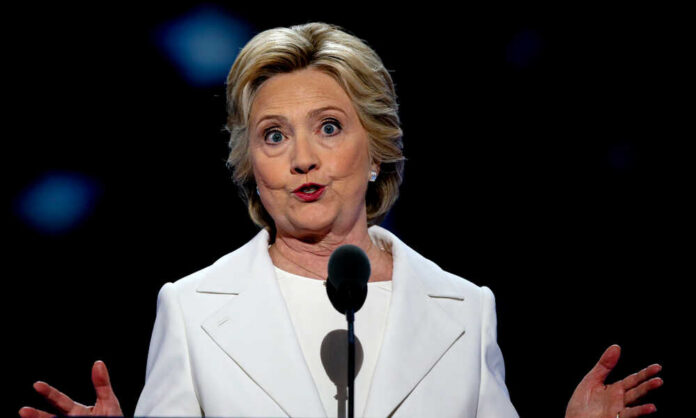
Hillary Clinton’s claim that she “does not recall ever encountering” Jeffrey Epstein is now a centerpiece in a renewed fight over whether Washington’s most powerful families can ever be fully held to account.
Quick Take
- Hillary Clinton told the House Oversight Committee in a 2026 closed-door deposition that she cannot recall ever meeting Jeffrey Epstein and said she never flew on his plane or visited his properties.
- The House Oversight Committee, led by Rep. James Comer, pursued subpoenas in 2025 and secured voluntary depositions in early 2026, avoiding a contempt vote.
- Public records and reporting focus more heavily on Bill Clinton’s documented flights on Epstein’s jet in the early 2000s. At the same time, direct ties between Hillary Clinton and Epstein remain unproven in the available material.
- The dispute is unfolding amid ongoing controversy over delayed or partial releases of Epstein-related files and broader demands for transparency.
What Hillary Clinton Told Investigators Under Oath
Hillary Clinton testified behind closed doors before the House Oversight Committee in early 2026 and said she did not recall ever encountering Jeffrey Epstein.
She also denied any involvement with Epstein’s travel or properties, stating she never flew on his plane and never visited his island or residences.
Clinton’s statement placed her personally outside Epstein’s network, at least based on what she says she remembers and what investigators can document from the public record.
Clinton also argued the Oversight inquiry was being used as political theater, portraying her deposition as a distraction from investigations and controversies involving President Trump.
That framing underscores a familiar Washington pattern: high-profile witnesses often respond by questioning motives rather than focusing strictly on facts.
The committee’s core question, however, is straightforward—what did prominent public officials know, and when did they know it, about a trafficker who moved comfortably through elite circles for years?
How the House Oversight Probe Reached the Clintons
House Oversight’s interest intensified after Republicans signaled broader investigations in 2023 and 2024, then moved to subpoenas in 2025 for Bill and Hillary Clinton related to Epstein ties.
The committee initially declined an early offer to testify but later agreed to depositions in early 2026, a move that averted a contempt vote and ensured sworn testimony occurred.
The location and closed-door format limited real-time public scrutiny, leaving Americans reliant on summaries and subsequent reporting.
🚨 BREAKING: Hillary Clinton tells House investigators in prepared deposition testimony that 'I do not recall ever encountering' Jeffrey Epstein pic.twitter.com/45CwQvEIjC
— Fox News (@FoxNews) February 26, 2026
What the Public Record Says About Bill Clinton’s Epstein Contacts
Available accounts compile a long-running timeline in which Epstein’s proximity to the Clinton orbit is clearer on Bill Clinton’s side than on Hillary Clinton’s.
Epstein reportedly visited the White House during the 1990s, and Bill Clinton later took multiple trips on Epstein’s jet in the early 2000s, including travel connected to international work.
Bill Clinton has denied knowledge of Epstein’s crimes and denied visiting Epstein’s private island, while acknowledging a limited period of contact that ended years before Epstein’s final arrest.
Ghislaine Maxwell’s reported 2025 statement to the DOJ is also cited as supporting the claim that Bill Clinton did not visit Little St. James, describing Epstein’s connection to Clinton as flowing through her.
That is not the same thing as proving there were no improper interactions; it is, however, a specific assertion that aligns with other denials about the island.
With Epstein deceased and many records still disputed, the gap between “documented travel” and “documented criminal involvement” remains the central evidentiary divide.
Why This Matters: Transparency, Equal Justice, and the Limits of “I Don’t Recall”
The political stakes are obvious, but the governance stakes are bigger. Epstein’s case has long symbolized a two-tier system—one standard for connected elites and another for everyone else.
Congressional oversight exists to test claims, reconcile timelines, and pressure agencies to release records that belong in the public domain.
When a top official responds with memory lapses, investigators are forced to rely on logs, calendars, flight manifests, and third-party testimony—exactly the kind of documentary trail Americans expect government to preserve.
At the same time, the current research base has limits. The provided materials do not establish direct evidence that Hillary Clinton met Epstein, traveled with him, or had independent dealings with him beyond what she denied in her deposition.
That uncertainty does not eliminate the need for oversight; it clarifies what should come next. If federal agencies possess clearer files, transparency—rather than selective leaks or political spin—is the only path that serves victims and restores public trust.
For conservatives who watched years of institutional protection and narrative management, the key test is whether the process now produces verifiable facts: documented timelines, unredacted records where legally possible, and consistent standards regardless of last name.
If the Oversight probe yields nothing beyond headlines, Americans will reasonably conclude the system once again protected the powerful. If it yields hard documentation, it could set a precedent that politics cannot override accountability.
Sources:
Relationship of Bill Clinton and Jeffrey Epstein