

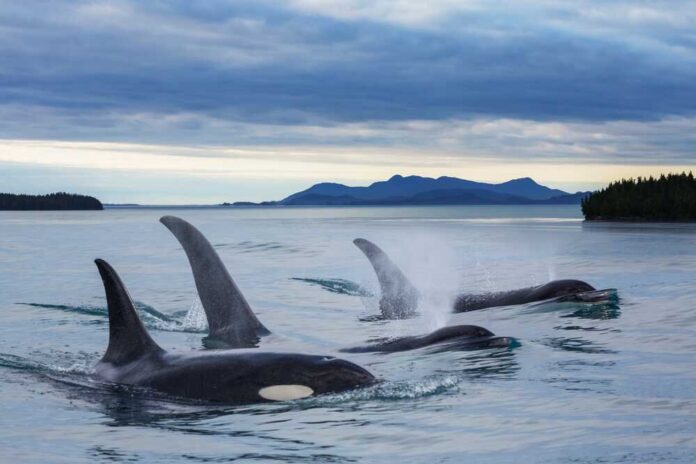
Scientists are transforming underwater fiber-optic cables into revolutionary orca surveillance networks, potentially giving conservatives hope that innovative private-sector technology can succeed where government conservation efforts have failed.
Story Highlights
- Distributed Acoustic Sensing technology converts existing fiber-optic cables into extensive sound detection arrays for orca monitoring.
- Paul G. Allen Family Foundation funds private innovation where federal agencies have struggled with endangered Southern Resident orcas.
- Project launched in October 2024 with additional deployments planned for 2025, bypassing typical government red tape.
- Technology offers superior monitoring compared to traditional hydrophones used by federal wildlife agencies.
Private Innovation Steps Up Where Government Falls Short
University of Washington researchers have deployed Distributed Acoustic Sensing technology on existing underwater fiber-optic cables in Puget Sound, creating comprehensive monitoring systems for endangered Southern Resident killer whales.
This breakthrough approach transforms cables into sound detection arrays, providing continuous surveillance along their entire length. The Paul G. Allen Family Foundation funds this private initiative, demonstrating how philanthropic investment can drive conservation breakthroughs more efficiently than bureaucratic federal programs.
Scientists hope underwater fiber-optic cables can help save endangered orcas https://t.co/uSUZ16IRu4
— The Virginian-Pilot (@virginianpilot) October 15, 2025
Maritime Industry Faces New Regulatory Pressure
The enhanced monitoring capabilities will likely inform new maritime traffic management strategies that could impose speed restrictions and route changes on shipping companies. Puget Sound’s busy commercial shipping lanes pose documented threats to orcas through vessel noise that disrupts their communication and hunting behaviors.
While the technology promises better data collection, it may lead to additional regulatory burdens on an industry already struggling with environmental compliance costs and operational restrictions.
Technology Offers Hope for Endangered Species Recovery
Southern Resident orcas have faced population decline due to habitat degradation, pollution, and vessel interference despite decades of federal protection under the Endangered Species Act.
Traditional government monitoring methods using hydrophones and visual observations have proven inadequate for comprehensive population management. The DAS technology project represents a market-driven solution that could provide the detailed behavioral insights necessary for effective conservation without expanding government oversight.
Broader Applications Promise Marine Conservation Revolution
Success with orca monitoring could establish a precedent for applying DAS technology to other marine conservation challenges globally. The project includes opportunities for undergraduate students to participate in data analysis, creating educational value alongside conservation benefits.
Researchers emphasize the potential for this private-sector innovation to revolutionize marine mammal monitoring by collecting continuous, detailed data that surpasses the capabilities of current government agencies.
Sources:
Major Grant Supports Orca Research in Puget Sound
Scientists Hope Underwater Fiber-Optic Cables Can Help Save Endangered Orcas
Keeping Connected: Submarine Communications Cables and Ocean Life