Firing up the grill this Memorial Day will cost you more than it did five years ago — and the gap between what you remember paying and what you’ll actually spend at checkout is bigger than most people realize.
At a Glance
- Grocery prices have climbed 28.3% since January 2020, according to Bureau of Labor Statistics data cited by Pew Research Center
- About half of all Americans call grocery costs a major source of stress, per an AP-NORC poll
- 86% of consumers have changed how they shop for groceries, with most cutting splurge items and switching to store brands
- Beef is up 16%, coffee up 20%, and eggs up 26% in recent price tracking, with tariff-linked categories adding further pressure
What a Memorial Day Cookout Actually Costs Right Now
Burgers, brats, cold beer, potato salad, and a bag of charcoal. That list hasn’t changed in decades. The price tag has. Food at home jumped 0.7% in April alone and sits 2.9% higher than a year ago, according to Bureau of Labor Statistics data summarized by NerdWallet. [7] Multiply that across a full cookout spread and the sticker shock is real. The family gathering that cost $120 three summers ago is pushing $155 or more today, and that’s before anyone splurges on name-brand condiments.
Hosting a Memorial Day cookout? Here's how much it could cost https://t.co/F0v4l16yYp
— FOX Business (@FoxBusiness) May 22, 2026
Beef is the centerpiece of any serious Memorial Day grill, and it’s also where the pain is sharpest. Prices are up 16% in recent tracking, driven in part by historically low U.S. cattle herd sizes — a supply-side squeeze that has nothing to do with political preference and everything to do with years of drought and herd liquidation. [4] That’s not a temporary blip. Rebuilding a cattle herd takes years, which means beef prices are unlikely to soften significantly before the next several Memorial Days come and go.
Eggs, Coffee, and the Items That Hurt Before You Even Light the Grill
The cookout math gets worse when you factor in the supporting cast. Eggs are up 26%, coffee is up 20%, and imported seafood like shrimp carries added cost depending on where it was sourced and what tariffs apply to that country of origin. [4] Coffee for the morning of the holiday, deviled eggs for the table, shrimp on the skewers — these aren’t luxury items. They’re the ordinary building blocks of a normal American holiday meal, and each one is measurably more expensive than it was 24 months ago.
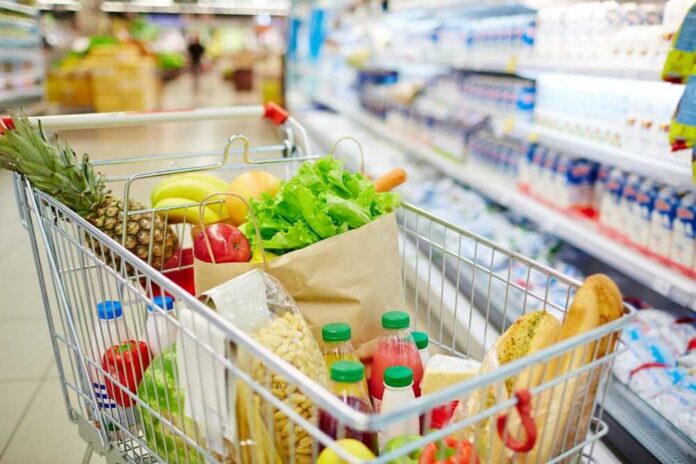
The Pew Research Center puts the cumulative damage plainly: food at home has climbed 28.3% since January 2020. [6] That figure doesn’t capture a single dramatic spike. It captures the slow, relentless grind that shows up every single week at checkout.
An AP-NORC poll found that about half of all Americans describe grocery costs as a major source of stress right now, with only 14% saying groceries aren’t adding to their stress at all. [3] Those numbers align with common sense. When a basic necessity eats a larger share of take-home pay every month, stress is the rational response.
How Shoppers Are Adapting Before They Ever Reach the Meat Counter
A LendingTree survey found that 86% of consumers have already changed how they shop for groceries. [1] They’re paying closer attention to unit prices, cutting back on splurge items, switching to store brands, and being more deliberate about leftovers. That behavioral shift is significant.
It’s not panic, but it is evidence that households are actively managing a budget that feels tighter than it used to. Choosing the store-brand bun over the bakery bun isn’t a crisis, but doing it every week because you have to is a different experience than doing it by choice.
🚨 $8 for a dozen eggs — billionaire Ken Griffin calls inflation 'deeply triggering' for Americans
Despite CPI cooling, real grocery prices stay elevated, squeezing household budgets and consumer confidence.
Rate cuts while Main Street still bleeds? #Inflation #Fed #Economy pic.twitter.com/Z3rZkqmmun
— The Signal 📡 (@signal_daily_) May 24, 2026
Some relief exists if you know where to look. Retailers occasionally absorb cost increases rather than pass them through immediately — banana prices, for example, held steady for a period even as import tariffs were applied, because importers chose to protect volume over margin. [8]
Loyalty programs, unit-price comparison, and buying whole produce instead of pre-cut versions are all documented money-savers. [12] But these strategies require time, attention, and planning that not every household has in abundance, especially heading into a holiday weekend.
The Honest Bottom Line for Anyone Shopping This Weekend
The Memorial Day cookout isn’t going away. Americans will fire up grills from Maine to Arizona this weekend regardless of what beef costs per pound. But the honest accounting matters.
Grocery prices are up sharply from pre-pandemic baselines, several key cookout staples are experiencing category-specific spikes driven by supply constraints and import costs, and the majority of American households are actively adjusting their behavior to cope. [1][6] Budget for more than you think you need, lean on store brands where quality holds up, and buy the good burgers anyway. You’ve earned the holiday.
Sources:
[1] Web – Half of Americans Struggle to Afford Food | LendingTree
[3] Web – The vast majority of US adults are stressed about grocery costs, an …
[4] Web – Stopping Sticker Shock at the Grocery Store: A Plan To Make Food …
[6] Web – 5 facts about food costs in America | Pew Research Center
[7] Web – Why Is Food So Expensive? – NerdWallet
[8] Web – Rising Food Prices Shift Grocery Buying Habits